Aussie tourists have high standards for eco-tourism but unwilling to pay more
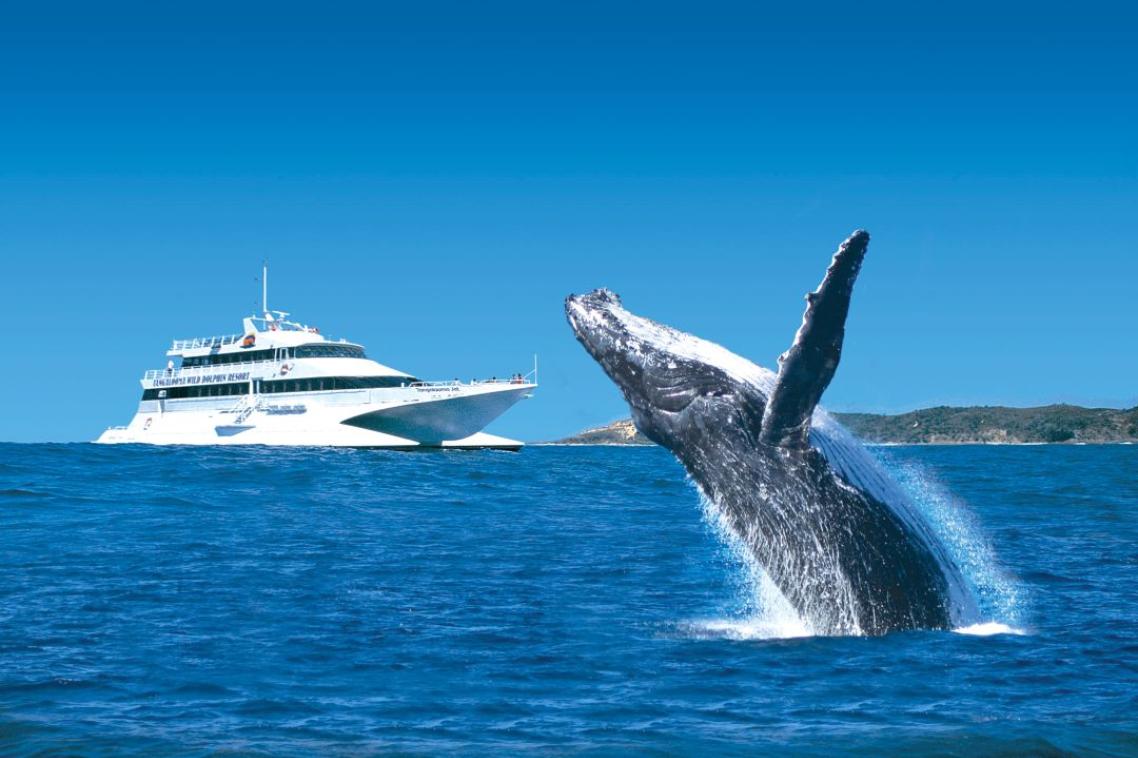
A whale jumps out of the water in front of a Tangalooma Island Resort boat.
(Photo credit: Tangalooma )
Australians who book whale watching tours are passionate about protecting the environment but are less willing to pay more for an eco-certified experience, research from The University of Queensland has found.
Whale watchers were surveyed about their environmental actions, whale knowledge and experience while on sightseeing tours in the past few months off the coast of Brisbane.
Dr Aaron Tkaczynski from UQ’s Business School said Australians had high expectations of businesses looking after the environment they operated in.
“The Australian tourism industry is a world leader for showcasing our natural environment with conservation in mind and locals have come to expect that,” Dr Tkaczynski said.
“There are a growing number of businesses acquiring eco-certification and I think it’s the way forward to highlight your company as the ‘real deal’ in caring for the environment and wildlife.”
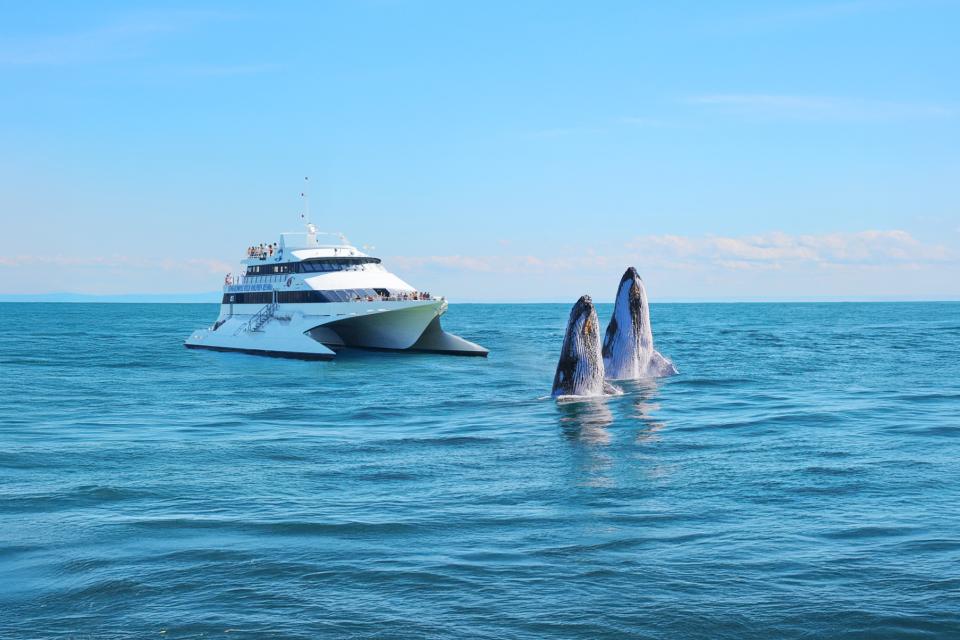
Two whales jump in front of a Tangalooma cruise.
(Photo credit: Tangalooma)
Survey results showed whale watchers of all nationalities wanted to learn about responsible environmental practices from tourism operators.
“Those on their first trip were significantly more interested in whale watching and protecting marine wildlife despite being less happy to miss out on seeing whales if environmental guidelines were followed,” Dr Tkaczynski said.
“Not surprisingly, these tourists were also less knowledgeable about whale watching and environmental actions conducted by whale watching operators.
“It’s vital boaties do what’s best for the whales by not getting too close, turning off engines and disposing of waste appropriately.
“Education is key to helping the environment and the more people know about what operators are doing and how they can help by donating or volunteering, the better the whole of society is.”
Curious tourists, an opportunity
Dr Tkaczynski said eco-tourism operators should take advantage of curious tourists who want to help look after the environment.
“This is an opportunity for operators to help the environment through educating tourists and motivating them to adopt more environmentally friendly actions at home,” Dr Tkaczynski said.
“Our survey results showed the majority of whale watchers were highly educated and already made some environmentally friendly decisions but were motivated to learn more.”
Results found whale watchers limited their waste action at home such as not flushing chemicals down the drain, using fewer plastic bags and recycling but fewer participated in clean up days and donating or volunteering for environmental groups.
“They want to protect the marine environment but are unaware how their money can go to cleaning waterways or oceans, or how local governments in regions such as the Redlands are providing measures to limit plastic entering oceans,” Dr Tkaczynski said.
“Providing education to tourists creates a legacy of eco-certification practices being carried out at home and appreciation for what businesses do on the water.”
Collaboration and acknowledgements
The survey was conducted in partnership with Tangalooma Island Resort.Related articles

Money doesn’t buy happiness if you need a second job to have it