Improving the safety of timber buildings – by setting them on fire

UQ researchers and QFD figrefighters are running live burn tests on timber compartments to explore how building design can influence fire behaviour.
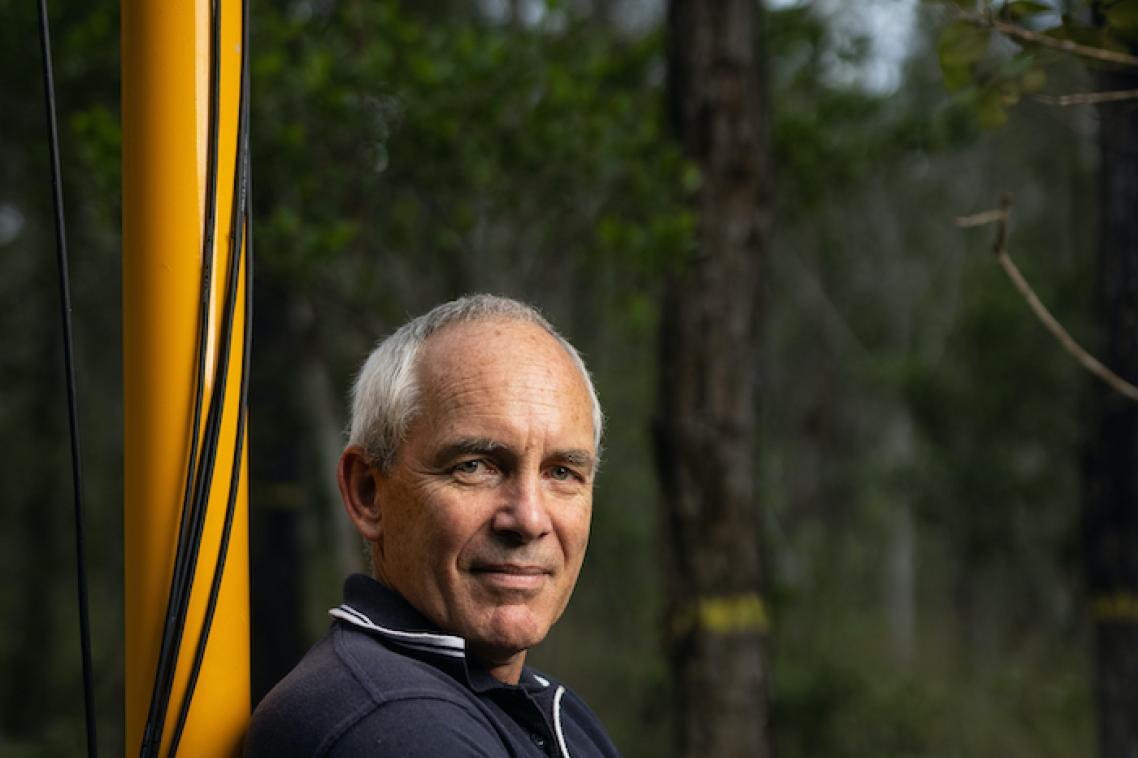
(Photo credit: The University of Queensland )
Key points
- UQ fire safety engineers and the Queensland Fire Department are burning mass timber compartments to explore how safety and design can be improved.
- Researchers set alight 12-metre long cross-laminated timber ceiling compartments and monitored the fire from the inside using livestreaming cameras and heat and pressure-sensing instruments.
- Researchers say understanding new materials and innovative design is crucial to improving building codes for safer timber structures and safer emergency response.
Full-scale fire tests on specially designed-timber ceilings could help University of Queensland researchers pave the way for safer buildings that are less likely to collapse during a fire.
UQ fire safety engineers and the Queensland Fire Department are running the test burns on mass produced timber compartments to see how construction methods could limit the spread and impact of fire in timber structures such as office blocks.
The research team constructed 12-metre long cross-laminated timber (CLT) ceiling compartments and set them alight under the supervision of QFD firefighters at their training ground at the Port of Brisbane.
UQ Associate Professor David Lange said each compartment was monitored from the inside using livestreaming cameras and heat and pressure-sensing instruments.
“In each test we changed the design of the compartment slightly to reveal how design parameters - including ventilation, ceiling obstructions, and ceiling height changes – influenced fire behaviour,” Dr Lange said.
“Learning how fire spreads in specific conditions means we can design buildings that better channel fire and give people more time to exit if needed.”
The research is central to a PhD project led by UQ’s Josh Madden and part of a wider body of work at the ARC Research Hub to Advance Timber for Australia’s Future Built Environment – administered by UQ’s School of Civil Engineering – exploring barriers to the wider use of mass and engineered timber.

Researchers led by Asociate Professor David Lange and PhD candidate Josh Madden monitored the fire using livestreaming cameras and heat and pressure-sensing instruments.
(Photo credit: The University of Queensland)
Mass or engineered timber products are made by compressing, binding, gluing, or nailing layers of wood together and as an alternative to using steel and concrete.
Mr Madden, working alongside Dr Lange and other international academics, said the use of manufactured engineered wood had increased rapidly in Australia as a sustainable, fast, and high-strength building material but many design methodologies were outdated and therefore potentially unsafe.
“Current fire safety guidance was generally built around the assumption that structural materials don't burn,” Mr Madden said.
“Timber absolutely breaks that assumption. It's a load-bearing material that is also combustible, acting as a fuel source, creating significantly different fire behaviour to that of steel or concrete.
“Our research is about measuring how we might improve design methodologies in order for timber to play a larger role in the building and construction sector.”

Mass produced timber is seen as a more environmentally friendly alternative to using steel and concrete.
(Photo credit: Adobe Stock / Grand Warszawski)
The tests continue a history of information sharing between UQ and the QFD dating back to 2014 and has helped fire and rescue services adapt firefighting skills to improve public safety.
QFD fire engineer Mick Conway said understanding new materials and innovative design was crucial to improving building codes for safer timber structures.
“The way we build buildings is prescribed by a set of rules that dictate certain methods for certain materials,” Mr Conway said.
“But there is a lot more to understanding the material science as opposed to something written in a code.
“By burning materials under experimental conditions our firefighters are learning things that they otherwise might have had to experience for the first time in a live scenario.”
Results of the test burns are now being analysed and would be presented in Mr Madden’s final thesis.

Related articles
Timber efficiencies could help ease nation's housing crisis