
Better urban planning can save koalas
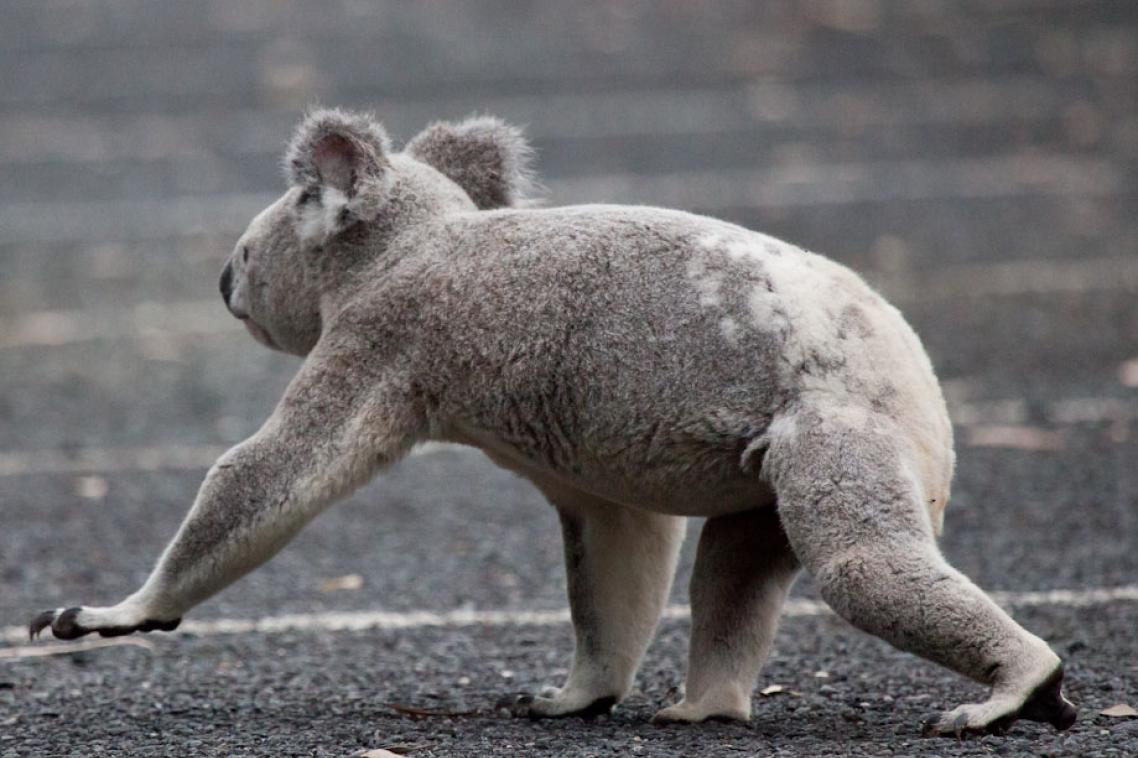
The smart design of roadway and tree cover patterns in new urban areas is critical to maintain koala genetic diversity and improve survival prospects for the species, a study has found.
Mixing genes across wider areas is crucial for koala colony health and resilience, said Dr Jonathan Rhodes of the National Environmental Research Program Environmental Decisions Hub at The University of Queensland.
“By identifying koalas’ genetic connectivity – how their genes are distributed across landscapes – scientists can establish the viability of a population,” he said.
Urban growth has constantly encroached on koala habitats and often has isolated their populations into small groups with limited genetic diversity.
“Koala numbers have dropped massively over the past 15 years in southeast Queensland, and further urbanisation will affect them more,” said Dr Rhodes, who collaborated on the research with molecular ecologist Dr Rachael Dudaneic of Lund University in Sweden, and others.
“We need smarter and more cost-effective ways to protect koalas while our cities continue to grow,
Although koalas spend most of their time in trees, they travel between trees on the ground.
“When they move across landscapes to mate, they transfer their genes across the landscape too,” Dr Rhodes said.
“The mixing of their genes across different areas is how they maintain genetic diversity, and is vital to the survival of the species
“By identifying koalas’ genetic connectivity, we can identify the main landscape features that influence this gene flow and what the impacts are on the viability of the species.”
In the study, the NERP ED researchers examined koala samples collected across eight local government areas in southeast Queensland and explored how the amount of tree cover and roads affected gene flow patterns.
The team found that genetic connectivity dropped rapidly once the percentage of forest cover fell below 30 per cent. Areas with little or no forest cover had rates of gene flow three times lower than areas where forest cover was 100 per cent.
“We also found that the presence of highways reduces gene flow dramatically compared to areas without roads,” Dr Rhodes said.
“If you throw in a major highway, genetic dispersal is greatly impeded regardless of how much forest cover is present.”
The findings suggest that koalas have a good chance of dispersing through an area if there is sufficient forest cover, Dr Rhodes said.
“To keep, create or maintain connections between koala populations, at least 30 per cent forest cover should be planned for.
“Also, as highways impede gene flow, habitat bridges and underpasses beneath highways need to be implemented as they can play an important role – particularly where highways are adjacent to koala habitats.”
“It’s vital that koalas are able to move across the landscape and that we do all we can in urban planning to ensure we do not isolate their habitats,” Dr Rhodes said.
“This requires us to embed new strategies in our urban planning practices.
“It’s crucial that we help koalas shift across highways, and also that we preserve and restore eucalypt foliage cover.
“Our study shows that understanding koalas’ genetic connectivity is a cost-effective and informative tool for conservation and urban planning.
“Sustaining gene flow is a major challenge when you are trying to minimise the impact of fragmentation on native wildlife, so when we design new urban areas, it’s important to understand the factors that influence gene flow.”
Thes research was funded through an Australian Research Council Linkage Project grant, and the National Environmental Research Program Environmental Decisions Hub.
The study, Using multi-level models to identify drivers of landscape genetic structure among management areas by Dudaniec RY, Rhodes JR, Worthington Wilmer J, Lyons M, Lee KE, McAlpine CA and Carrick FN, was published in Molecular Ecology
The Australian Government funds the National Environmental Research Program (NERP) to inform evidence-based policy and sustainable management of the Australian environment.
Contact: Dr Jonathan Rhodes, NERP Environmental Decisions Hub/UQ, +61(0)7 3365 6838, +61(0)466 650 709; Dr Rachael Dudaniec, Lund University, +61(0)450 615 055; Karen Gillow, NERP Environmental Decisions Hub/UQ, +61(0)402 674 409, k.gillow@uq.edu.au
www.nerpdecisions.edu.au
Photo: Liana Joseph
Related articles

Turning up the heat on chickpea yield
