Skip to menu Skip to content Skip to footer
News

UQ draft Master Plan open for community feedback
8 April 2015
Decorative
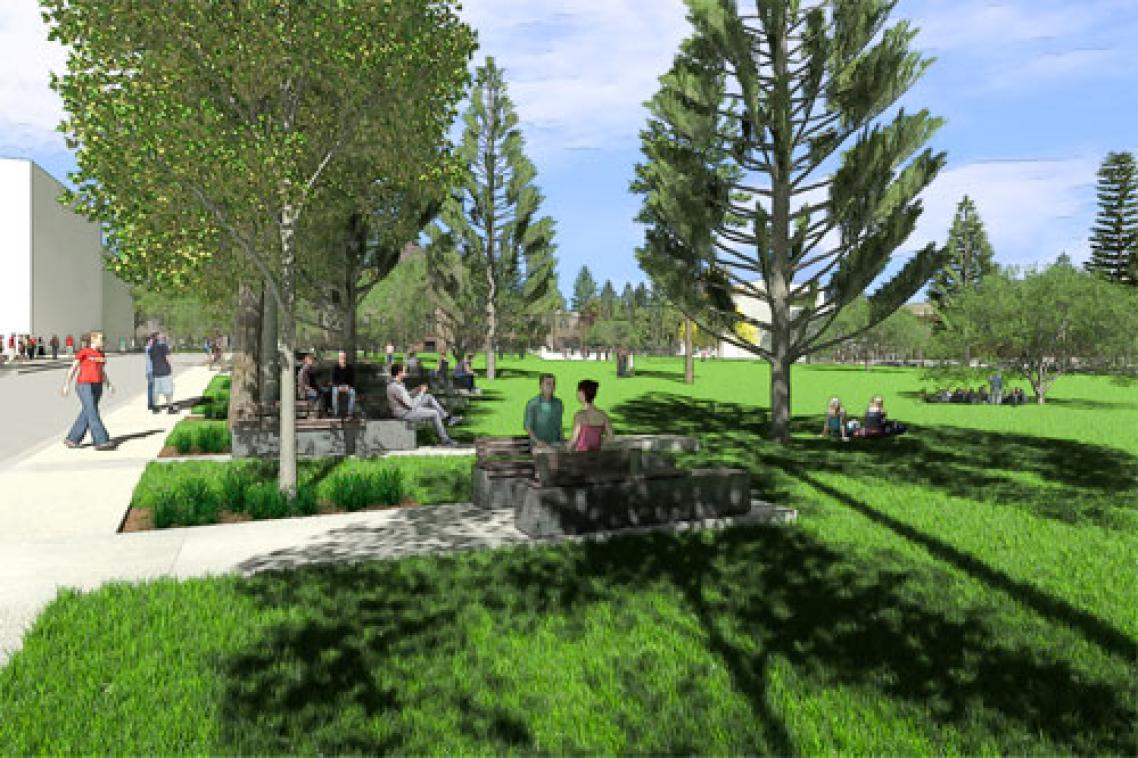
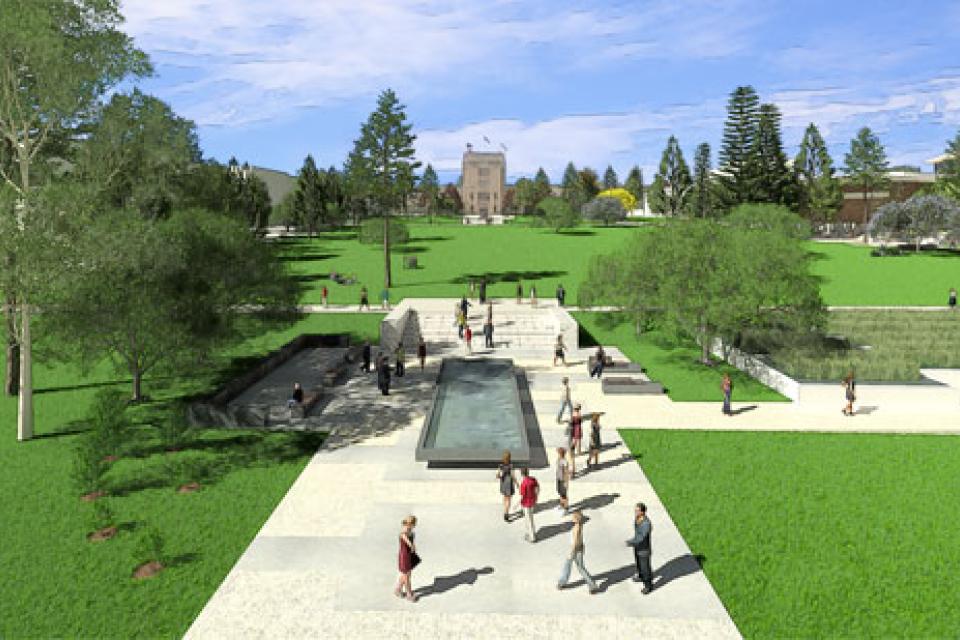
Artist's impression of the new space.

New student accommodation and retail outlets feature among key developments proposed in The University of Queensland’s new draft Master Plan for its St Lucia campus.

UQ Property and Facilities Director Mr Alan Egan said the possibility of new river crossings for cyclists and pedestrians, more student accommodation, and upgraded sports facilities were highlighted as opportunities to meet the needs and expectations of students, staff and the community.

The public consultation phase of the master planning process started this week, with the launch of a website and a display in the University’s Duhig Library.

Mr Egan said the St Lucia campus Draft Master Plan 2015 presented a clear vision and strong framework for a physical environment that would continue to support UQ’s position as a landmark centre of knowledge leadership.

“The St Lucia campus, including the Long Pocket and Avalon Theatre precincts, has grown into a thriving community with a distinct sense of place, people and purpose,” Mr Egan said.

“The landscaped grounds, heritage buildings, cultural spaces, sporting facilities, residential colleges and high-tech research labs enrich the experience of learning and working at UQ and provide Brisbane with a picturesque meeting place for ideas and activities that the public can also enjoy.

“Queensland’s population is forecast to reach eight million by 2040, with most people living in the south east region.

“The demands of a modern society in such a growth region require a planning approach that integrates the needs of both the campus and the wider community.

“In 2014, UQ welcomed about 50,000 students, including 12,000 international enrolments from 144 nations.

“This plan aims to guide sustainable development of the physical environment so that it can continue to provide a unique, memorable and desirable campus experience for current and future generations,” he said.
Decorative
The plan incorporates best-practice principles of contemporary urban form and respects cultural and environmental heritage, with the sandstone edifice at the front of the campus becoming a stronger focal point.

“Parkland characteristics will be enhanced, not only because they are central to the visual image of the University, but also to retain major green space for the neighbourhood,” Mr Egan said.

Public feedback is encouraged through the community consultation phase. The UQ library display is open to the public, and information stalls will be set up in the neighbourhood.

An online newsletter, a survey and details of other feedback options can be found on the St Lucia campus Draft Master Plan 2015 website.

Media: communications@uq.edu.au, +617 3365 1120.

Related articles

Hand-coloured drawing of the town of Hobart in the 1800s, depicting grassy plains, the beach and a small town in the distance.
Analysis

What was Australia’s first novel?

The first novel written and published in Australia is a multifaceted work of autobiographical and historical significance, a convict narrative and, arguably, Australia’s first work of crime fiction.
15 October 2026
Three researchers wearing blue protective lab gowns stand among rows of potted chickpea plants inside a controlled-environment plant research facility.

Turning up the heat on chickpea yield

A University of Queensland study has outlined a practical pathway for accelerating the development of heat adapted chickpeas using data from new ‘omic’ technologies. PhD candidate Callum Jamie said the suite of technologies offered tremendous opportunities to understand how a complex trait like heat tolerance works. “The narrow genetic diversity in the elite chickpea gene pool has limited conventional breeding’s effectiveness for stress tolerance,” Mr Jamie said. “These technologies have improved our capacity to dissect trait architecture and phenotype secondary traits but their use in chickpeas has been limited.” The technologies include genomics, epigenomics, transcriptomics, proteomics, metabolomics, phenomics and enviromics, and help provide a comprehensive picture of biological systems. Epigenomics helps understand what controls gene activity; transcriptomics considers gene expression; proteomics protein production; metabolomics looks at biochemical processes; phenomics observes traits; and enviromics considers environmental factors influencing outcomes. Mr Jamie said previous studies had focused on just 1 to 2 -omic datasets, a small number of genotypes, and single tissues. This has meant it was hard to infer what results meant for trait architecture and mechanisms and the ability to extrapolate the information to breeding populations was limited. There have also been challenges around cost, scalability and integrating very different types of data to make the technologies useful. To overcome the hurdles, Mr Jamie’s research at the Queensland Alliance for Agriculture and Food Innovation has resulted in a proposed staged approach. It would start with genomic prediction and phenotyping, before adding -omic layers as costs fall and unknowns were resolved. “These technologies are novel and we still don’t know which information provides added value and how best to integrate all of this data to achieve an outcome,” Mr Jamie said. His PhD is supported by the Grains Research and Development Corporation (GRDC) and the International Research Training Group (IRTG) Accelerating Crop Genetic Gain and is aligned to a project which aims to fast-track the development of chickpea varieties adapted to high temperatures. Project leader Dr Millicent Smith said heat stress causes severe yield implications through flower and pod loss, reduced pollen viability and impaired grain filling. “Late sown chickpea is particularly in the firing line across most of Australia's crop in southern Queensland and northern New South Wales,” Dr Smith said. “We want to ensure that Australian growers maintain their competitive edge. “New varieties with improved genetics to cope with heat stress are essential for the future. “This work, suggesting a staged approach to utilising the new -omic technologies, is an exciting frontier.” The research was published by Food and Energy Security. Callum Jamie’s PhD is supported by the Grains Research and Development Corporation (GRDC) and the International Research Training Group (IRTG) Accelerating Crop Genetic Gain.
15 October 2026

Media contact

Subscribe to UQ News

Get the latest from our newsroom.