
Study gets an earful of how mammals developed hearing
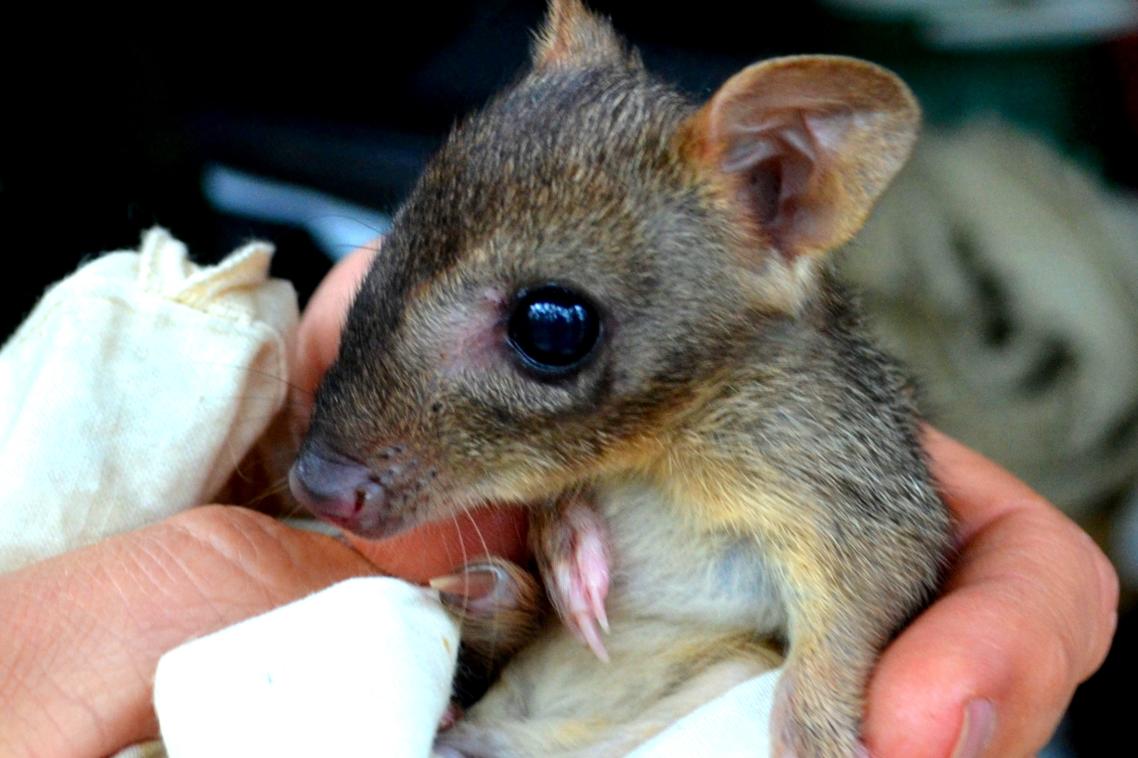
An international study led by University of Queensland researchers has challenged a long-held idea about how mammals evolved more sensitive hearing than reptiles.
UQ School of Biological Sciences researcher Dr Vera Weisbecker said the development of the mammalian middle ear represented an “extreme transformation” in the evolution of mammals from reptile-like ancestors, but existing scientific theories about how and why were based on insufficient data.
“One of the problems with earlier studies on mammalian development is that scientists saw a relative shrinking in size of middle ear bones, as well as a movement away from the jaw joint, possibly under the influence of a rapidly expanding brain,” she said.
“Because scientists look to such development processes to find out about evolution, these processes were interpreted to reflect the evolution over time of the mammalian middle ear.
“However, with a patchy fossil record, there weren’t enough developmental data available to draw such conclusions.
“The evolution of the middle ear has been a hotly-debated area of developmental biology since 1837, but there is little fossil evidence to trace the details of this process.
“Over 320 million years of mammalian evolution, three bones of the ancestral reptile-like jaw joint, initially devoted to feeding, shrank and ‘retooled’ to form bones entirely dedicated to a new purpose of conducting sound more sensitively towards the inner ear.
“It’s not known why this change occurred, but it is thought that by extending their range of hearing to include high-pitched sounds, mammals could improve their detection of prey, such as small insects in the dark.
She said CT (computerised tomography) data from marsupials and monotremes revealed there was no support for some of the existing theories about mammalian middle ear development.
Dr Weisbecker said the study, published today in the Proceedings of the Royal Society B, highlighted a need for further fossil evidence to test widely-cited evolutionary theories.
The lead author was UQ PhD student Héctor Ramirez-Chaves, who holds UQ Centenary and UQ Ipswich Scholarships. Researchers from other Australian institutions and from Japan and Germany contributed to the study.
Dr Weisbecker’s research is supported by Hermon Slade and ARC Discovery grants.
Media: Dr Vera Weisbecker, , v.weisbecker@uq.edu.au, www.weisbeckerlab.com.au, +61 7 336 57071 or 0487 385 214.
Topics
Related articles

UQ to support development of mobile launcher for high-speed flight R&D
