
Nanopatch polio vaccine success
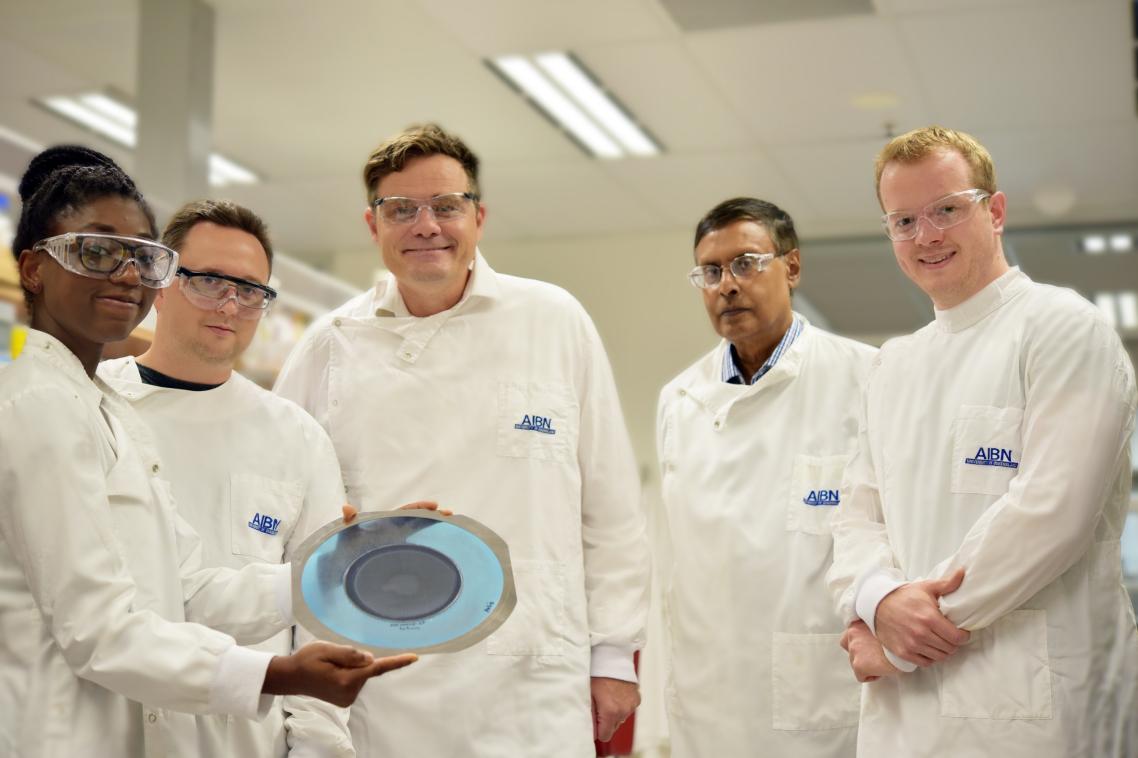
Needle-free Nanopatch technology developed at The University of Queensland has been used to successfully deliver an inactivated poliovirus vaccine.
Delivery of a polio vaccine with the Nanopatch was demonstrated by UQ’s Professor Mark Kendall and his research team at UQ’s Australian Institute for Bioengineering and Nanotechnology, in collaboration with the World Health Organisation, the US Centres for Disease Control and Prevention, and vaccine technology company Vaxxas.
Professor Kendall said the Nanopatch had been used to administer an inactivated Type 2 poliovirus vaccine in a rat model.
“We compared the Nanopatch to the traditional needle and syringe, and found that there is about a 40-fold improvement in delivered dose-sparing,” Professor Kendall said.
“This means about 40 times less polio vaccine was needed in Nanopatch delivery to generate a functional immune response as the needle and syringe.
“To our knowledge, this is the highest level of dose-sparing observed for an inactivated polio vaccine in rats achieved by any type of delivery technology, so this is a key breakthrough.”
The next step will be clinical testing.
Dr David Muller, first author of the research published in Scientific Reports, said the work demonstrated a key advantage of the Nanopatch.
“The Nanopatch targets the abundant immune cell populations in the skin’s outer layers; rather than muscle, resulting in a more efficient vaccine delivery system,” he said.
Clinical success and widespread use of the Nanopatch against polio could help in the current campaign to eradicate polio. It could be produced and distributed at a cheaper cost, and its ease of use would make it suitable for house-to-house vaccination efforts in endemic areas with only minimal training required.
World Health Organisation Global Polio Eradication Initiative Director Mr Michel Zaffran said only Afghanistan and Pakistan remained polio-endemic, but all countries were at risk until the disease was eradicated everywhere.
“Needle-free microneedle patches such as the Nanopatch offer great promise for reaching more children with polio vaccine as well as other antigens such as measles vaccine, particularly in hard-to-reach areas or areas with inadequate healthcare infrastructure,” Mr Zaffran said.
Nanopatch technology is being commercialised by Vaxxas Pty Ltd, which has scaled the Nanopatch from use in small models to prototypes for human use.
Vaxxas CEO Mr David Hoey said the first human vaccination studies are scheduled for this year.
“Key attributes of the Nanopatch, including its ease of use and potential to not require refrigeration, could improve the reach and efficiency of vaccination campaigns in difficult-to-reach locations, including those where polio remains endemic,” Mr Hoey said.
The work was funded by the World Health Organisation, Vaxxas, Rotary District 9630 and the Rotary Foundation.
Media: Darius Koreis, d.koreis@uq.edu.au, +61 7 3346 3962, +61 427 148 187.
Related articles

What makes a winning environmental campaign? We studied six decades of activism to find out
