
UQ continues fight against coral bleaching
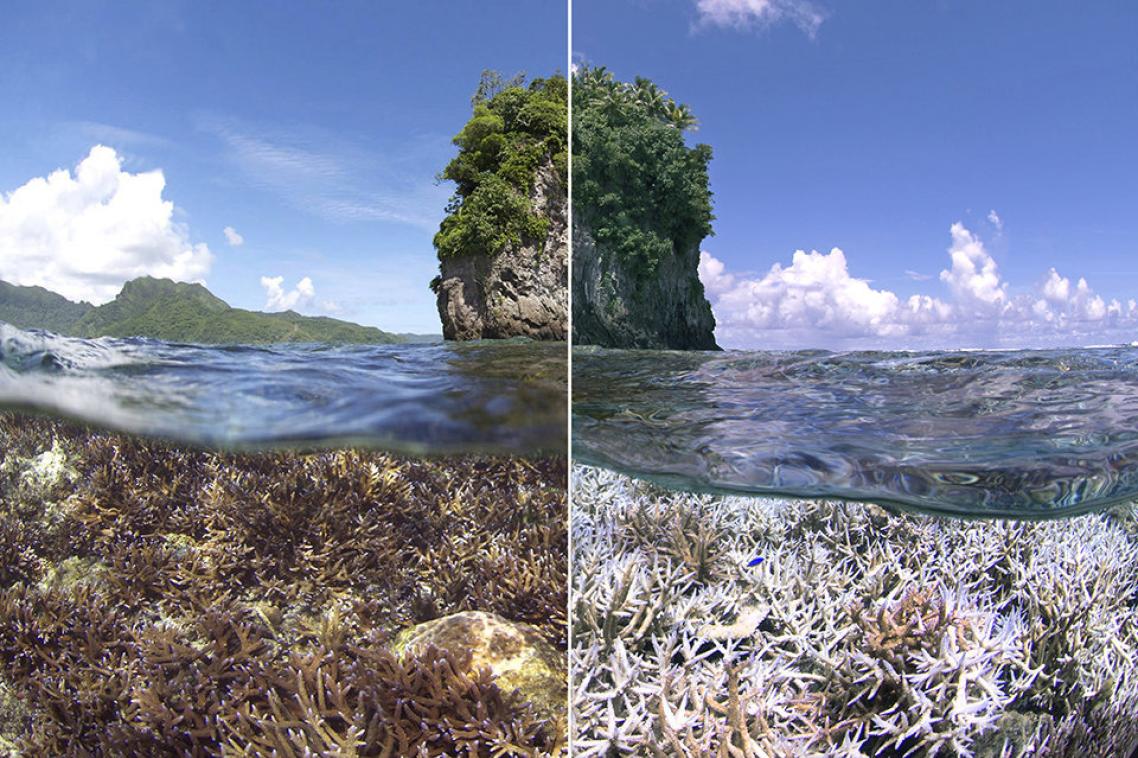
The University of Queensland has been tasked with helping fight climate change on the Great Barrier Reef, just days after government agencies revealed an increase in coral bleaching and mortality.
Director of UQ’s Global Change Institute Professor Ove Hoegh-Guldberg said above average land and water temperatures across the summer had resulted in widespread mass bleaching north of Cairns and there were early indicators that many corals around Lizard Island had already died.
Professor Hoegh-Guldberg will lead the team undertaking extensive underwater surveys to determine the impact on the reef, by comparing its current health with imagery from 2012 baseline surveys.
“Lose the corals, you lose the fish. You lose the tourism and fishing, and of course if you lose those you lose the income to Queensland and Australia,” Professor Hoegh-Guldberg said.
“The ‘living edge’ of the Great Barrier Reef, offshore from Cape York, should be one of the healthiest and most resilient sections of the reef due to less human interference.
“This survey will investigate the ‘living edge’ and the damage that has occurred there as a result of the bleaching.”
Research findings from surveys — which will take place in June — will be important in helping the government target management solutions for reef damaged by coral bleaching.
The team will use the latest technology, including computer image recognition, and will survey multiple baseline sites established as part of the Global Reef Record.
Federal Environment Minister Greg Hunt announced funding for the surveys on the ABC’s AM program this morning.
“The world has to continue to do more and more, both in terms of climate change but also water quality,” Mr Hunt said.
“Today I’m in the position to announce that we will, as a federal government, be supporting the work of The University of Queensland – Professor Ove Hoegh-Guldberg – for one of the world’s most significant coral baseline studies over the coming months.”
Professor Hoegh-Guldberg said imagery from the surveys was not only vital for scientific research but also for helping to explain the risks to the reef to all Australians.
“Even with the best management of the reef, it is still vulnerable to climate change so this issue requires the same focus and effort as we see when dealing with water quality,” Professor Hoegh-Guldberg said.
“This funding will hugely improve our understanding and help federal management agencies in responding to the impacts of a changing climate.”
Media: Anna Moloney, a.moloney@uq.edu.au, +61 7 3443 3148, +61 478 487 211.
Related articles
UQ ranked third nationally in AFR Best Universities Ranking
