
Baby see, baby do?
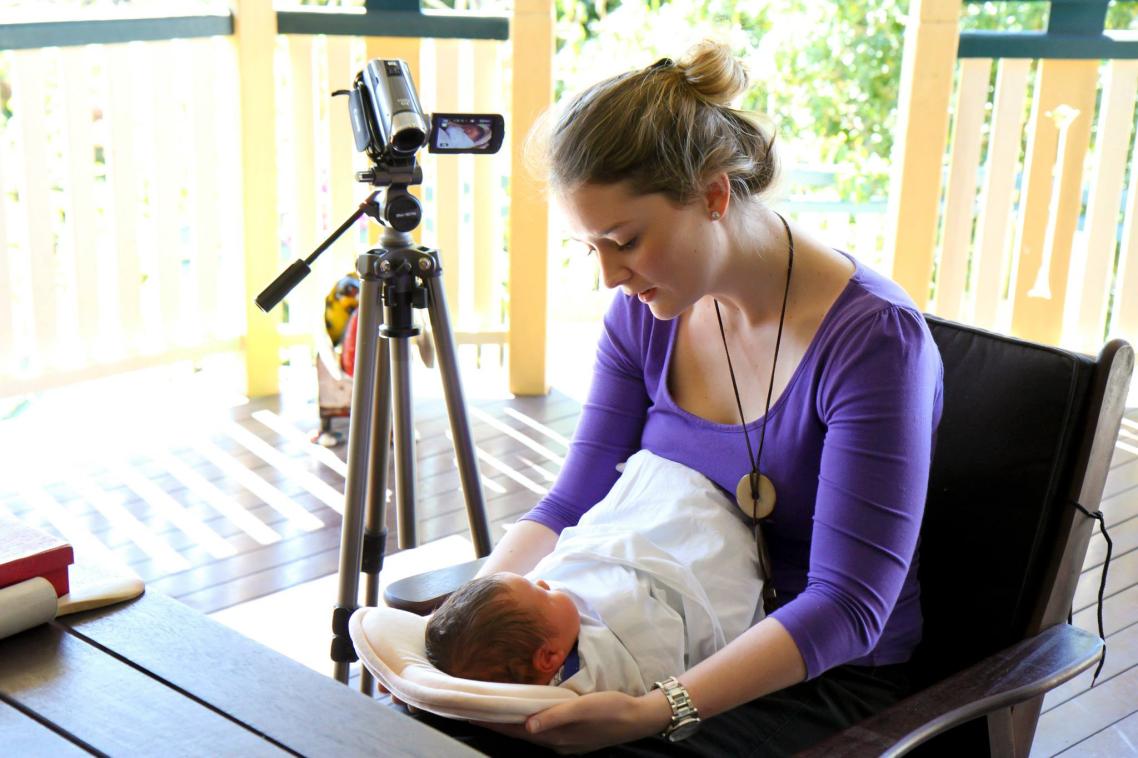
That cute thing your newborn is doing that you’ve been telling everyone about… Chances are they aren’t copying it from you.
Researchers from The University of Queensland School of Psychology have recommended “modifying or abandoning” the theory that imitation is an inborn capacity in humans, after studying more than 100 babies over their first nine weeks of life
Professor Virginia Slaughter said the team failed to find any evidence newborns could copy facial gestures, hand movements or vocalisations up to nine weeks old.
“The results provided evidence against the view that certain human behaviours are innate,” she said.
“Analysis indicated infants were just as likely to produce gestures in response to other stimuli as to matching models.
“Human children in later stages do copy others’ actions, but the controversial assumption that this occurs from the moment of birth needs to be rethought.”
Professor Slaughter worked with UQ colleagues Professor Thomas Suddendorf, Associate Professor Mark Nielsen, Dr Jonathan Redshaw, Siobhan Kennedy-Constantini and Sally Clark on the research.
UQ graduate Dr Janine Oostenbroek, now at the University of York, UK, and Jacqueline Davis, now at the University of Cambridge, UK, were also involved in the study.
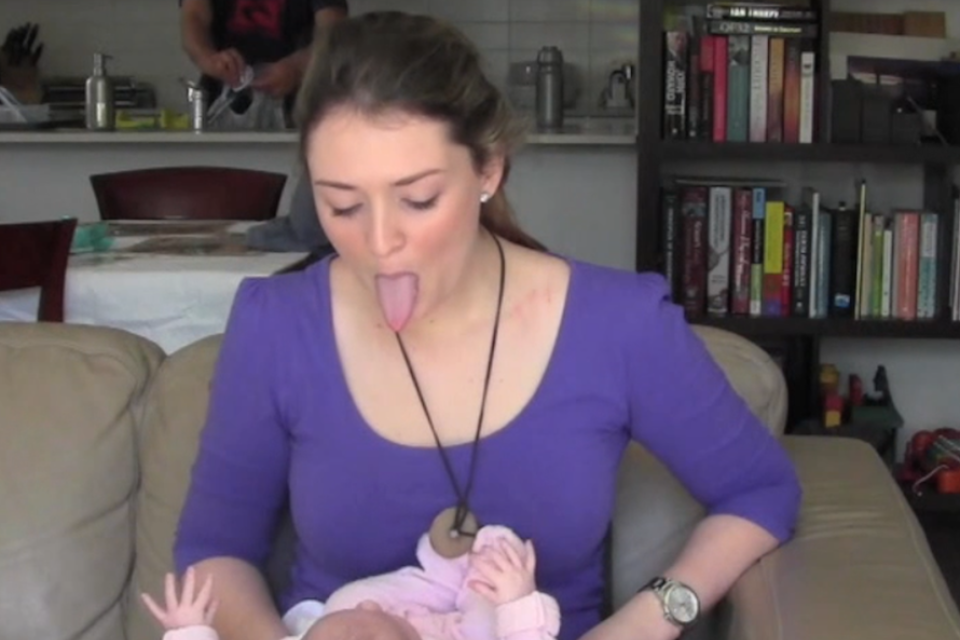
A total of 106 infants were presented with a variety of facial expressions, gestures or sounds created by both human and non-human models, and were tested at one, three, six and nine weeks of age.
Cognitive scientist Professor Cecilia Heyes of the University of Oxford described the results as “powerful” and encouraged deeper thought about what separates humans from animals.
“Many assume that we are ‘special’ because we inherit a set of complex cognitive mechanisms,” Professor Heyes said.
“Imitation was one of the things that set us apart, along with language, mental time travel, cheater detection, face recognition, and theory of mind.
“Now that we know imitation is not inborn there is renewed impetus for testing other hypotheses.
“At birth, human minds may only be different to those of other animals in subtle ways.”
The research on imitation in human newborns is published in the journal Current Biology.
Media: Professor Virginia Slaughter, vps@psy.uq.edu.au; Robert Burgin, UQ Communications, r.burgin@uq.edu.au, +61 7 3346 3035, +61 448 410 364.
Topics
Related articles

Shaping the future of medicine: UQ Medical School turns 90
