
Fitness bands undervalue your effort
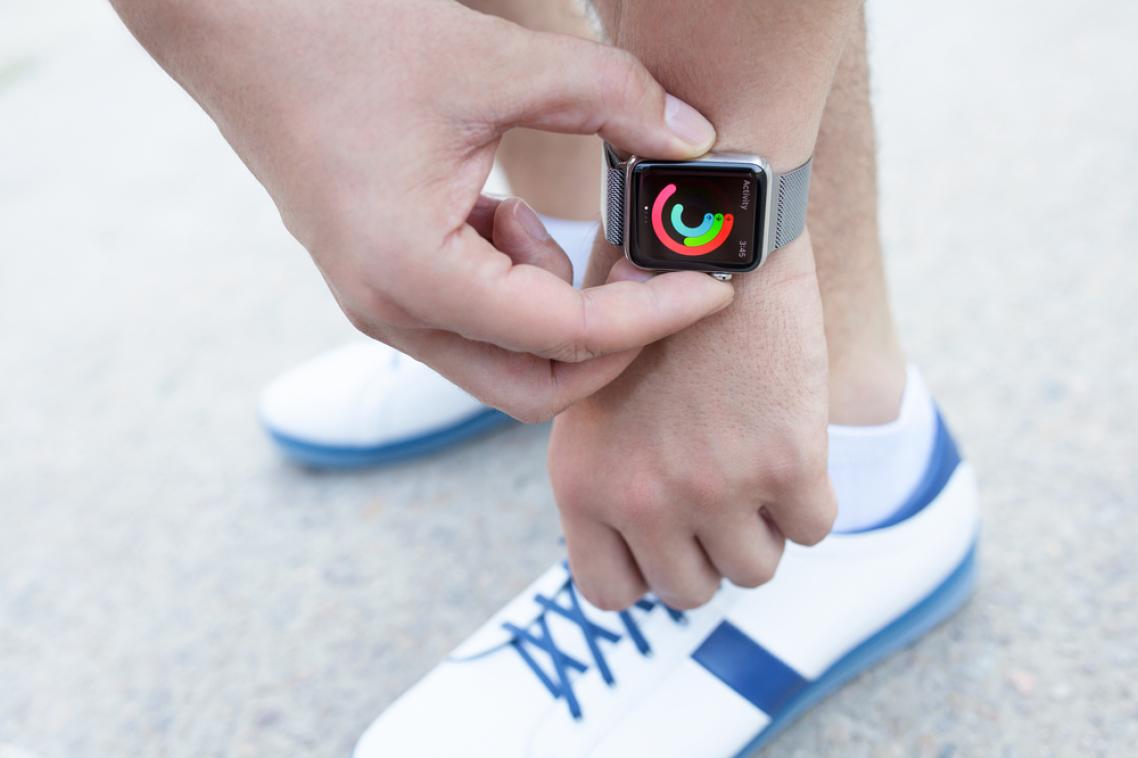
Popular wrist-worn fitness monitors underestimate energy expenditure with variances of more than 40 per cent, University of Queensland researchers have found.
Supervised by Professor Jeff Coombes of UQ’s School of Human Movement and Nutrition Sciences, PhD student Matthew Wallen and collaborators tested four common devices.
“We determined the accuracy of the Apple Watch, Fitbit Charge HR, Samsung Gear S and Mio Alpha,” Mr Wallen said.
“None of the devices proved to be consistently more accurate overall and the percentage error for energy expenditure was between nine and 43 per cent.
“Measurement of heart rate was more accurate, with only minor variances.
“Combining these two factors, it shows there are limits to how much trust we can place in such devices to monitor energy balance and, therefore, to serve as weight loss aids.”
Testing involved 22 healthy volunteers (even split of males and females) completing a variety of activities — ranging from running, cycling and walking, to seated and laying rest — for a period of approximately one hour.
The measurements of the wrist-worn devices were compared to electrocardiography readings every 15 seconds and against a portable gas analysis system which measured the number of calories burnt.
As per manufacturer instructions, each of the wrist-worn devices was individualised to reflect the user’s age, gender, height and weight.
“We did seek technical assistance from each company to learn information regarding the algorithms used by each device to determine energy expenditure,” Mr Wallen said.
“However, this information was not disclosed.”
The research team noted that movement and folding of skin could possibly cause reduced accuracy of wrist-worn fitness devices during high-intensity or resistance-based exercise.
Other collaborators on the study were Dr Shelley Keating and Dr Sjaan Gomersall of UQ, and Professor Ulrik Wisloff of the Norwegian University of Science and Technology.
Findings of the research have been published in the journal PLOS One.
Media: Matthew Wallen, m.wallen@uq.edu.au , +61 0419 183 401; Robert Burgin, UQ Communications, r.burgin@uq.edu.au, +61 7 3346 3035, +61 448 410 364.
Topics
Related articles

Sick of being told to ‘just lose weight’? Health promotion shouldn’t come with weight stigma
