
Media neglect puts native insects at risk
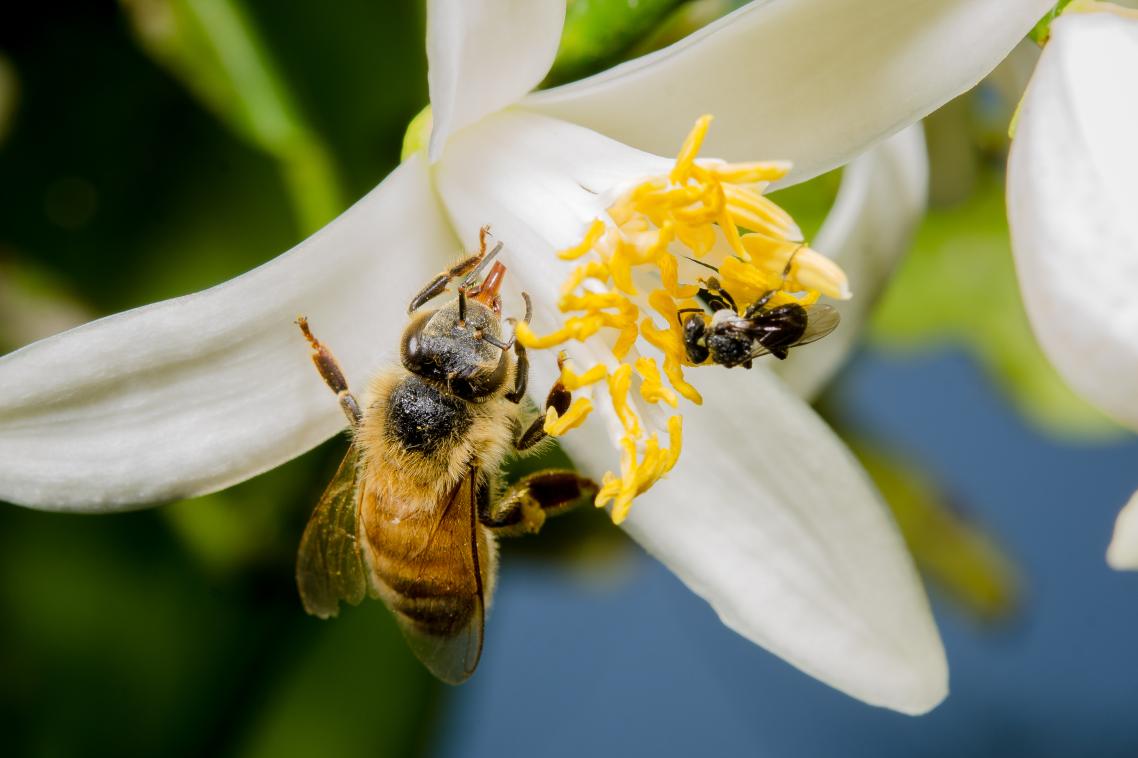
Native bees are falling victim to bad press, with the media glorifying European honey bees at the expense of hard-working Australian pollinators.
The bias toward European honey bees is so great that researchers from the University of Queensland and Charles Sturt University fear it could undermine support for native bee conservation efforts.
UQ School of Biological Sciences researcher Dr Tobias Smith said native insects played important pollination roles in natural ecosystems and agricultural crops, but a study of Australian media stories found that their importance was overshadowed by a focus on European honey bees.
Dr Smith and Charles Sturt University’s Dr Manu Saunders looked at 151 media stories and found a disproportionate focus on the European honey bee as the most important or indeed the only pollinating insect relevant to Australia.
“This media focus has the potential to distort public support for conservation initiatives for native species,” Dr Smith said.
“Pollination is a critical ecosystem function, important both for the natural environment and for the productivity of agricultural crops, but the contribution of native insect species is being overlooked.
“European honey bees get a lot of attention but research globally shows they are not always the most efficient or most important pollinator for many crops and plants.”
He said Australia had about 2000 native bee species that were important pollinators, and thousands of other insects such as flies, wasps, butterflies, moths and beetles played important roles as pollinators.
“Only 15 per cent of stories we examined mentioned native bees as pollinators and only 17 per cent mentioned non-bee insect pollinators.
“This doesn’t reflect what we know from scientific studies about pollination and could potentially misrepresent the issue of pollinator conservation to readers.
“It’s important to have diverse pollinator communities, but implementing conservation initiatives often depends on public support, which can be shaped by the media.”
Honey bees are an introduced species to Australia. They are an important component of the crop pollinator mix, but are also under increasing pressure from factors increase their susceptibility to disease and parasites.
"We need to focus more attention on native insects and aim to conserve diverse pollinator communities, rather than rely on a single insect species," Dr Smith said.
The research, Honey bees: The Queens of mass media, despite minority rule among insect pollinators, is published in the journal Insect Conservation and Diversity
Media: Dr Tobias Smith, tobias.smith@uqconnect.edu.au, 0428 363 512.
Related articles

White wine drinkers help pinpoint what’s missing in no and low alcohol drinks
