
Budgies provide crash course in flight safety
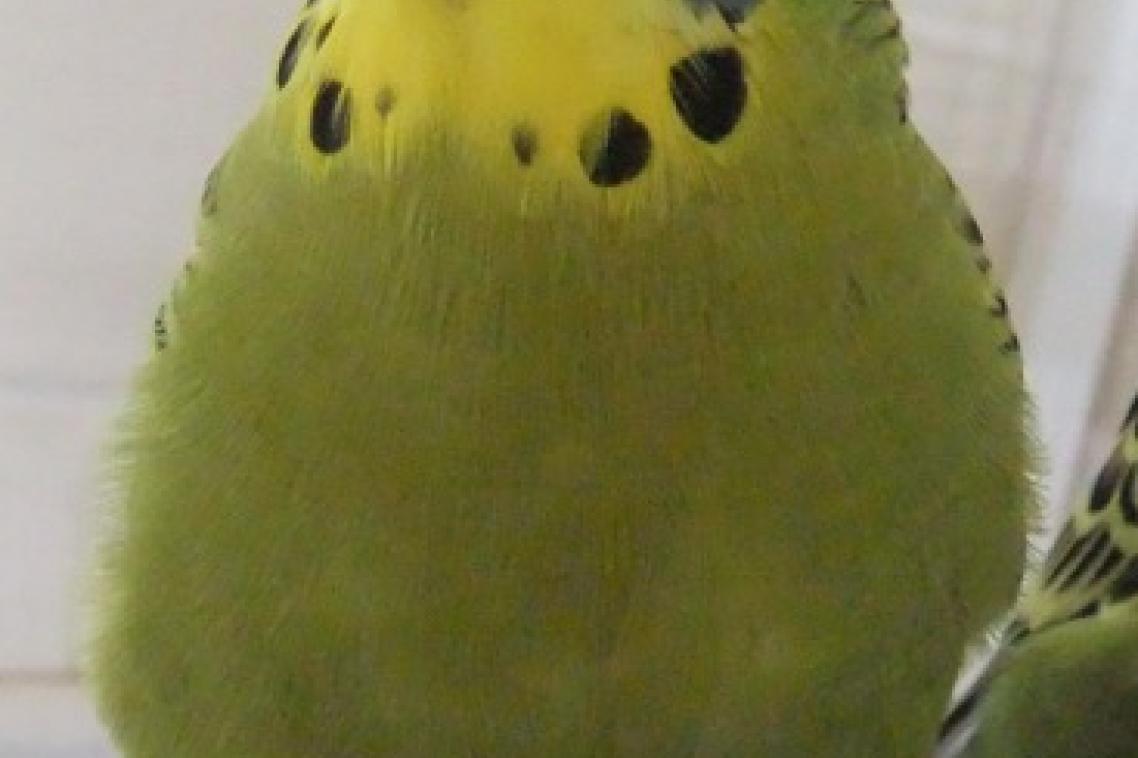
Research at The University of Queensland has revealed the stunningly simple reason why birds never crash mid-flight: they always veer right.
The findings from Professor Mandyam Srinivasan’s laboratory at the Queensland Brain Institute have enormous potential for automated anti-crash systems on aircraft.
Professor Srinivasan said there was much for humans to learn from how bird flight had evolved over 150 million years.
“Birds must have been under strong evolutionary pressure to establish basic rules and strategies to minimise the risk of collision in advance,” Professor Srinivasan said.
“But no previous studies have ever examined what happens when two birds fly towards each other.
“Our modelling has shown that birds always veer right - and sometimes they change their altitude as well, according to some pre-set preference.
“As air traffic becomes increasing busy, there is a pressing need for robust automatic systems for manned and unmanned aircraft, so there are real lessons to be learned from nature.”
In a series of experiments Professor Srinivasan’s team released pairs of budgerigars from the opposite ends of a tunnel, and filmed them with high-speed video cameras to observe their strategies.
The team recorded 10 birds on 102 flights - and not a single collision was observed.
“Another finding was that birds would rarely fly at the same height, and this raises the question of whether individual birds have a specific preference for flying higher or lower,” Professor Srinivasan said.
“It might be that their position in the group hierarchy determines their flight height. This is a question for further research.
“While we can’t say how birds solve the problem of switching to different altitudes, we can propose some simple strategies for autopilot systems and unmanned aerials vehicles to prevent head-on collisions,” he said.
This research is being conducted in collaboration with Boeing Defence Australia and The Queensland University of Technology.
It is published in PLOS One and funded by the ARC and Boeing Defence Australia.
Media: Professor Mandyam (Srini) Srinivasan, srinivasan@uq.edu.au; Donna Lu, QBI Communications, communication@qbi.uq.edu.au, +61 405 661 856.
Related articles

UQ hosts national sport conferences
