
When cabbages get stressed they adopt human solutions
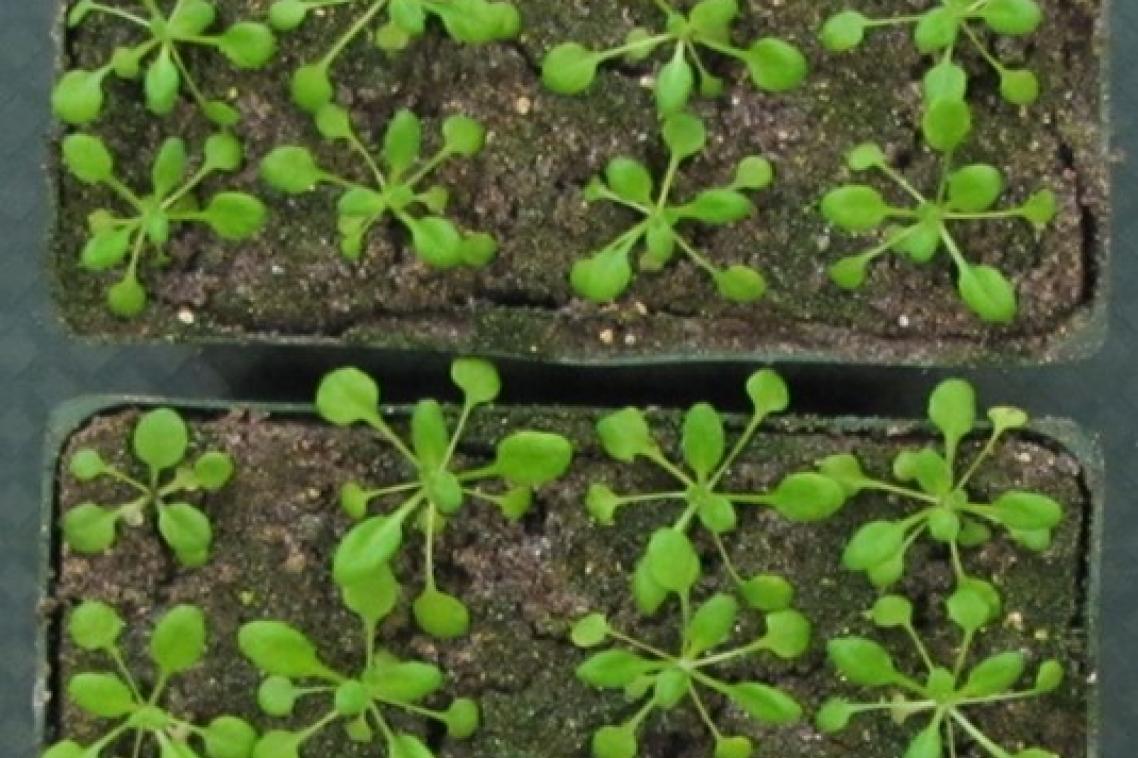
Plants get stressed and send defensive signals in the same way humans do, researchers from The University of Queensland have found.
The international study, featured in Science Signaling and Science, found that plants have adapted the genetic machinery that humans use to see and smell the environment, and to ward off threats.
Plant Biotechnology Professor Jimmy Botella of UQ’s Plant Genetic Engineering Laboratory in the School of Agriculture and Food Sciences said the University of North Carolina-led research studied a family of proteins called G-proteins in thale cress from the Brassica family, which includes cabbages.
“Plants have adapted the machinery that humans use to see in order to defend themselves against pathogens and water stress,” Professor Botella said.
“In humans, G-proteins help people to sense light, flavour, odour, and are involved in behaviour and mood regulation via things such as adrenalin, histamine, dopamine and serotonin.
“G-proteins are present in almost all living organisms and about half of all human medications achieve their effect through G-protein–coupled receptors,” he said.
Professor Botella’s laboratory has previously explored the important role that G-proteins play in enhancing yield in crops such as rice and is looking at other grain crops to help tackle world food security.
“Our laboratory has also previously discovered that plants contain a larger variety of these G-proteins than humans,” he said.
“In this new paper we provide the ‘history’ part; how they evolved and what we think is the main cause for that evolution. We show that plant G-proteins have overtaken humans in evolutionary terms.”
He said “classic” members of the G-protein machinery in plants retained their role in development (like humans) while newer members of the G-protein family had specialised in environmental stress responses.
“This reflects the main difference between most animals and plants - that while animals can avoid stress situations by moving, most plants are stuck in one place and need to come up with ingenious solutions to survive,” he said.
The research led by Dr Alan Jones and Dr Daisuke Urano and involved researchers from the National University of Singapore and Cold Spring Harbor Laboratory, New York.
“This family of proteins is vital and extensively studied in animal systems but their role in plant systems is still largely unknown,” he said.
Professor Botella’s team has previously explored the important role that G-proteins play in enhancing yield in crops such as rice and is looking at other grain crops to help tackle challenges to world food security.
Media: Professor Jimmy Botella; j.botella@uq.edu.au, +61 7 3365 1128
Topics
Related articles

Fishmeal alternative aims to protect marine wildlife from overfishing
