
Diversity key to better lymphoma immune response
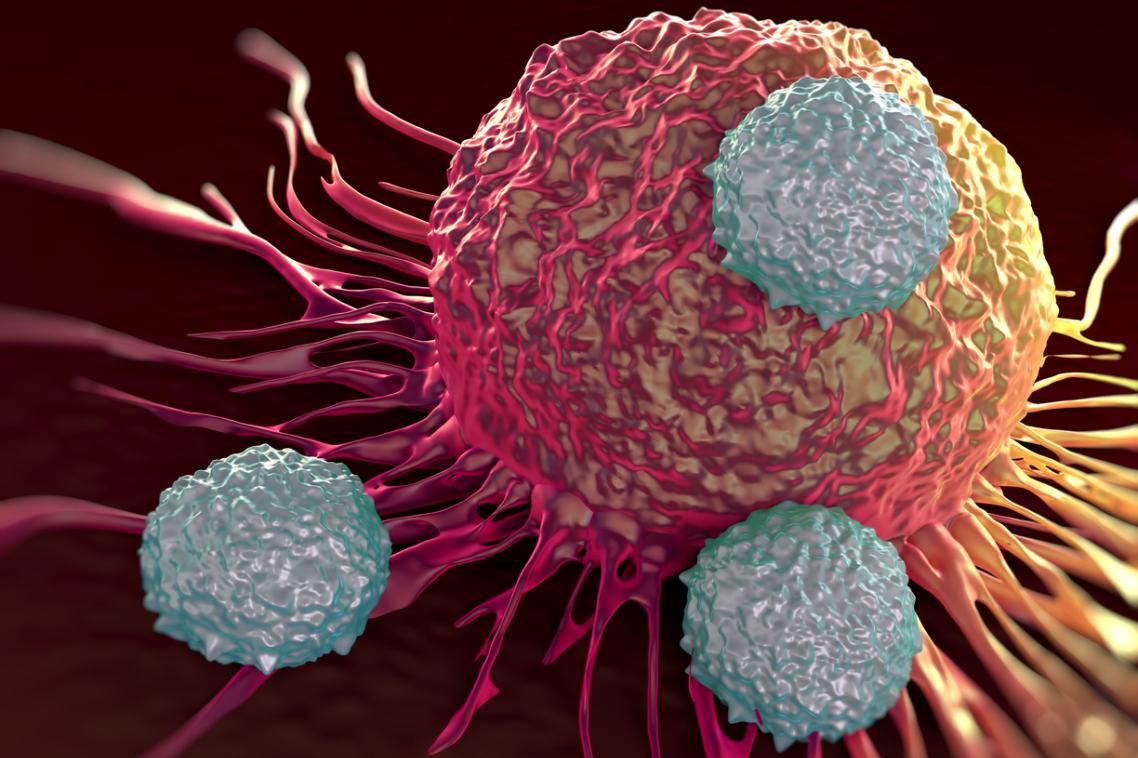
A University of Queensland researcher has found patients with non-hodgkins lymphoma are most likely to survive if they have a rich variety of T-cells.
UQ Diamantina Institute researcher Dr Colm Keane said the findings could pave the way for personalised immunotherapies for those who did not respond to existing treatments.
“The study was unique in that we were able to get the code for every one of the 2500 or so T-cells from biopsies from a large group of patients with diffuse large B-cell lymphoma (DLBCL),” Dr Keane said.
T-cells are known to fight off infections such as influenza, but recent findings indicate they are also capable of killing cancer cells.
“Our research showed those with a highly dominant T-cell type had a lower survival rate than those with greater diversity,” Dr Keane said.
“If the tumour mutated to avoid a dominant T-cell, the immune system was left with fewer and weaker options to mount an effective response.
“You could compare it to a sports team who lose their only star player.”
More than 4000 Australians are diagnosed with non-hodgkins lymphoma each year, and about 30 per cent of those with the aggressive DLBCL die from the disease.
Dr Keane said the results were surprising because melanoma patients typically respond well to therapies when they have groups of dominant T-cells.
“We now know that T-cell composition for specific tumour types should be factored into the design of future immune-based therapies,” he said.
“We are working to find which types of T-cells are associated with the best outcomes for lymphoma patients.
“We hope then to be able to produce those in the laboratory and give them back to the patient to improve their response and chances of survival.”
The study involved 92 patients at the Princess Alexandra Hospital in Brisbane and Canberra Hospital.
Dr Keane holds a dual appointment at Queensland Health, and his research was funded by The Leukaemia Foundation’s Bridgestone Award and the Metro South Health's Study, Education and Research Trust.
This research is published in Clinical Cancer Research.
Media: Dr Colm Keane, c.keane@uq.edu.au or 0414 092 920. UQ Media, Bernadette O’Connor, bernadette.oconnor@uq.edu.au, +61 7 3365 5118 or +61 431 533 209.
Related articles

UQ hosts national sport conferences
