
Left or right? Like humans, bees have a preference
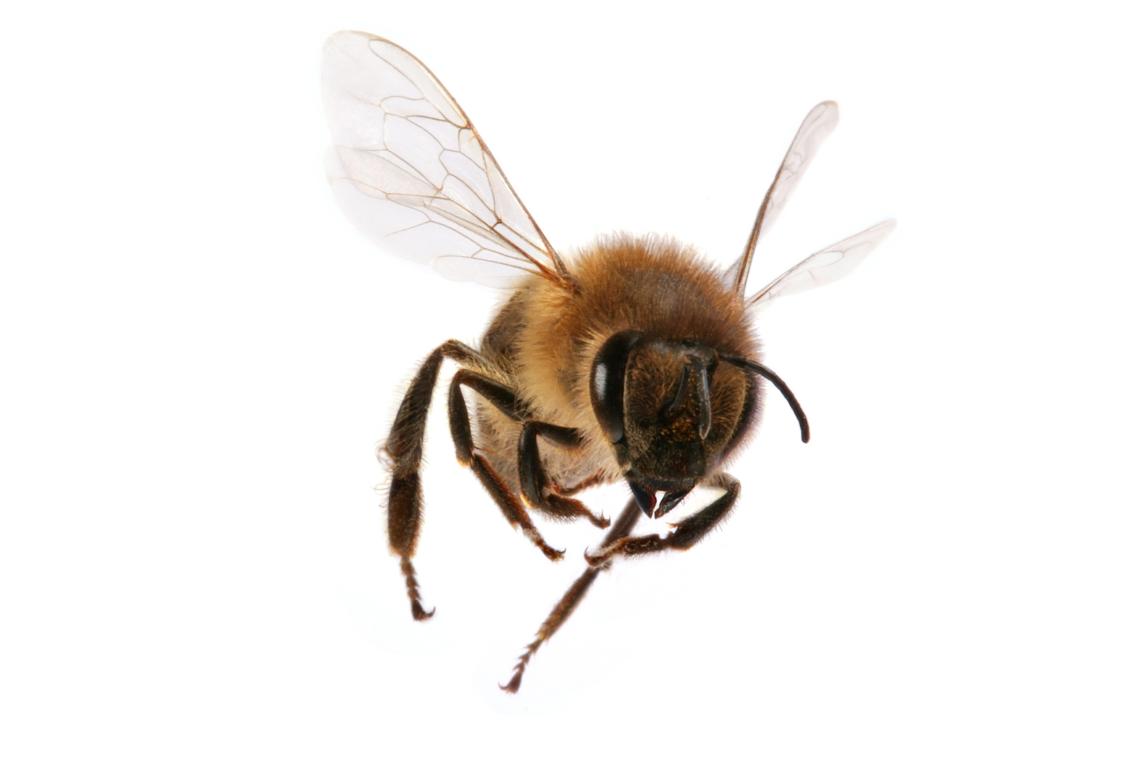
A discovery that bees have individual flying direction preferences could lead to strategies for steering drone aircraft fleets.
Researchers at The University of Queensland’s Queensland Brain Institute have found that honeybees have individually distinct biases in “left and right-handedness” when flying through obstacles.
Professor Mandyam (Srini) Srinivasan said the study showed that honeybees displayed handedness that varied from individual to individual.
“Unlike humans, who are mostly right-handed, some bees display a strong left bias, others a strong right bias, and yet others a weak or zero bias,” Professor Srinivasan said.
The researchers studied the flying decisions made by foraging honeybees when they encountered a barrier that could be traversed by flying through one of two apertures.
Bees were able to discriminate the widths of oncoming gaps and choose the passage that was presumably safer and quicker to fly through.
“When the apertures were equally wide, both apertures were chosen with equal frequency and about 55 per cent of the bees displayed no side bias in their choices,” Professor Srinivasan said.
Half the remaining 45 per cent preferred the left gap and half preferred the right gap.
When the gaps were of different width, the bees preferred the wider opening, and that preference increased sharply in line with the difference in aperture width.
The researchers confirmed the existence of individual biases by measuring the flight times of biased bees, noting a bee took longer to make a decision if its intrinsic bias was toward the side with the narrower opening.
“We believe these individual biases help to improve the flight efficiency of a swarm of bees through densely cluttered environments,” Professor Srinivasan said.
“Flying insects constantly face the challenge of choosing efficient, safe and collision-free routes while navigating through dense foliage.
“This finding could potentially be used as strategy for steering a fleet of drone aircraft,” he said.
The research is published in PLOS One.
Professor Srinivasan’s laboratory has previously discovered that birds don’t crash in flight because they always veer right, in research that has potential implications for aircraft automated anti-crash systems. That research is also published in PLOS One.

Media: Professor Mandyam (Srini) Srinivasan, srinivasan@uq.edu.au; Donna Lu, QBI Communications, communication@qbi.uq.edu.au, +61 405 661 856.
Topics
Related articles

UQ to support development of mobile launcher for high-speed flight R&D
