
New maps show shrinking wilderness being ignored at our peril
Maps of the world’s most important wilderness areas are now freely available online following a University of Queensland-led study published today.
The authors have made the maps available to assist researchers, conservationists and policy makers to improve wilderness conservation.
UQ School of Earth and Environmental Sciences PhD student James Allan said these wilderness areas were strongholds for endangered biodiversity and critical in the fight to mitigate climate change.
“These ecosystems play a key role in regulating local climates, sequestering and storing large amounts of carbon and supporting many of the world’s most culturally diverse – but politically and economically marginalised communities,” Mr Allan said.
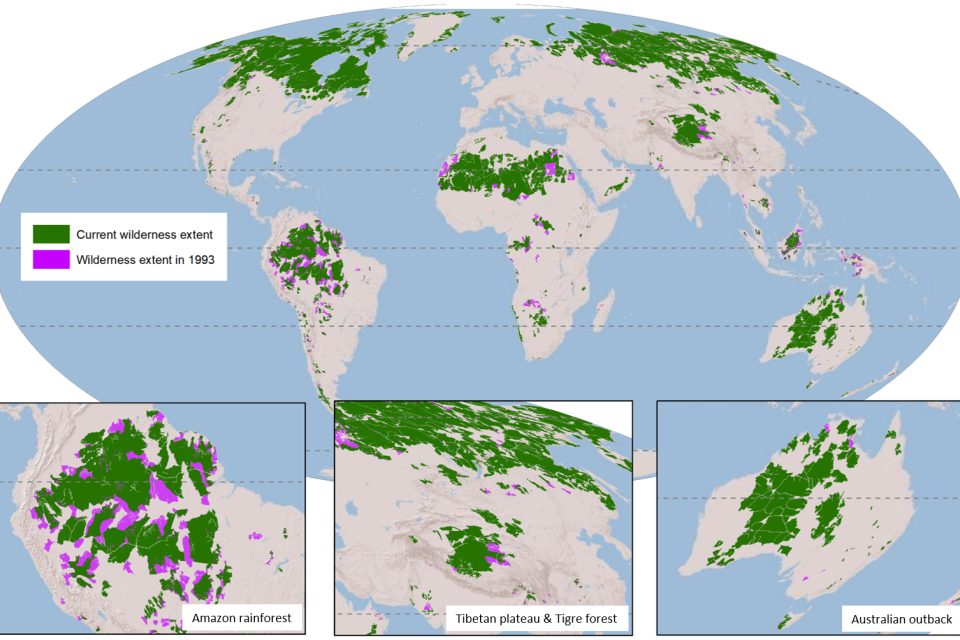
“Despite their importance, wilderness areas are being destroyed at an alarming rate and need urgent protection with almost 10 per cent being lost since the early 1990s.
“Their conservation is a global priority.”
Wildlife Conservation Society and UQ Associate Professor James Watson said he anticipated the maps would be important for identifying places where conservation actions must occur, and as indicators of progress towards United Nations commitments such as Sustainable Development Goals.
“Environmental policy almost completely ignored wilderness conservation but this has to change,” Associate Professor Watson said.
“National governments and multilateral environmental agreements such as the World Heritage convention need to step up and protect wilderness before it is too late.”
Scientific Data article (DOI: 10.1038/sdata.2017.187).
Dryad Digital Repository maps are available here (https://doi.org/10.5061/dryad.124fp).
Media: James Allan, j.allan2@uq.edu.au, +61 424 982 651, @jamesecology: Dr James Watson, jwatson@wcs.org, +61 409 185 592, @cyclonewatson.
Related articles

Fishmeal alternative aims to protect marine wildlife from overfishing
