
Saving horses from scary hairy caterpillars
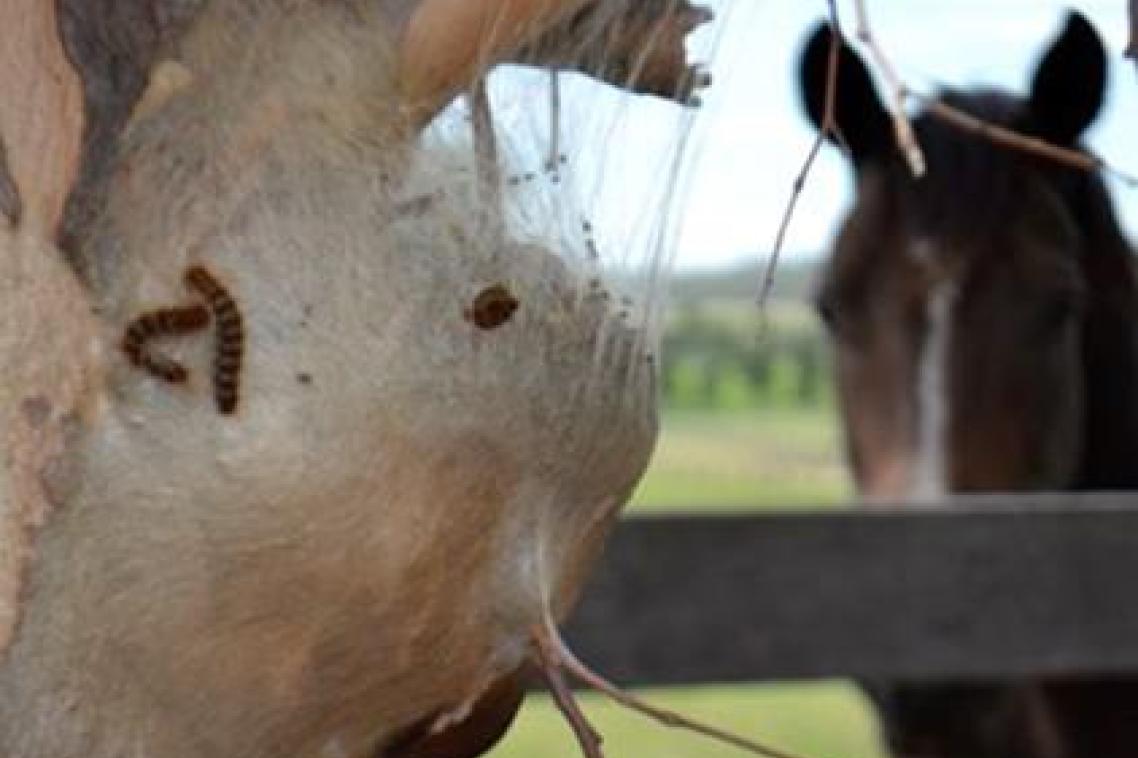
University of Queensland experts are set to help thoroughbred horse breeders combat a hairy caterpillar threat that causes abortion in mares and costs the Australian racing industry millions of dollars every year.
UQ School of Biological Sciences researcher Professor Meron Zalucki said bag-shelter moth caterpillars were believed to be responsible for up to one-third of abortions in thoroughbreds, causing equine amnionitis and fetal loss (EAFL) by inflaming the placental membrane
“The caterpillars are covered with up to 2.5 million dangerous tiny hairs, and horses inadvertently ingest them or their nest remains,” he said.
Professor Zalucki is part of a team behind an insect management strategy to reduce the issue in the thoroughbred industry.
The researchers have developed guidelines for studs and farmers to deal with the threat and are completing a risk assessment of horses’ exposure to the caterpillars.
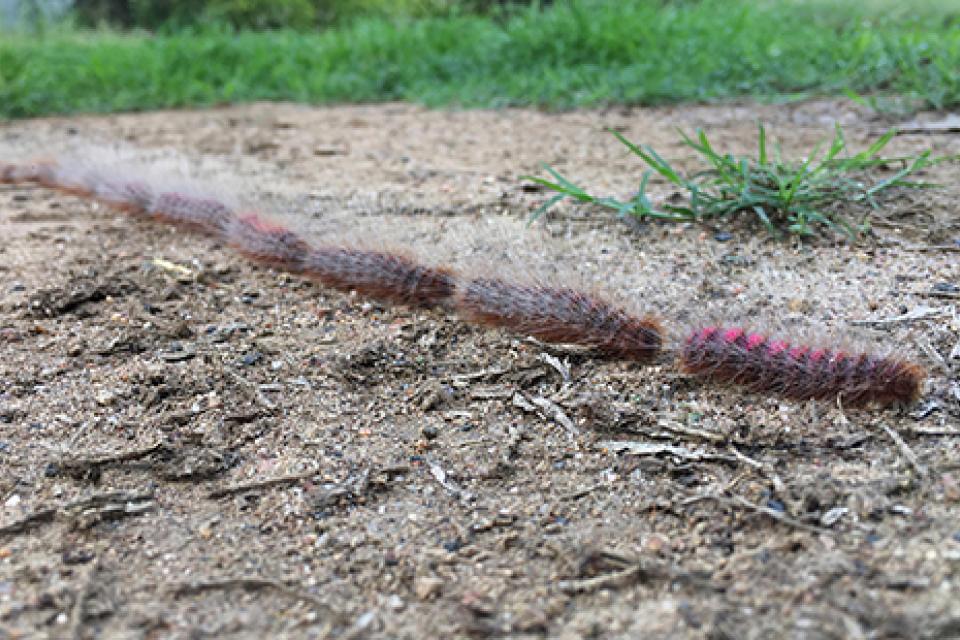
Professor Zalucki said bag-shelter moth (Ochrogaster lunifer) caterpillars were commonly known as processionary caterpillars because they walk nose-to-tail in lines when they leave their nests on gum or wattle trees.
Professor Zalucki said stud owners should remove moth egg masses and caterpillar nests from tree trunks and branches and dispose of them safely.
“It’s important to be careful and to wear protective equipment when handling caterpillar material as the hairs can cause skin irritation and potentially get into eyes,” he said.
Continuing research would investigate the potential of biological controls using wasps that attack caterpillar eggs, methods of caterpillar hair dispersal, the possible involvement of other insects in equine amnionitis, and effects on other types of animals.
The research is supported with funding from the Australian Research Council and the thoroughbred breeding industry, through the Hunter Valley Equine Research Foundation.
It involves researchers from the UQ schools of Biological Sciences, Agriculture and Food Sciences, and Veterinary Science.
Image above: Caterpillar procession at Gatton. Photo credit: Mizuki Uemura.
Media: Professor Meron Zalucki, m.zalucki@uq.edu.au, +61 7 3365 1747.
Related articles

Australian classrooms are getting a ‘digital detox’ – what does this mean for schools and students?
