
Citizen scientists awarded for mapping local reef
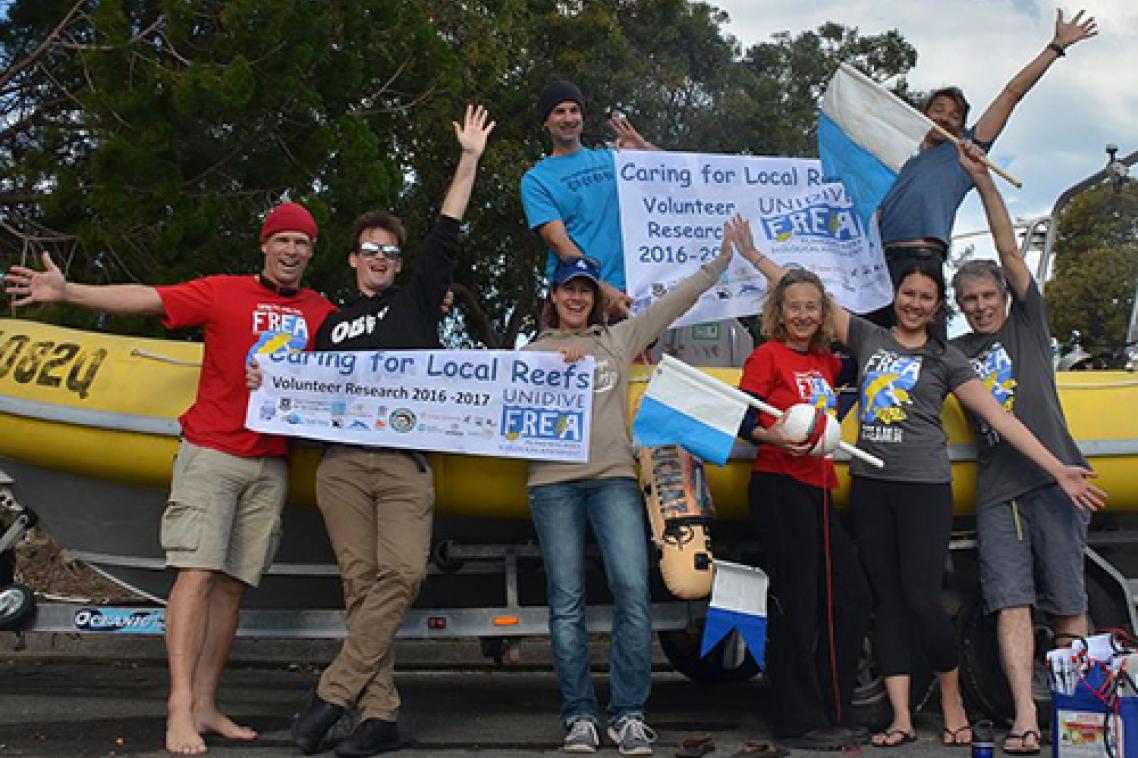
An army of volunteer divers and researchers have won an environmental award for a project mapping the health of a reef off the South-East Queensland coast.
The University of Queensland Underwater Club, UniDive, was awarded the 2018 Healthy Land and Water’s Environmental Guardians Award.
The project involved more than 560 dives to train citizen scientists and collect, map and publish information on Flinders Reef, north of Moreton Island.
Volunteer project organiser, Dr Chris Roelfsema from UQ’s School of Environmental and Earth Sciences, was delighted with the award, a result of more than 10,000 volunteer hours.
“I’m incredibly proud of all of the UniDive volunteers, as well as the high-quality data we’ve collected,” he said.
Citizen science brings hope to Flinders Reef from The University of Queensland on Vimeo.
“We found that the reef has astonishing coral cover, with a variety of fish and invertebrates, and low impacts compared to other reefs in South-East Queensland.
“It was no mean feat, but 50 UniDive volunteers conquered sea and weather, and used their own time, boats, equipment and expertise to conduct 400 dives to assess the reef’s condition and create its first detailed map.”
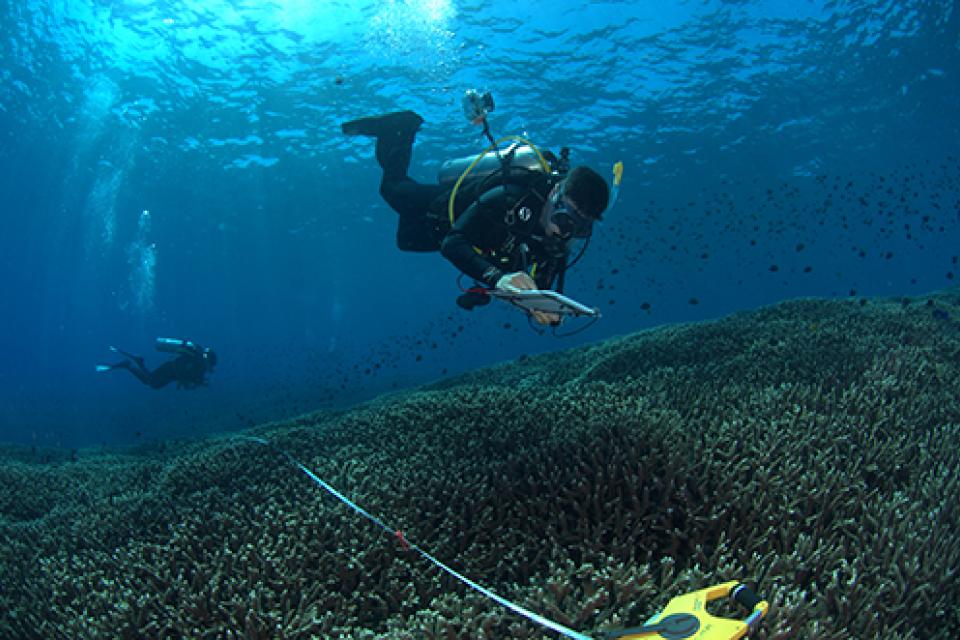
All survey divers were trained to be internationally-recognised Reef Check and CoralWatch divers and mapping methods were developed with UQ’s Remote Sensing Research Centre.
Their findings are documented in a publicly accessible map, data, technical report, book, video and peer-reviewed journal.
“This information will provide a wealth of knowledge and insight for researchers, marine managers and the community,” Dr Roelfsema said.
"It has also offered invaluable experience to the dozens of volunteers, instructors and experts involved, and helped showcase Flinders Reef as a slice of the Great Barrier Reef on Brisbane’s doorstep.
“It’s really incredible to see such strong community involvement, and I think this is a perfect example of how concerned citizens – given the right direction and the right tools - can help create change.”
The photo book accompanying the project, comprising of 300 images of Flinders Reef, is titled Finders: Flora and Fauna of Flinders Reef Dive Sites, and is available for purchase online.
The Flinders Reef Project was supported by a $5000 grant from Queensland Parks and Wildlife Services and $8000 through crowdsourcing and support from local industry.
Media: Dr Chris Roelfsema, c.roelfsema@uq.edu.au, +61 400 207 401; Dominic Jarvis, dominic.jarvis@uq.edu.au, +61 413 334 924.
Maps- https://doi.pangaea.de/10.1594/PANGAEA.890756
Data – www.reefcheckaustralia.org, www.coralwatch.org
Methods – http://epic.awi.de/37407/1/Unidive_PLEA_methods_manual.pdf
Final report – http://epic.awi.de/47362/1/FREA_report.pdf
Related articles

Turning up the heat on chickpea yield
