
Bush tucker 'Masterchef' reinventing Aussie cuisine
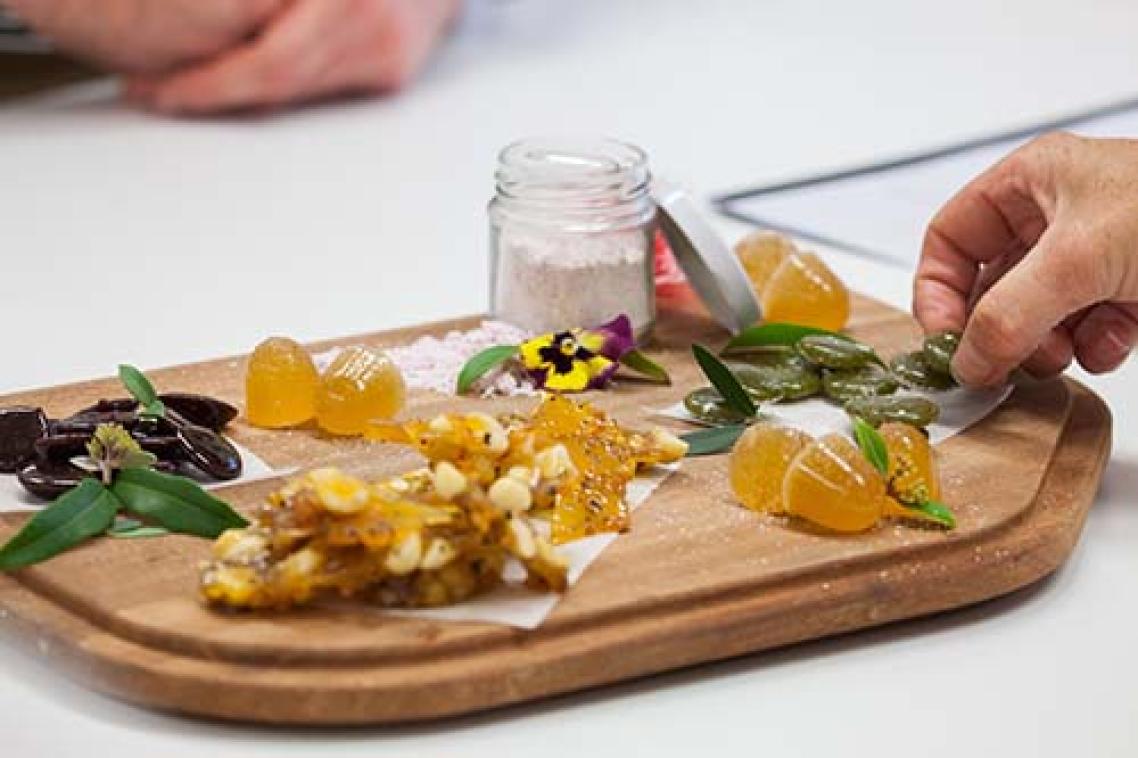
Native Australian ‘bush tucker’ was the feature of a Masterchef-style showdown that pitted six groups of university students against each other.
Bunya flour dumplings, lemon myrtle mousse and quandong sherbet lollies were some of the culinary highlights at The University of Queensland’s Australian Bush Food ‘Masterchef’ event, part of UQ’s Bush Foods of Australia course.
Program Coordinator Professor Melissa Fitzgerald, from UQ’s School of Agriculture and Food Sciences, said she was extremely impressed with the students’ creations.
“We had dumplings made from Davidson plum powder and bunya flour and filled with macadamias, rice paper rolls with marinated kangaroo, crispy-skinned fish with a bunya and wattleseed crust – there were some delicious inventions,” she said.
“For dessert we were treated to lemon myrtle mousse cake, lemon myrtle trifle with bunya sponge and some Aussie-themed confectionery.
“The confectionery was the most creative use of native ingredients, including medicinal lozenges flavoured with lemon myrtle, a bunye (bunya nut) and boppal (macadamia nut) brittle, a quandong and burdekin plum sherbet, desert lime jubes and sour lollies from Davidson plums.
“We found that bush foods are incredibly versatile; for example, lemon myrtle and bunya flour were used in both savoury and sweet applications.”
Competing students were asked to describe how they made their creations before the results of their labours were judged by a panel mostly made-up of Indigenous women.
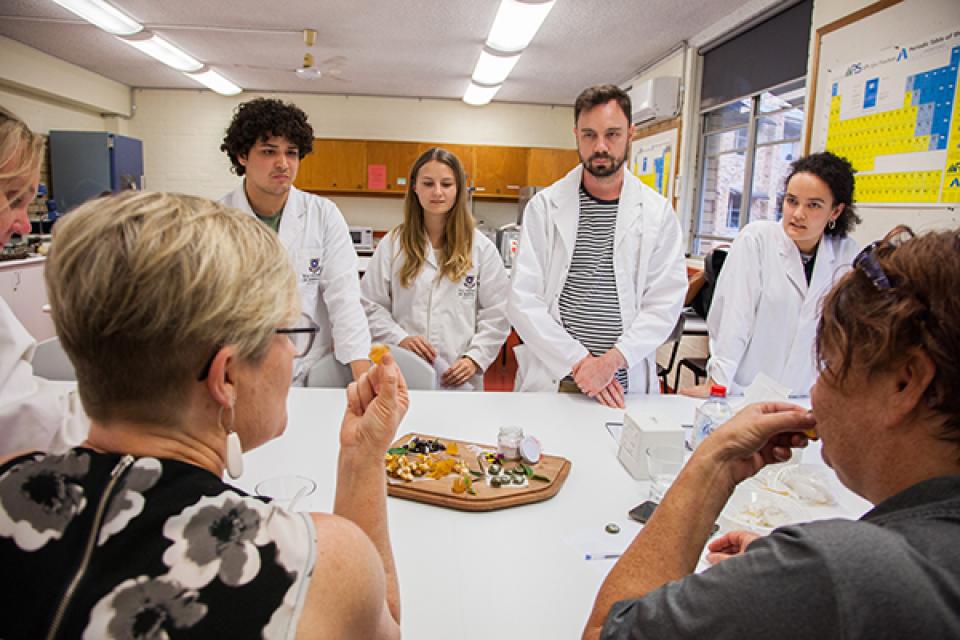
Professor Fitzgerald said the native inventions would tantalise all taste buds and she hoped to see the recipes commercialised.
“It would be great to see a company commercialise these foods, especially if an Indigenous company got involved and helped take them to the world,” she said.
“Many of the ingredients have relatively good supply chains now, so this is definitely a possibility – it’s just a matter of public education and reaching the right market.
“I can imagine seeing these products sold to Qantas or another Australian airline, showcasing some of Australia’s unique flavours.
“Events like this shine a light on how unique our Indigenous foods are, and make us think about how we can make the most out of native ingredients and traditional knowledge.”
Image above left: Judges tasting the food created by students (L-R) Joe Nastasi, Maddy Wallace, Tom Hay and Anthea Harrison.
Media: Professor Melissa Fitzgerald, m.fitzgerald2@uq.edu.au, +61 417 279 760; Dominic Jarvis, dominic.jarvis@uq.edu.au, +61 413 334 924.
Topics
Related articles

UQ to support development of mobile launcher for high-speed flight R&D
