
Molecule predicts patient’s ability to survive melanoma
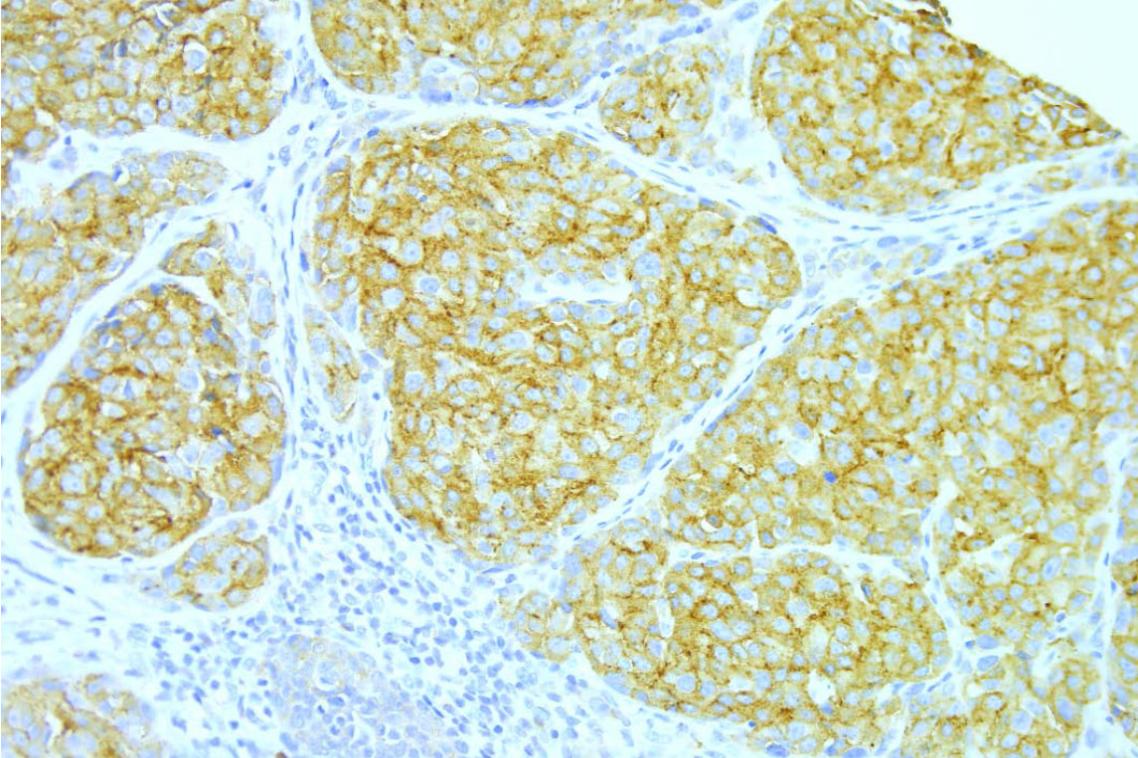
Doctors may be able to assess the survival rates of melanoma patients following the discovery of a molecule that allows the cancer to spread from the skin to other parts of the body.
University of Queensland researchers hope that targeting this molecule may offer a way to stop the cancer from spreading.
UQ Diamantina Institute’s Professor Nikolas Haass said levels of the molecule, RAB27A, correlated to patient survival rates.
“Patients with high levels of RAB27A in their melanoma cells have a lower survival rate,” Professor Haass said.
“So measuring RAB27A levels could become a new prognostic tool when assessing patients.
“This would enable patients with a poorer prognosis to be treated more aggressively, sooner.”
Professor Haass said metastasis, the ability of melanoma to spread within the body, was what made it so deadly.
“Melanoma cells with high RAB27A levels instruct other less aggressive cancer cells to spread to new areas of the body,” he said.
“It makes aggressive cancer cells produce exosomes, small vesicles that can carry material or information from one cell to another.
“Other, initially less aggressive, cancer cells that are contacted by these vesicles then become more aggressive and are able to spread to other parts of the body.”
Professor Haass noted that making RAB27A a target for new therapeutic treatments was not straightforward.
“It’s often difficult to target molecules like this directly,” he said.
“But we’ve identified two binding partners of RAB27A.
“By blocking these, the molecule would potentially be unable to produce the invasive exosomes and the ability of melanoma to spread could be inhibited.
The study involved researchers from the University of Sydney and is published in the International Journal of Cancer (DOI: 10.1002/ijc.32064).
Media: Professor Nikolas Haass, n.haass1@uq.edu.au, +61 7 3443 7087; Faculty of Medicine Communications, med.media@uq.edu.au, +61 7 3365 5118.
Topics
Related articles

Shaping the future of medicine: UQ Medical School turns 90
