
Researchers take a step forward in understanding human feet
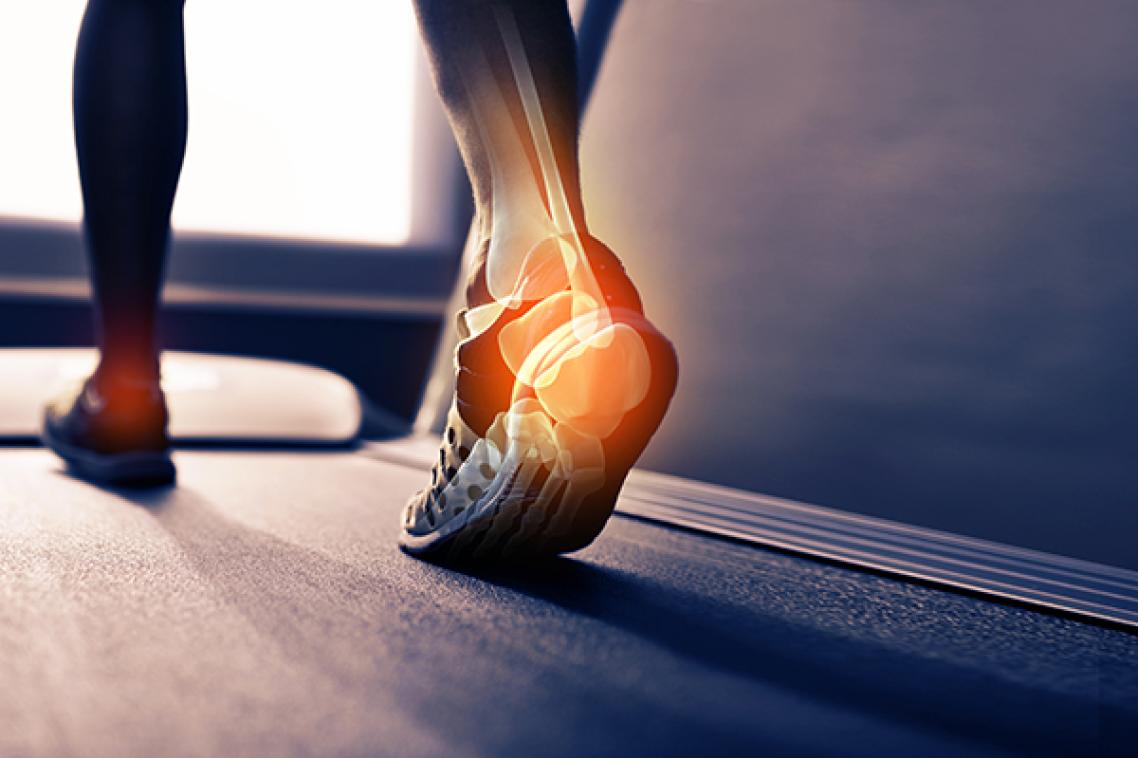
Researchers have taken strides in understanding how human feet evolved to enhance walking and running, setting us apart from species such as chimpanzees.
Findings from The University of Queensland and University of Exeter study could be used to improve exercises for foot-related injuries, understanding of conditions such as flat feet, and the design of footwear.
UQ School of Human Movement and Nutrition Sciences researcher Associate Professor Glen Lichtwark said the study examined whether the plantar intrinsic muscles helped support the arch of the foot, presumed to be a key to moving efficiently while upright.
“Instead, we found the muscles made minimal contribution to arch support, but were crucial for helping us push off the ground when walking or running,” he said.
The researchers took a unique approach, using an epidural-like nerve block to temporarily eliminate the influence of the muscles to ascertain that affected performance.
“Participants were attached to a harness above the treadmill at all times, as running with paralysed feet feels a little like running on stumps,” Dr Lichtwark said.
“By comparing foot and lower limb movement with and without the nerve block, we were able to show that foot muscles don’t really influence how the arch of the foot compresses to absorb shock during walking or running.
“They do play an important role in stiffening the forefoot and toes to enable us to produce greater propulsive forces to move our body forward.
“These results have provided an important insight into how these muscles adapted to allow humans to be economical runners.”
UQ researchers Dr Luke Kelly and Professor Andrew Cresswell and Exeter’s Dr Dominic Farris collaborated on the research as part of the QUEX Institute partnership.
The study, published in Proceedings of the National Academy of Sciences, was funded by the Australian Research Council.
Media: Dr Glen Lichtwark, g.lichtwark@uq.edu.au, +61 7 3365 3401; UQ Communications habs.media@uq.edu.au.
Topics
Related articles

Prolapse is common after pregnancy and later in life. Here’s what to look out for
