
Tangle of shorebird policy unpicked
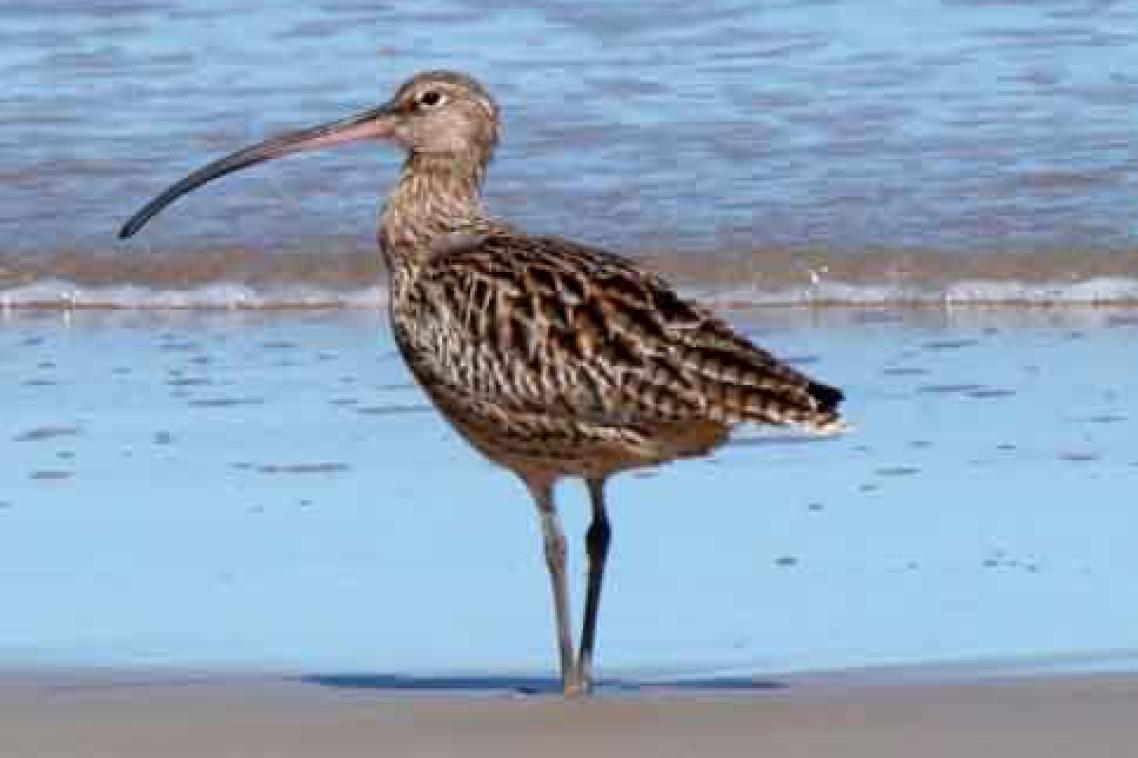
Research has shown that international cooperation has been critical in protecting migratory shorebirds in the Asia Pacific, but ongoing challenges exist.
The University of Queensland-led study surveyed and analysed the international policy framework for conserving shorebirds migrating within the East Asian-Australasian Flyway, one of four major global migratory waterbird flyways.
Eduardo Gallo-Cajiao, from UQ’s School of Biological Sciences and the School of Earth and Environmental Sciences, said conserving these birds was a huge challenge, but efforts were well under way.
“Every year, millions of shorebirds travel between their breeding grounds in the northern hemisphere, primarily in Russia and Alaska, and their wintering areas in the southern hemisphere, including Australia and New Zealand,” he said.
“This spectacle, however, is currently in peril due to multiple threats, such as coastal reclamation, hunting, pollution, and disturbance.”
“National governments and other key players have realised that protecting these birds requires international cooperation, so they’ve been collaborating across the region through agreements.”
The research revealed the number of active agreements, who participates in them, and the threats they address.
“A total of 28 agreements make up the international framework for conserving migratory shorebirds in the Flyway, with 57 government and non-government participants,” Mr Gallo-Cajiao said.
“These agreements have been emerging since the 1970s, with China, Russia, Japan, Australia, Republic of Korea, and the USA participating most.”
The team discovered that Flyway-relevant agreements are not exclusive to national governments, with NGOs and local governments becoming key players.
“NGOs have been emerging as signatories to some of these agreements since the mid-2000s, and local governments, such as Seocheon County in the Republic of Korea, have been entering into additional agreements,” Mr Gallo-Cajiao said.
“The rise in the number of agreements seems to be the result of governance demand in critical areas around the Yellow Sea, where conservation priorities are high.
“We have the agreements; the challenge now is to ensure actions are coordinated across them, helping to protect these beautiful, precious, and globally revered species.”
The research has been published in Regional Environmental Change (DOI: 10.1007/s10113-019-01461-3).
Media: Eduardo Gallo-Cajiao, e.gallocajiao@uq.edu.au, +1 425 393 7595, Skype: e.gallocajiao@gmail.com; Dominic Jarvis, dominic.jarvis@uq.edu.au, +61 413 334 924.
Topics
Related articles

UQ to support development of mobile launcher for high-speed flight R&D
