
Tree climbing big cats roar onto the small screen
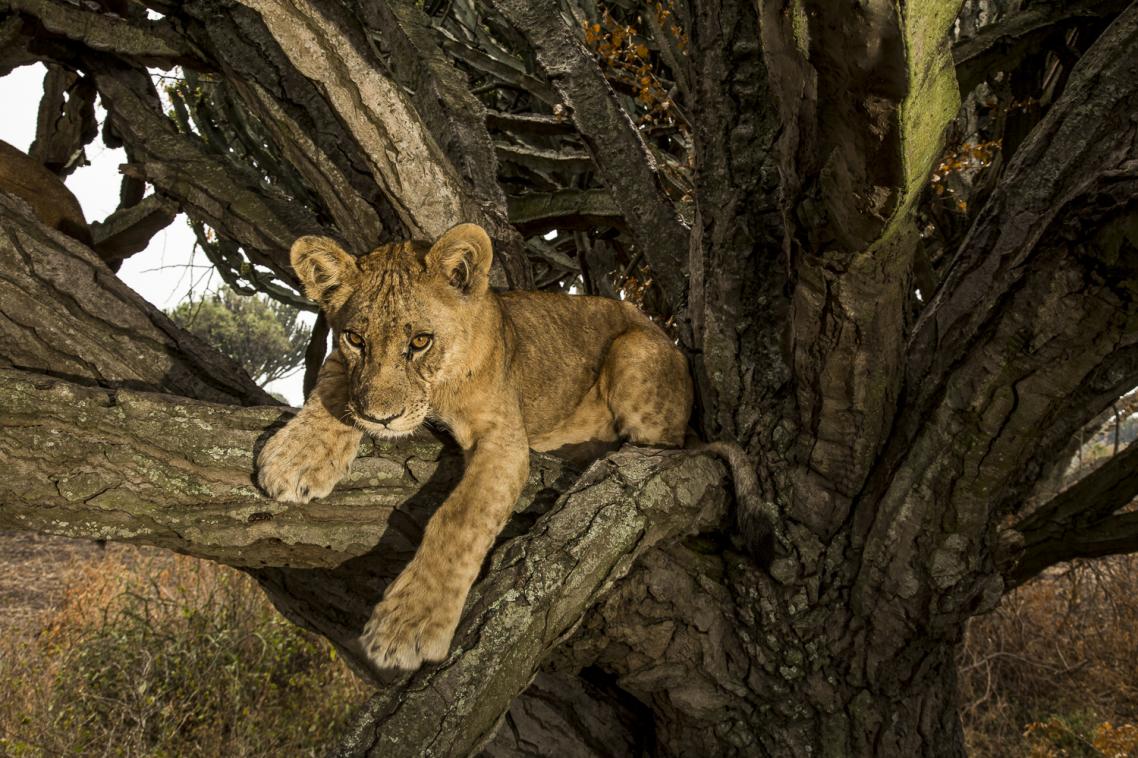
Tree climbing lions star in a new National Geographic documentary filmed by a University of Queensland PhD candidate.
Big cat expert and filmmaker Aleksander Braczkowski, from UQ’s School of Earth and Environmental Sciences, teamed up with National Geographic to intimately capture the lives of a peculiar population of tree-climbing lions in Uganda.
“These particular lion prides in Uganda are doing something bizarre – climbing trees,” he said.
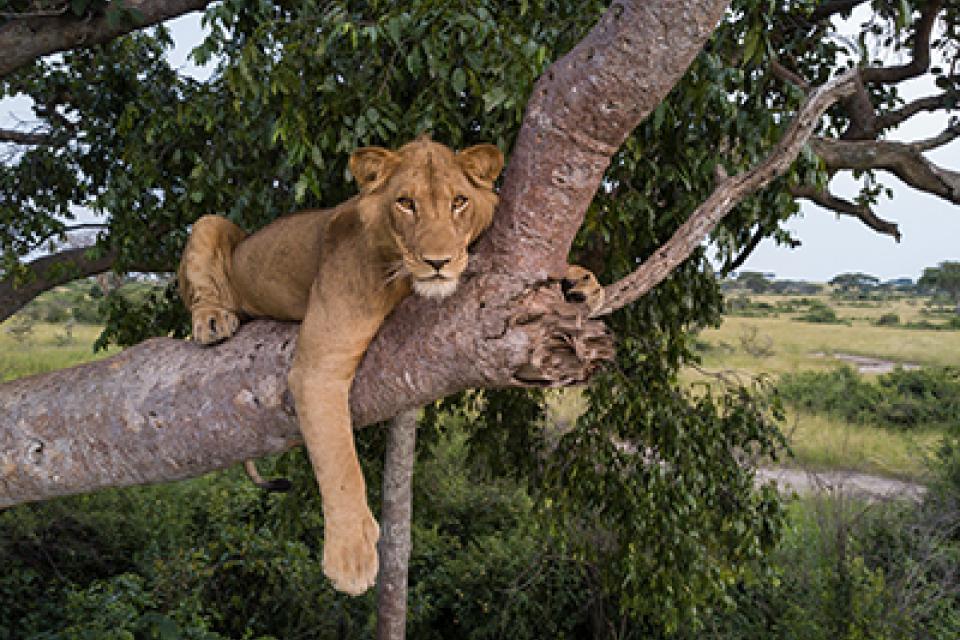
“Lions are known to occasionally climb trees all over Africa, but in Queen Elizabeth National Park they spend most of their lives in fig and candelabra trees.
“It’s possible they do this as a way of protecting themselves against the numerous biting tsetse flies on ground level.
“Other people think that they climb into branches to escape the heat on the ground and enjoy the cool breeze.
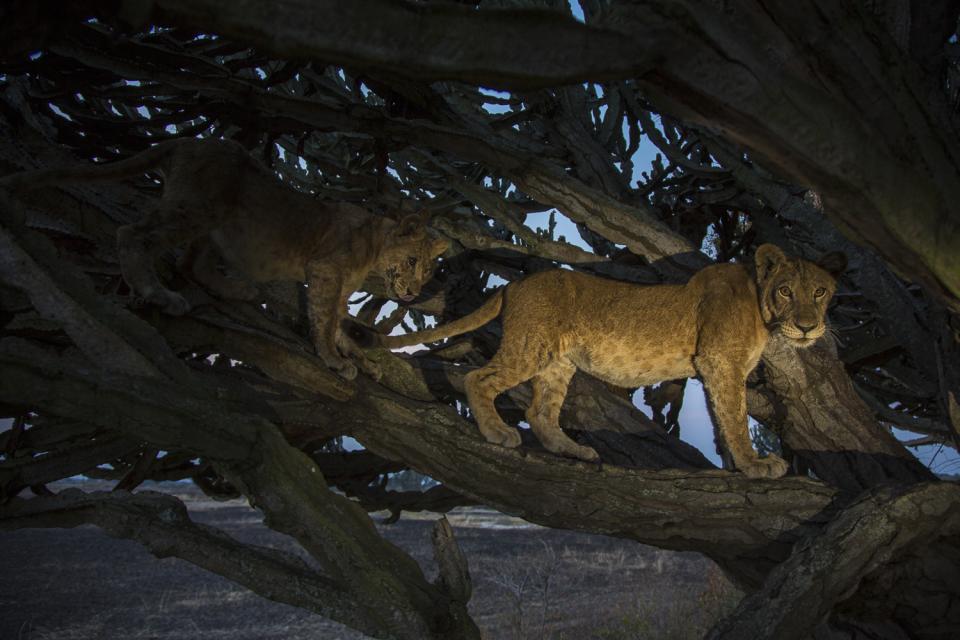
The lions have become an important boost for tourism in the area, attracting visitors from all over the world, but their future is in peril due to habitat loss and illegal trading.
“The two most damning threats to lions and big cats globally are from farmers killing big cats when they eat livestock, and from cheap, wire snare traps used by poachers,” Mr Brackowski said.
“And these threats are being amplified with the growth in the local human population.”
The biology researcher experienced this firsthand in April 2018, when eight tree-climbing lions were found dead after being poisoned by a farmer in the Hamkungu village, where livestock had been eaten by lions.
“This type of occurrence is common in Uganda, so I decided to explore ecological and economical solutions as part of my PhD research, exploring areas such as insurance schemes for lions and livestock,” he said.
“There is no villain in this story.
"This is something that points to a much bigger problem facing lion conservation across Africa.
“I’m determined to help these lions, but also to support and enrich the local human communities that share their habitat.”
Mr Braczkowski is seeking graduate students to take part in big cat research in South Africa and Australia in late 2019.
National Geographic’s Tree Climbing Lions is available on demand via Foxtel’s NAT GEO WILD channel and is also available in the USA on Hulu.
Media: Aleksander Braczkowski, a.braczkowski@uq.edu.au, +61 478 732 277; Dominic Jarvis, dominic.jarvis@uq.edu.au, +61 413 334 924.
Topics
Related articles

UQ to support development of mobile launcher for high-speed flight R&D
