
Australian-first wild koala release program
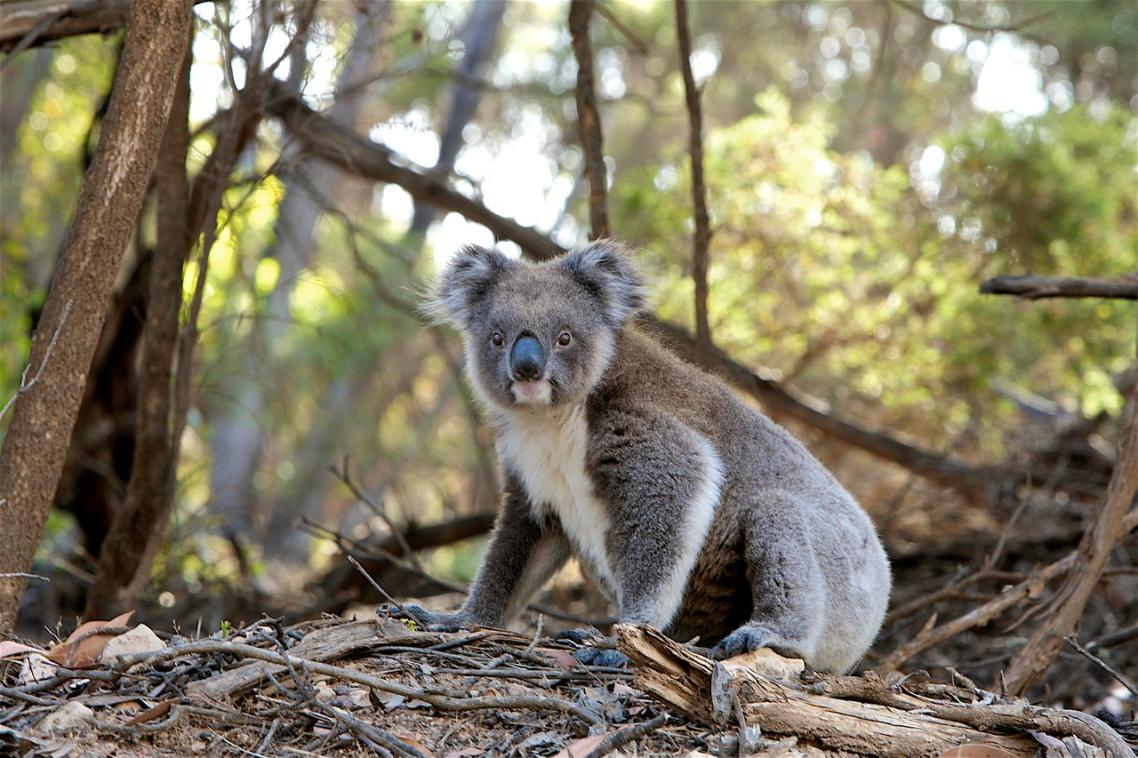
Two rescued koalas treated for a life-threatening disease will be released back into the wild by Queensland researchers as part of a project to help protect the threatened species and improve genetic diversity.
The Living Koala Genome Bank project aims to address the increasing threat of local koala extinction due to habitat loss and disease.
Dreamworld Wildlife Foundation General Manager and University of Queensland Adjunct Associate Professor Al Mucci said he was pleased to see successful results from the conservation effort.
“Two animals have been cleaned, treated for chlamydia infection and vaccinated, and will be released back into the wild where they belong,” he said.
“When these koalas were first brought into our care, one had been displaced due to habitat destruction and would not have survived, so it’s a very positive outcome to see them returning to the wild in healthy conditions.”
UQ’s Associate Professor Stephen Johnston said the koalas would move to a soft-release enclosure in Coombabah Lakelands Conservation Area on the Gold Coast where they could be monitored.
“These animals will provide us with valuable information about how wild koalas that have spent time in captivity thrive after being released,” he said.
The Living Koala Genome Bank project is a collaboration between UQ, Dreamworld, the Queensland Government and Queensland University of Technology.
It uses breeding and molecular technologies developed by UQ, and a chlamydia-proofing vaccination therapy developed at QUT to help future-proof local koala populations.
“It provides practical mechanisms to improve the genetic diversity of populations and assist in developing disease-free koalas to release into the wild,” Dr Johnston said.
“There are currently five joeys growing in pouches that are possible future releases of the program, and will support and potentially improve the genetic integrity of smaller, fragmented populations.”
The program has two important aims that are being tested for the first time.
“Our first aim uses zoos as a breeding centre for the genetic and disease management of local wild populations, while the second explores whether zoo koala populations might act as reservoirs for safe-guarding the genetic diversity amongst local wild populations,” he said.
The captive genome bank is initially focussing on the koala population at Dreamworld with a view to expand to other Queensland zoos to ensure the long-term conservation of koalas in the wild.
A dedicated breeding centre is being built as part of the $3 million redevelopment of Dreamworld’s wildlife precinct.
Media: Associate Professor Al Mucci, a.mucci@uq.edu.au, +61 407 437 595; Associate Professor Stephen Johnston, s.johnston1@uq.edu.au, +61 408 280 963; Dominic Jarvis, dominic.jarvis@uq.edu.au.
Related articles

Supercharged 'molecule highway' could transform industrial processing
