
Smartphone app to diagnose respiratory diseases
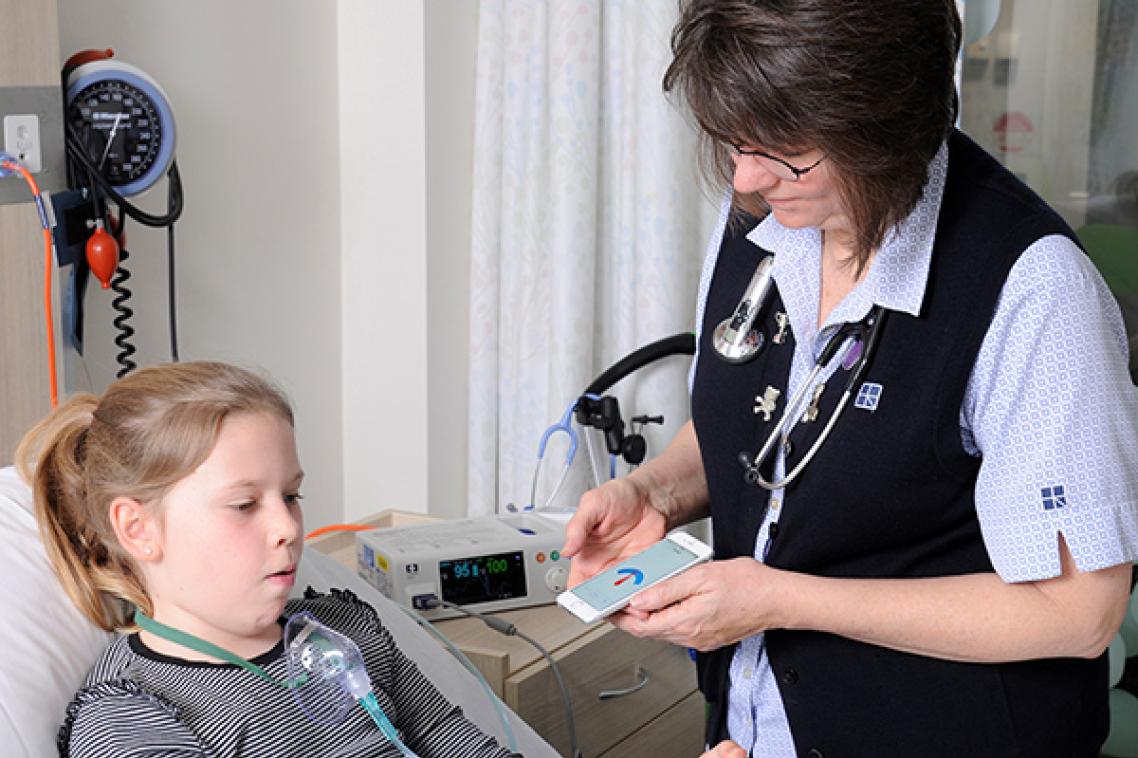
Technology developed by University of Queensland researchers that analyses a person’s cough could help diagnose respiratory disorders quickly and easily in patients who lack access to doctors.
UQ biomedical engineer Associate Professor Udantha Abeyratne and his team have developed the diagnostic technology that uses smartphones to instantly identify common respiratory disorders like asthma, croup, pneumonia, lower respiratory tract disease, Chronic Obstructive Pulmonary Disease and bronchiolitis.
A clinical study on childhood respiratory diseases found the technology had an accuracy of between 81 and 97 per cent.
Dr Abeyratne said respiratory disease was the third leading cause of death, meaning the potential global health and economic impact of this technology was phenomenal.
“Coughs can be described as wet or dry, brassy or raspy, ringing or barking; they can whistle, whoop or wheeze; but experts cannot always agree on the description or how to use cough sounds for diagnosis,” Dr Abeyratne said.
“Our approach is to introduce signal processing, and machine classification and learning technologies to extract useful diagnostic characteristics from coughs, removing the subjective elements for characterising them.
“We believe the technology can lead to earlier diagnosis and better patient outcomes throughout the world, including in remote locations with limited access to doctors.”

“This study demonstrates how new technology, mathematical concepts, machine learning and clinical medicine can be successfully combined to produce completely new diagnostic tests using the expertise of several disciplines,” Dr Porter said.
To develop the technology, UQ researchers trained algorithms to recognise features of coughs which are characteristic of five different respiratory diseases. The technology also allowed users to report other noticeable symptoms, to ensure diagnoses were as accurate as possible.
The researchers then categorised the coughs of 585 children aged between 29 days and 12 years.
The accuracy of the analyser was determined by comparing its diagnosis to one reached by a panel of paediatricians that had reviewed hospital charts and conducted all available clinical investigations.
The respiratory research program was started at UQ in 2009 with a Grand Challenges in Global Health Explorations Grant from the Bill & Melinda Gates Foundation.
“We are grateful to the Foundation for making this project possible,” Dr Abeyratne said.
“None of these breakthroughs would have been possible without that generous philanthropic support.”
This project has culminated in a spin-off company, ResApp Health Ltd, where Dr Abeyratne is the Chief Scientist.
The study has been published in Respiratory Research.
For more information on ResApp Health, please visit UQ’s Research Impact story.
Image above left: Associate Professor Udantha Abeyratne.
Media: UQ Communications, Genevieve Worrell, g.worrell@uq.edu.au , +61 408 432 213.
Topics
Related articles

Fishmeal alternative aims to protect marine wildlife from overfishing
