
Keeping the crunch in low-fat chips
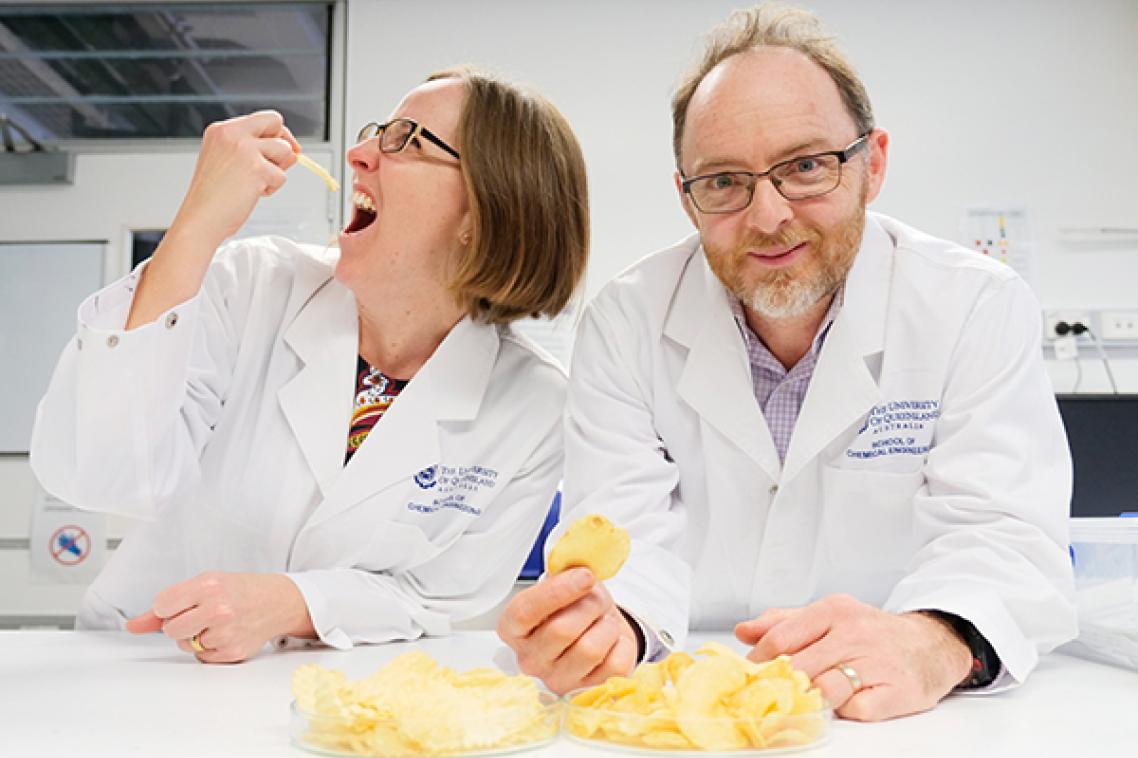
University of Queensland chemical engineers have developed a new method to analyse the physical characteristics of potato chips in a bid to develop a tastier low-fat snack.
Professor Jason Stokes said while a low-fat potato chip might reduce guilt, many people don’t find the texture as appealing.
“A key challenge in the food industry is reducing the amount of sodium, added sugar and saturated fat without sacrificing the taste, flavour, texture and mouthfeel in food and drink,” Professor Stokes said.
“Even subtle changes in the composition of processed food and drink can alter the consumer’s acceptability of a product for reasons that are not well understood, which compromises healthy choices.”
Professor Stokes worked with flavour scientists including senior research fellow Dr Heather Smyth, USA researcher Dr Stefan Baier – now at Motif Ingredients – and former UQ postdoctoral researcher Dr Michael Boehm who now works at PepsiCo, Inc.
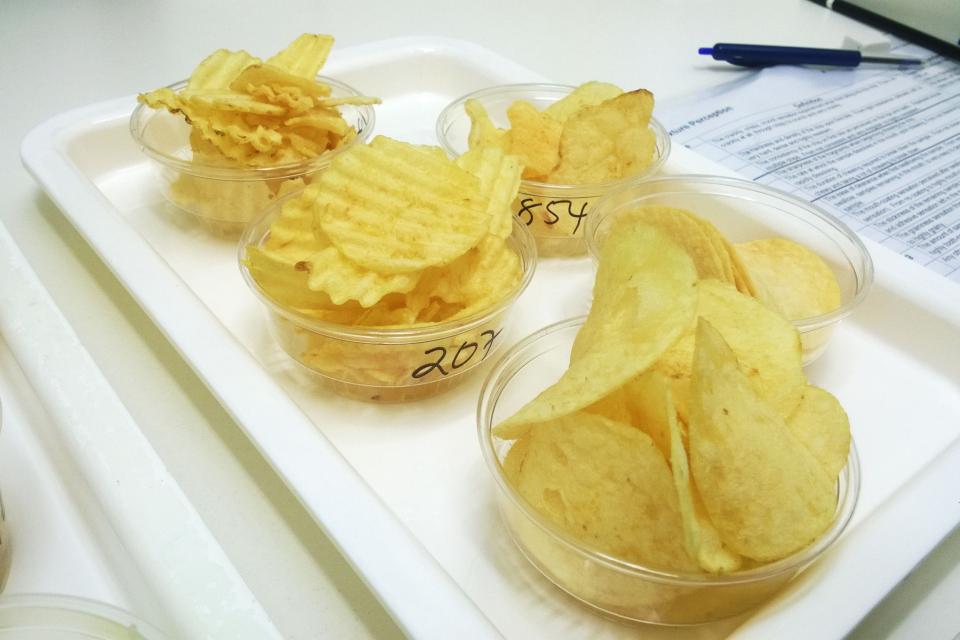
The team has been developing a more objective method of analysing the potato chips at four stages of simulated eating.
“We wanted to simulate the entire eating process, from first bite, to the break down and softening of chip particles and finally swallowing the clumped mass of chip particles,” he said.
The researchers used the results to design a lower-fat chip coated in a thin layer of seasoning oil, which contained a small amount of a food emulsifier.
In tests with sensory panellists, the seasoning oil made the low-fat chip more closely resemble the greasiness of a full-fat one, but it only added 0.5 per cent more oil to the low-fat product.
Professor Stokes said he had worked with all manner of food and drink.
“We also aim to consider the challenges in emerging areas that include the rise of consumer interest in plant-based foods and proteins.”
The authors acknowledge funding from PepsiCo., Inc. and the Australian Research Council Linkage Program.
Media: School of Chemical Engineering, Professor Jason Stokes, jason.stokes@uq.edu.au; +61 7 3365 4361, EAIT Communications, Paige Ashby, p.ashby@uq.edu.au, 0430 511 615.
Related articles

Time to tap into agriculture’s hidden genetic potential
