
Scientists seek landholder help to combat toxic fireweed
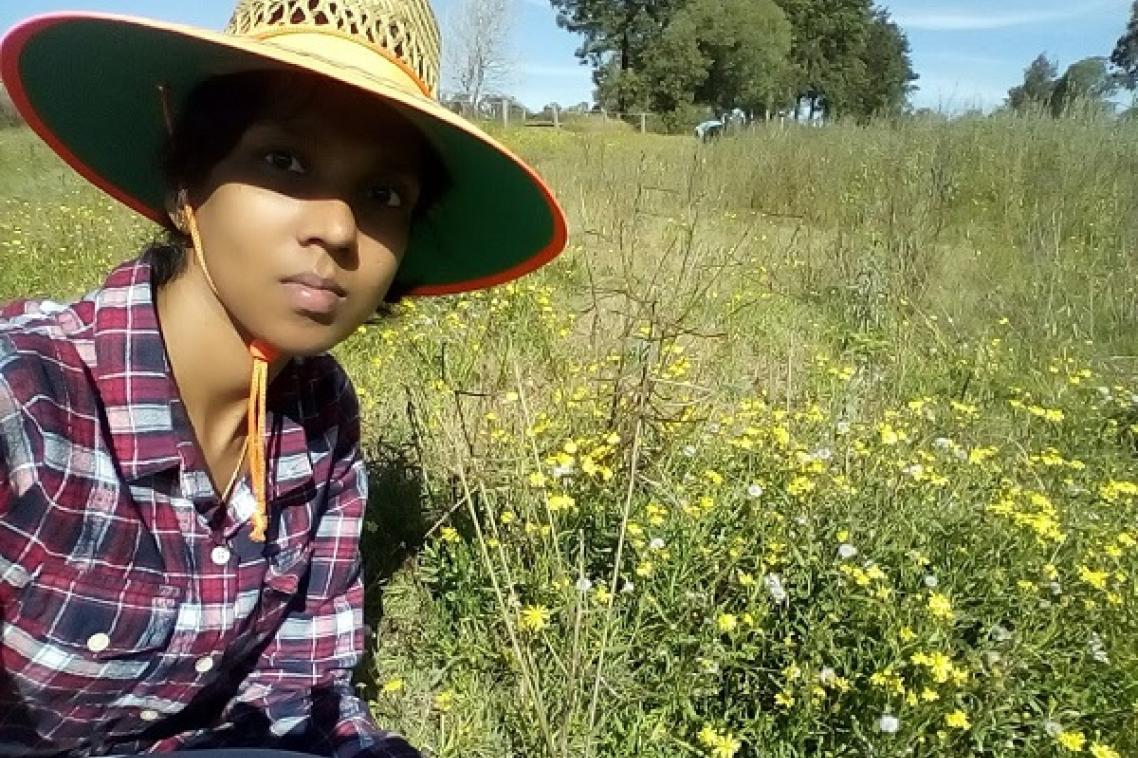
Fireweed is one of eastern Australia’s worst invasive species, and scientists are asking landholders for on-the-ground information about where it is growing and how they deal with it.
This information from members of the public could help combat the introduced, pest species, said PhD candidate Kusinara Wijayabandara, from UQ’s School of Agriculture and Food Sciences.
“This dreaded plant -- Senecio madagascariensis Poir – is bad news for landholders,” she said.
“Fireweed contains toxins known as pyrrolizidine alkaloids, which leads to liver toxicity when eaten by certain grazing animals, including cattle and horses.
“Its physical effects are awful for the animals and it’s a financial burden for farmers.”
Ms Wijayabandara said fireweed reduced livestock production and cost an estimated $2.5 million a year.
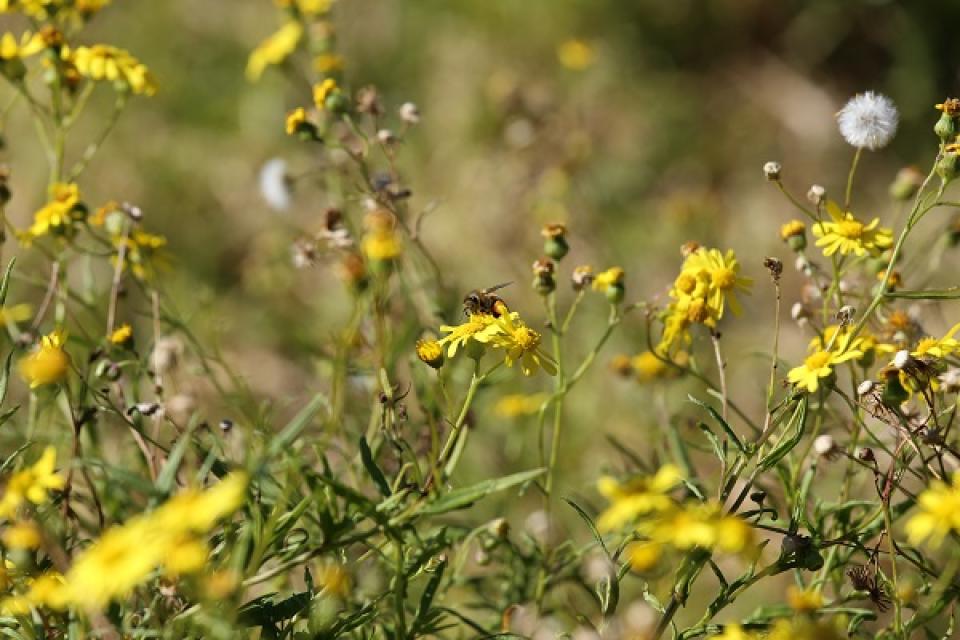
“Infestations have been found in Queensland near Caboolture, Cooroy, Belli Park, Maleny, Yandina, Pelican Waters and Gympie,” Ms Wijayabandara said.
“It has been reported as far north as Rockhampton and the Atherton Tablelands.”
To help combat the invasive pest, Ms Wijayabandara is collaborating with UQ’s Professor Steve Adkins and Dr Shane Campbell and the Queensland Department of Agriculture and Fisheries’ principal weed scientist, Joe Vitelli.
“We are building on past research, looking at current management practices and hoping to develop more effective, integrated fireweed management strategies,” Ms Wijayabandara said.
“I’m studying fireweed’s requirements for seed germination and determining the longevity of seed in the soil.
“We will also set up experiments to examine the efficacy of selected herbicides against the plants and their seeds.
“Landholders with fireweed on their properties are providing us with an incredible amount of information, but we still need more data.
“I’m asking Australians – particularly in south-east Queensland and northern NSW, who have this weed on their land to contact us please.
“They will be helping to fight fireweed and to protect animals and farmers.”
The survey takes about 15 minutes to complete.
Ms Wijayabandara said information collected through the survey would provide a better understanding of fireweed’s distribution and impacts, and would give insight on control options landholders are currently using.
The Queensland Department of Agriculture and Fisheries is providing operational support for the project.
Contact: Kusinara Wijayabandara, k.wijayabandara@uq.edu.au, +61 421 509 051.
Media: Dominic Jarvis, dominic.jarvis@uq.edu.au, +61 413 334 924.
Related articles

Mapping the green transition of Asia Pacific economies
