
Non-antibiotic pharmaceuticals linked to antibiotic resistance

Key points
- UQ researchers have found common non-antibiotic medications can accelerate the spread of antibiotic resistance
- The research team found nonsteroidal anti-inflammatories, a lipid-lowering drug, and a β-blocker significantly promoted bacterial transformation that can lead to antibiotic resistance
- The findings highlight a new concern that non-antibiotic pharmaceuticals can speed up the dissemination of antibiotic resistance
Common non-antibiotic medications like anti-inflammatories and a lipid-lowering cholesterol drug can accelerate the spread of antibiotic resistance according to University of Queensland research.
The study led by UQ’s Advanced Water Management Centre’s Associate Professor Jianhua Guo said non-antibiotic pharmaceuticals made up more than 95% of the drug market worldwide yet their effects on antibiotic resistance was largely unknown.
“When we think of antibiotic resistance, we often link it to the intensive use of antibiotics for medical, veterinary or agricultural purposes,” he said.
“We started wondering if non-antibiotic pharmaceuticals may also play a role in the spread of antibiotic resistance through bacterial transformation.
“Antibiotic resistance occurs and spreads when bacteria uptake free-living antibiotic resistance genes (ARGs) via bacterial transformation in response to the use of antibiotics.”
The study investigated if the same process linked to antibiotics, also occurs with widely used non-antibiotic pharmaceuticals such as nonsteroidal anti-inflammatory drugs which 30 million people worldwide consume daily.
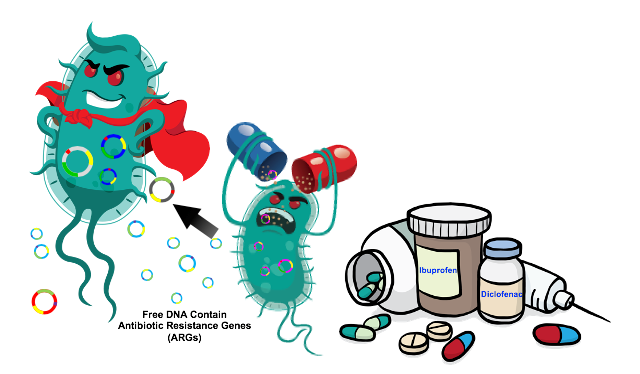
UQ PhD student Yue Wang said the research team tested six commonly consumed non-antibiotic pharmaceuticals.
“We did find nonsteroidal anti-inflammatories, a lipid-lowering drug, and a β-blocker significantly promoted the bacterial transformation,“ she said.
“Given the high consumption of non-antibiotic pharmaceuticals, our findings highlight a new concern that non-antibiotic pharmaceuticals can speed up the dissemination of antibiotic resistance.
Dr Guo said the study broadens our view of antibiotic resistance and further research was needed.
“They are the iceberg of factors for promoting antibiotic resistance, and should not be ignored,” Dr Guo said.
Antimicrobial resistance has become a major threat to public health globally with approximately 700,000 people a year dying from antimicrobial-resistant infections.
The study has been published in The ISME Journal.
The research was undertaken by a UQ team which included Dr Ji Lu, Dr Jan Engelstädter, Shuai Zhang, Pengbo Ding, Dr Likai Mao, Professor Zhiguo Yuan and Dr Philip Bond, and was funded by the Australian Research Council Future Fellowship.
Topics
Related articles

Sick of being told to ‘just lose weight’? Health promotion shouldn’t come with weight stigma
