
Bradfield Scheme would transform Central Queensland, students find

The numbers – and the engineering – may stack up for the Bradfield Scheme, according to final-year civil engineering students from The University of Queensland.
Their hands-on course looked at the feasibility of real-world engineering scenarios, producing environmental assessments that consider elements such as nature conservation, water and land use, and cultural heritage impacts.
Senior lecturer Dr David Callaghan said UQ focused on engineering principles, critical thinking and evaluation to train graduate civil engineers capable of designing for the future.
“Our students are required to design systems never before implemented and consequently have no established design standards—just like the pure engineering used to shape the original Bradfield Scheme and much of Sydney and beyond,” Dr Callaghan said.
The students investigated one section of the original scheme covering Central Queensland, and found for this region the benefits may outweigh the impacts.
In 1938, civil engineering pioneer, Dr John Bradfield, suggested one billion hectares of land could be irrigated across Queensland and South Australia, diverting excess floodwaters from northern Queensland to grow rice, cotton and wheat crops in drought-prone areas.
Using a series of dams, pumps and pipes, Bradfield’s plan was to move water down through Queensland river systems, across the Great Dividing Range and into regions in extreme drought.
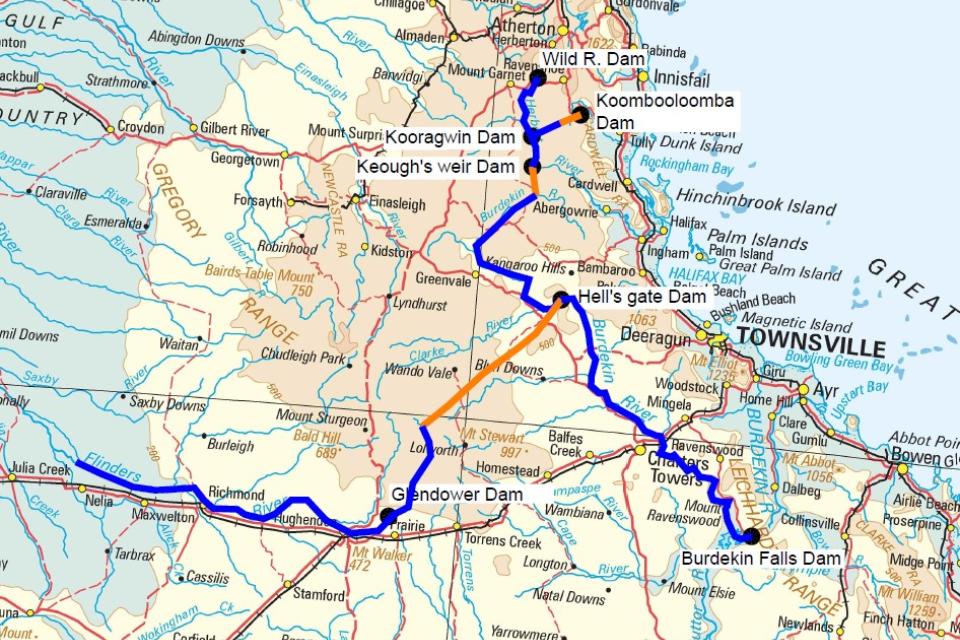
Dr Callaghan said the students found the key issues with the scheme were nature conservation, due to the proximity of threatened species and significant ecological communities, and Indigenous cultural heritage across the vast and remote spaces needed to create the irrigation project.
“Students worked in teams for about three months, and found that land use and infrastructure would play an important role, with existing mining leases, stock routes, road and rail all requiring close attention,” Dr Callaghan said.
“A vital element was water, as the scheme would cause significant changes to water flow regimes – so, it’s important to make sure the project would protect against potential flooding downstream and ensuring protection of important wetland sites.”
The various designs were costed by students with estimates ranging from $1000 to $3000 per person in Queensland.
The teams also looked at potential social impacts and the role of stakeholders and community groups in making the decision about whether or not such a scheme should go ahead.
Contact: Dr David Callaghan, dave.callaghan@uq.edu.au, +61 7 336 53517; Genevieve Worrell, UQ Communications, g.worrell@uq.edu.au, +61 408 432 213.
Topics
Related articles

Time to tap into agriculture’s hidden genetic potential
