
UQ tech to restore damaged bones
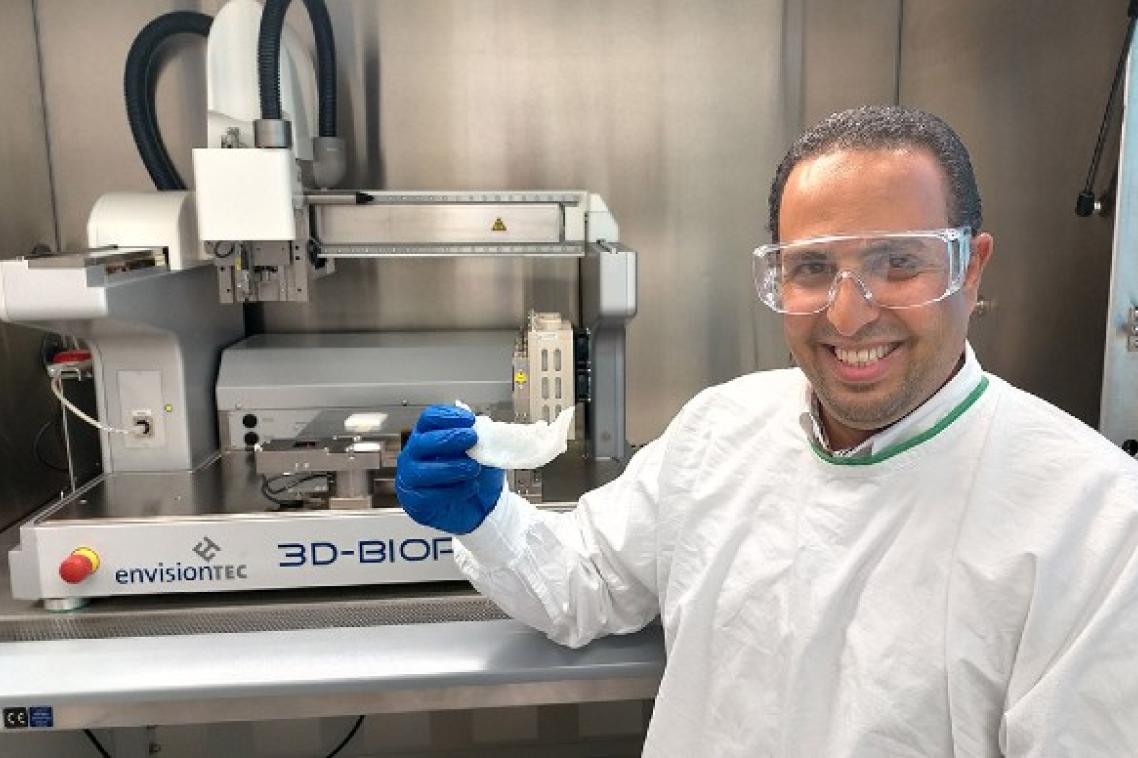
A technological advancement that has the potential to stimulate bone formation inside the human body has been developed by University of Queensland researchers.
The findings from the UQ School of Dentistry builds on existing research in the field of bone tissue engineering and could help the many Australians who undergo joint-replacement surgery or are diagnosed with bone cancer.
Dr Abdalla Ali said 3D-printed bone scaffolds which used magnesium hydroxide looked set to become substitutes for human bone grafts.
“Using magnesium hydroxide with existing bone-forming materials improved bone regeneration and function in our study of 3D-printed bone scaffolds,” Dr Ali said.
“Magnesium hydroxide has the potential to accelerate bone formation inside the human body when combined with polycaprolactone (PCL) - the most common biodegradable material used in bone tissue engineering.
“The combination of 3D-printed scaffolds with both magnesium hydroxide and PCL are proving a suitable alternative in the regenerative treatment of various bone diseases and injuries.”
Dr Ali said human bone grafts were considered the traditional ‘gold standard’ for restoring damaged or injured bone that was not capable of healing itself.
“But bone grafts have the drawback of limited availability, and are subject to complications,” he said.
“3D-printed bone scaffolds are a new alternative made from porous degradable biomaterials that provide mechanical support during the bone’s natural repair process.
“PCL has a slow degradation rate that is not ideal for many bone healing applications and lacks biofunctionality.
“Many attempts have been made to incorporate new materials into bone tissue engineering, but they are not fully absorbable in the body, which is necessary as the bone naturally regenerates.”
Dr Ali said adding magnesium hydroxide in their study of 3D-printed scaffolds enhanced bone formation, resulted in a higher bone mass and a faster degradation rate.
Bone implant rates are rising globally due to the increasing ageing population, leading to more age-related degenerative bone problems, bone diseases, accidents and injuries, and revision surgery.
More than 115,000 Australians undergo hip, knee or shoulder replacements each year.
Of the approximately 130,000 new cancer patients diagnosed in Australia each year, 60 per cent of them will spread to bone and 10 per cent may require surgery.
Bone cancers are the second most common cause of death in children, teenagers and young adults, next to brain tumours.
The research is published in Composites Part B: Engineering (DOI: 10.1016/j.compositesb.2020.108158).
Media: Dr Abdalla Ali, abdalla.ali@uq.edu.au, +61 7 3365 8019; Dani Nash, UQ Communications, dani.nash@uq.edu.au, +61 7 3346 3035.
Related articles

Shaping the future of medicine: UQ Medical School turns 90
