
Study shows clamp technology promising for future vaccine development
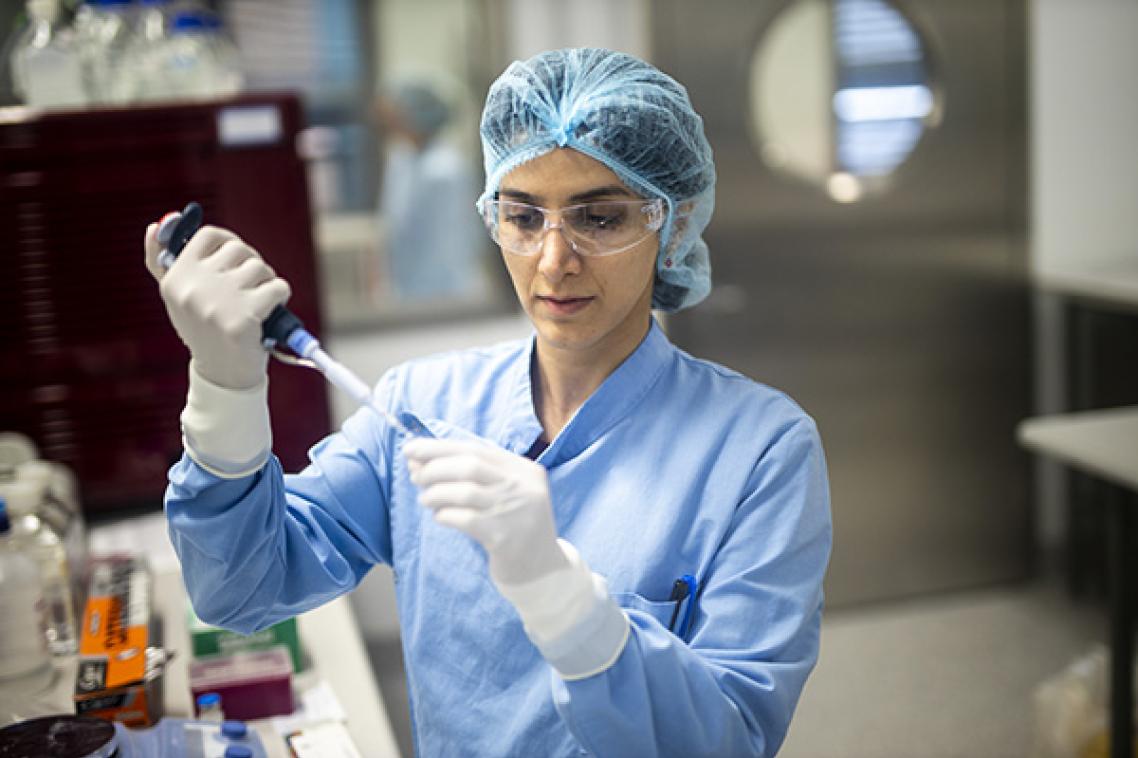
University of Queensland scientists have published the clinical trial data confirming their molecular clamp-stabilised vaccine technology was safe and potentially effective.
The vaccine candidate developed by the team last year did not progress through to Phase 2/3 clinical trials, due to cross reactivity caused by the protein fragment used to stabilise the clamp design.
Initial data from the clinical trial conducted in Brisbane was initially released last December and has now been published following peer review in the prestigious Lancet Infectious Diseases.
Project co-leader Associate Professor Keith Chappell said 99 per cent of vaccinated participants in the study produced a neutralising immune response.
“In 75 per cent of vaccine recipients it was above the average in recovered patients, and in 38 per cent it was more than twice the average for recovered patients," he said.
"Adverse events were comparable to those in the saline placebo, with the only exceptions being mild injection site pain and tenderness.”
Project Director Professor Trent Munro said the paper also discussed the cross-reactivity in HIV diagnostics that led to the decision not to proceed into later stage clinical studies.
“The design of the original molecular clamp excluded known antibody binding sites in order to reduce the potential, but unfortunately the antibodies registered a low response on some highly sensitive HIV tests.”
Project co-leader Professor Paul Young said the 2020 vaccine candidate was not an option for Australia’s current vaccine rollout.
“The team understood the decision in December to shift the focus to other candidates that were showing promise.
“Some of these vaccines are now in market and need to remain the immediate priority.
“This study has strongly validated the Molecular Clamp technology as a promising rapid response strategy for vaccine development.
“The team is continuing to work on alternative clamp constructs that could be used to respond to COVID-19 in the future or other viral diseases.”
The data published relates to the clinical trial involving 120 participants aged 18 to 55, 96 of which received the vaccine candidate.
Collaborators on the clinical trial included CSL/Seqirus, Australian National University, Doherty Institute, CSIRO, Patheon, Cytiva and Nucleus Network.
In addition to support from the Coalition for Epidemic Preparedness Innovations (CEPI), the Queensland Government provided $10 million Advance Queensland funding for the vaccine project last year, the Federal Government contributed $5 million and more than $10 million was provided by philanthropic and other donors.
The research is published in the Lancet Infectious Diseases.
Media: UQ Communication; communications@uq.edu.au; +61 7 33651120.
Related articles

Sick of being told to ‘just lose weight’? Health promotion shouldn’t come with weight stigma
