
Do you see faces in things?
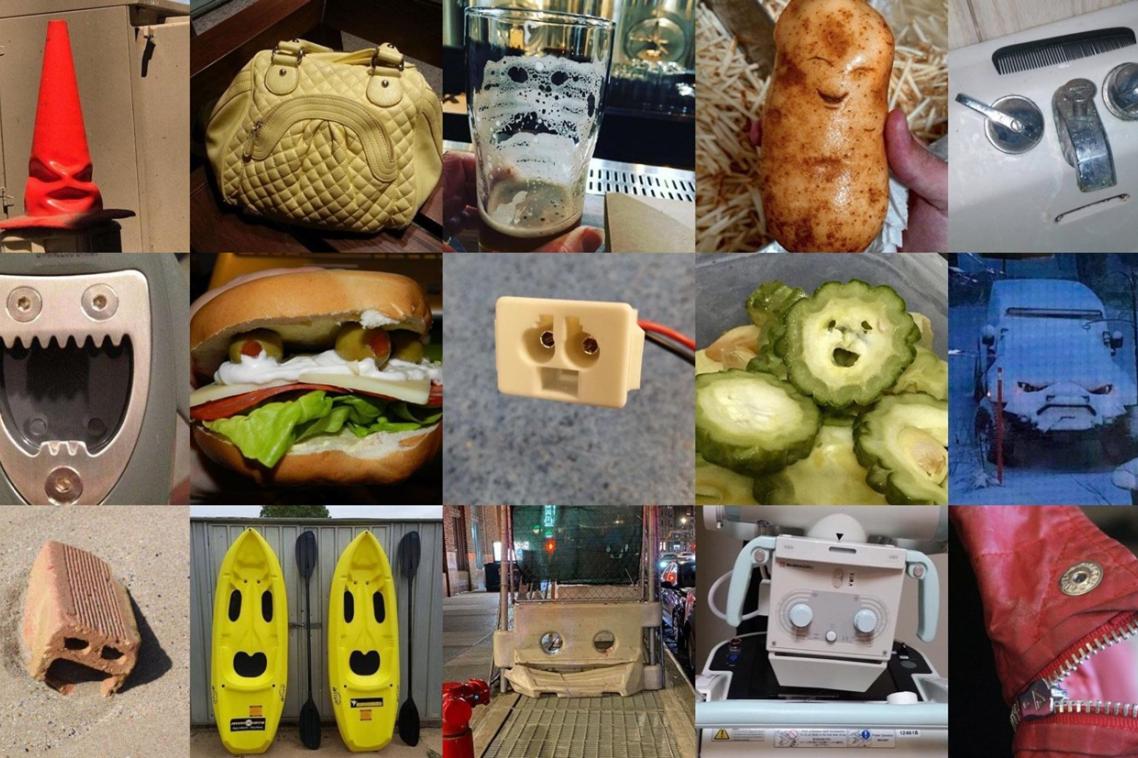
Seeing faces in everyday objects is a common experience, but research from The University of Queensland has found people are more likely to see male faces when they see an image on the trunk of a tree or in burnt toast over breakfast.
Dr Jessica Taubert from UQ’s School of Psychology said face pareidolia, the illusion of seeing a facial structure in an everyday object, tells us a lot about how our brains detect and recognise social cues.
“The aim of our study was to understand whether examples of face pareidolia carry the kinds of social signals that faces normally transmit, such as expression and biological sex,” Dr Taubert said.
“Our results showed a striking bias in gender perception, with many more illusory faces perceived as male than female.
“As illusory faces do not have a biological sex, this bias is significant in revealing an asymmetry in our face evaluation system when given minimal information.
“The results demonstrate visual features required for face detection are not generally sufficient for the perception of female faces.”
More than 3800 participants were shown numerous examples of face pareidolia and inanimate objects with no facial structure and they were asked to indicate whether each example had a distinct emotional expression, age, and biological sex, or not.
“We know when we see faces in objects, this illusion is processed by parts of the human brain that are dedicated to processing real faces, so in theory, face pareidolia 'fools the brain',” Dr Taubert said.
“The participants could recognise the emotional expressions conveyed by these peculiar objects and attribute a specific age and gender to them.
“Now we have evidence these illusory stimuli are being processed by the brain by areas involved in social perception and cognition, so we can use face pareidolia to identify those specific areas.
“We can compare how our brains recognise emotion, age, and biological sex, to the performance of computers trained to recognize these cues.
“Further we can use these interesting stimuli to test for abnormal patterns of behaviour.”
The UQ research team wants to gather more examples of face pareidolia and is encouraging people to email any illusions they come across to j.taubert@uq.edu.au.
The study is published in Proceedings of the National Academy of Sciences.
Related articles

Sick of being told to ‘just lose weight’? Health promotion shouldn’t come with weight stigma
