
What drives children to choose compassion
University of Queensland researchers have found children will help people in distress unless there is a personal cost.
Dr James Kirby from UQ’s School of Psychology and his team worked with 285 children aged 4 and 5 to investigate what drives them to be compassionate.
“We tested if their compassion response changed depending on who they were interacting with,” Dr Kirby said.
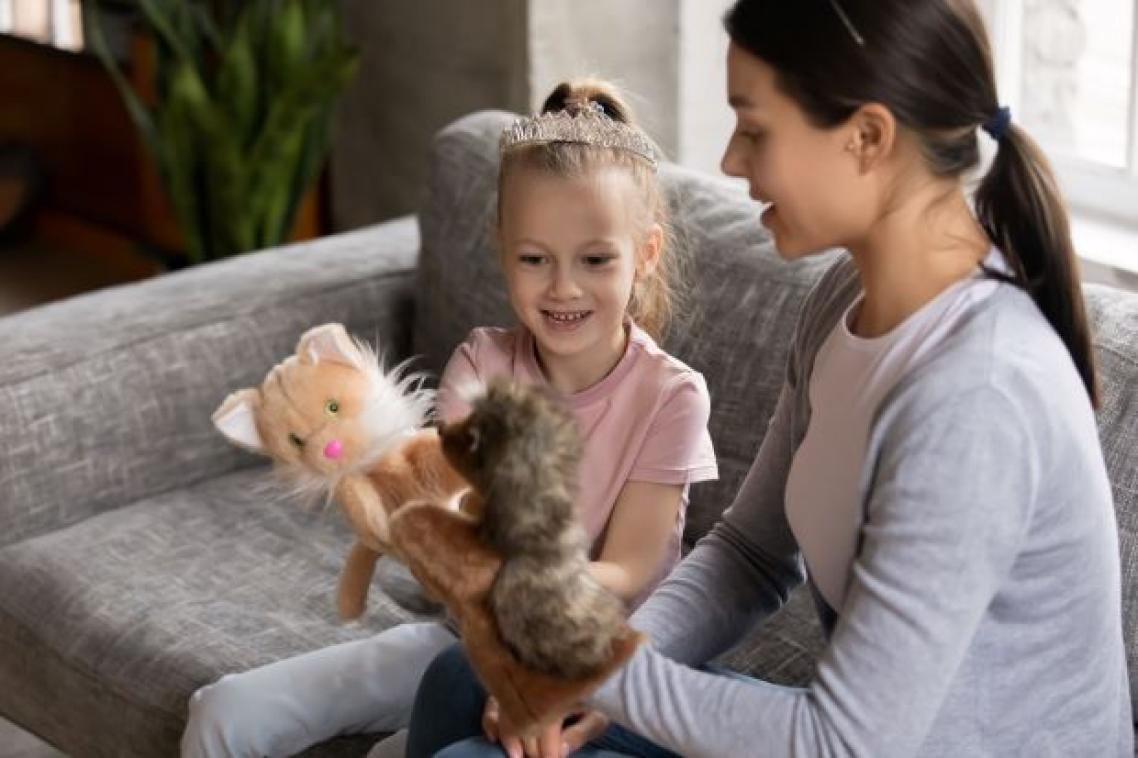
“Adults are an authority figure and children sometimes do what is required just because an adult is asking, which is why we also used puppets who are more on a child’s level.
“Our research found children will assist every time if there is no personal cost to helping and this didn’t change if it was an adult or puppet.”
To understand if the compassion response changed if there was a cost involved, stickers were given to the children when they completed tasks.
“We then saw that if they had to give up their reward stickers it was awfully hard for the children to help, even if the adult or puppet showed distress,” Dr Kirby said.
“It didn’t mean the children were deliberately selfish because adults also really struggle giving up rewards and resources.

“Most importantly, this study highlighted that if there were no personal costs or the children didn’t have to give up rewards, they were deeply compassionate and helpful.
“Understanding what drives children to be compassionate is important for setting up positive learning and family environments.”
The study is published in Royal Society Open Science.
It builds on previous research led by PhD candidate Mitchell Green and Professor Mark Nielsen from UQ’s School of Psychology about what factors influence the likelihood that children will be compassionate.
Image above left: Dr James Kirby.
Media: UQ Communications; Kirsten O’Leary, +61 412 307 594 habs.media@uq.edu.au, @UQHealth
Topics
Related articles

Shaping the future of medicine: UQ Medical School turns 90
