
Bees abuzz for biosecurity in avocados
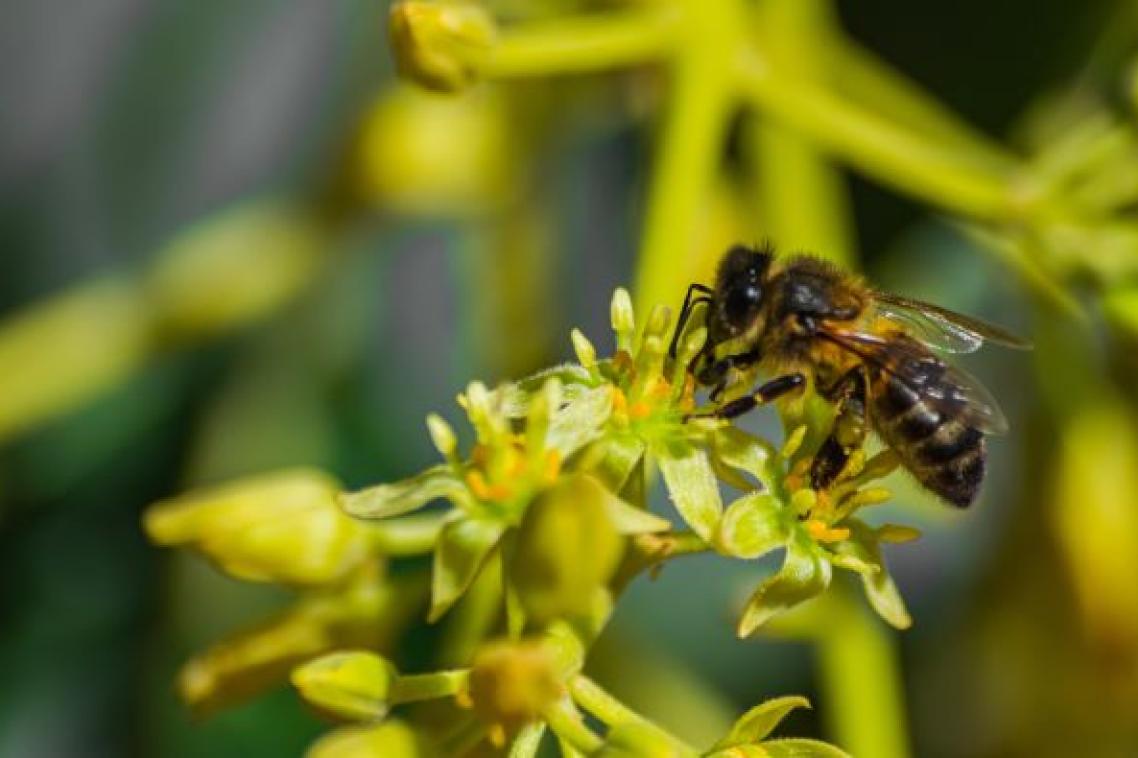
Bees can help prove Australia's valuable avocado crop is free of a pathogen that could be a barrier to exports according to research by The University of Queensland and the national science agency CSIRO.
Associate Professor Andrew Geering from the Queensland Alliance for Agriculture and Food Innovation (QAAFI) said monitoring for avocado sunblotch is important to protect lucrative overseas markets.
“We’ve had an active control plan for avocado sunblotch since the 1980s because it has the potential to cut tree yield by about 80 per cent,” Dr Geering said.
“Even though this pathogen has nearly been eradicated, there is a chance there are still pockets of infection and this is a concern for Australia’s trading partners.
“Because the viroid is seed-transmitted at a very high rate, a child in New Zealand using an infected avocado seed for a school project could introduce sunblotch to their country.”
The research team sought a simple way to check for avocado sunblotch in Australian orchards without having to individually test every tree, and found bees were the answer through a concept developed by the CSIRO’s Dr John Roberts who had detected plant viruses alongside bee viruses in hives.
“Avocado trees are 10 metres tall by 5 metres wide and there might be 20,000 in an orchard, and we needed a way to efficiently gather samples,” Dr Geering said.
“Bees are brought in to pollinate the trees as a normal farming practice to improve yields.
“They take the pollen back to their hive, so effectively they’ve done the sampling work for us and all we have to do is test the pollen.
“It’s much better than a team of people climbing up ladders or riding cherry pickers to collect leaves.
“Bees are reliable, free and very thorough in their sampling activity.”
Dr Geering plans to implement the bee surveillance more broadly.
“Now that we’ve demonstrated the principle, we’d like to roll it out in the largest avocado producing area in Australia, the Atherton Tableland, to demonstrate that it’s free of the pathogen,” he said.
Dr Roberts said bees in approximately 530,000 commercially managed hives delivering paid pollination services around Australia could be recruited for more surveillance tasks.
“For avocado sunblotch we can use them for annual monitoring during pollination across wide areas,” Dr Roberts said.
“This approach can also provide surveillance for multiple pathogens simultaneously of both honeybees and plants, making this a powerful cross-industry biosecurity tool."
The research was funded from the Avocado Industry levy, through Hort Innovation and has been published by APS Publications.
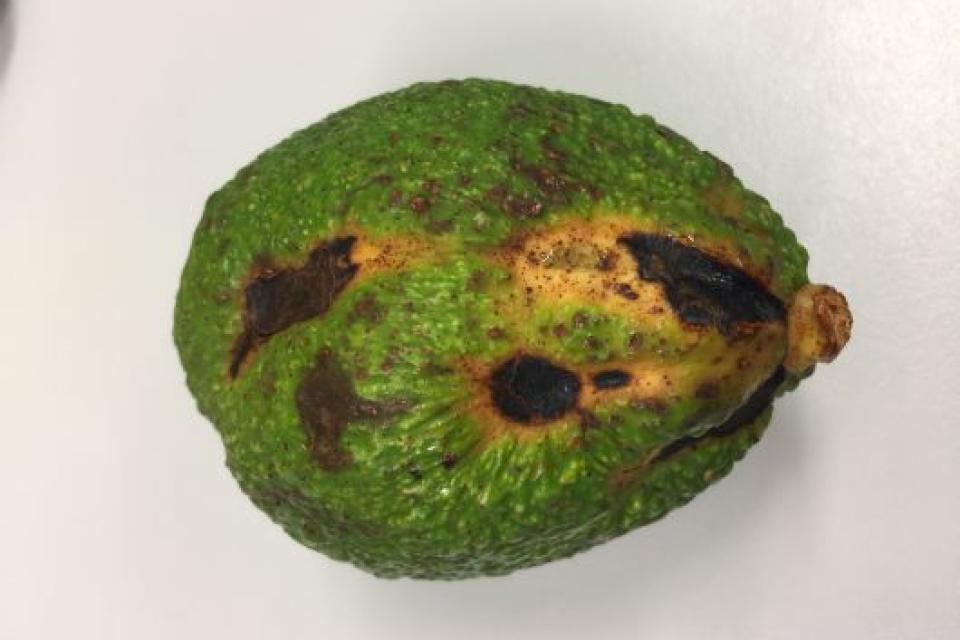
Image above: An avocado fruit affected by sunblotch (Dr Lara Pretorius).
Media contact
QAAFI Media
Natalie MacGregor
n.macgregor@uq.edu.au
Topics
Related articles

Time to tap into agriculture’s hidden genetic potential
