High-tech spray prevents and cures rusty plant threat
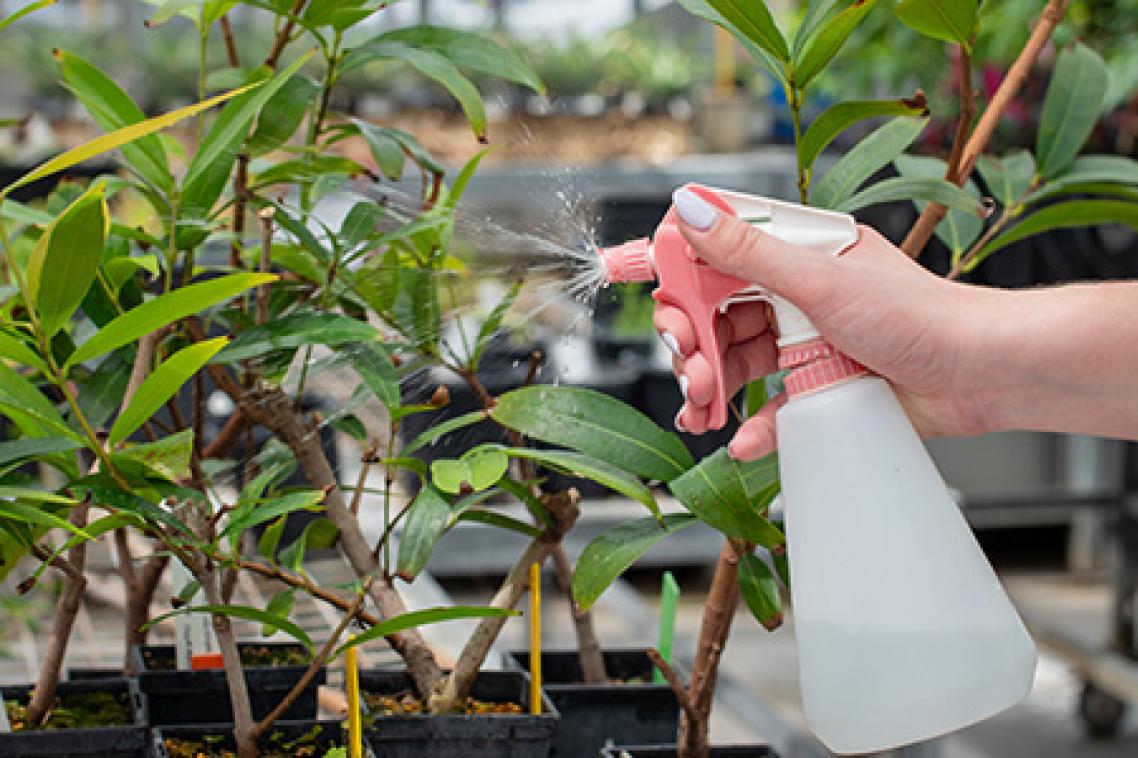
Researchers from The University of Queensland have developed a treatment that can both prevent and cure infection caused by an invasive fungal disease devastating native Australian plants.
PhD candidate Rebecca Degnan, Dr Anne Sawyer and Professor Neena Mitter worked with the Department of Agriculture and Fisheries to develop an environmentally friendly spray which uses RNA technology to treat plants infected by myrtle rust.
“We found that when the double stranded RNA was applied to a healthy tree, it prevented the plant from being infected,” Ms Degnan said.
“What’s even more exciting, when we infected the plants and applied the double stranded RNA as late as two weeks post infection, the plants recovered.
“It’s significant because our previous studies didn’t have that curative aspect, so being able to apply a treatment after infection gives it more potential.”
Dr Sawyer said myrtle rust has become a problem for popular native Myrtaceae species like eucalypts, lilly pilly and paperbark since it was detected in New South Wales in 2010.
“It has since spread all the way up the east coast and into the Northern Territory, as well as Western Australia and even New Zealand,” she said.
“There are more than 2,000 species of Myrtaceae native to Australia, with 16 species of rainforest trees on the east coast facing extinction due to this disease.
“The symptoms of infection range from leaf spots of yellow fungal spores through to death of the tree, even large old trees.”
Dr Sawyer said the team would now test the RNA treatment in field trials.
“We’ve only done short term experiments up to six weeks after infection, so now we want to test the spray’s longevity,” she said.
“We also want to see whether the plants are protected from a second infection and if the RNA can protect new growth after the leaves are sprayed.”
Ms Degnan said it was exciting to consider the potential impact of the treatment.
“It’s not always a silver bullet, but we work in partnership with a lot of other scientists developing great management techniques for the pathogen and it feels really rewarding to contribute to that,” she said.
The research paper is published in Communications Biology.
RNA for crop protection is the major focus of the Mitter Lab at UQ’s Queensland Alliance for Agriculture and Food Innovation.
Media contacts
Rebecca Degnan
r.degnan@uq.edu.au
+61 417 166 667
Dr Anne Sawyer
a.sawyer@uq.edu.au
+61 422 285 190
Natalie MacGregor (QAAFI Media)
n.macgregor@uq.edu.au
+61 409 135 651
Media assets
Related articles

UQ strengthens Indigenous partnership in New Zealand