
Exercise can help slow cognitive decline
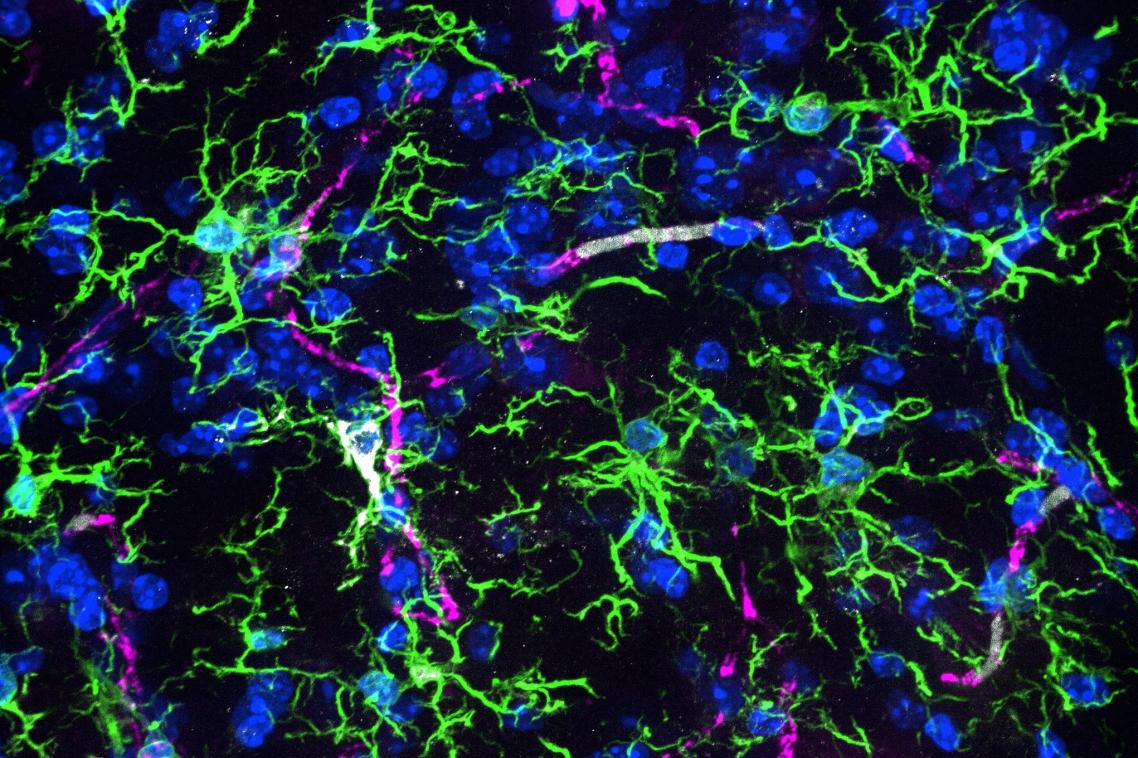
A microscope snapshot of microglia (green cells) in an ageing mouse brain, extending their cellular processes to monitor and support the nerve cell function.
University of Queensland research has found exercise can help prevent or slow cognitive decline during ageing.
A team led by Associate Professor Jana Vukovic from UQ’s School of Biomedical Sciences and Queensland Brain Institute and Dr Solal Chauquet from UQ’s Institute for Molecular Bioscience assessed the expression of genes in individual brain cells of mice.
“We found that ageing significantly alters the gene expression of all cell types in the brain but had greatest impact on the microglia, which are immune cells of the central nervous system that support brain function,” Dr Vukovic said.
“Our research showed that exercise, in the form of a running wheel for the mice, reverted the gene profile of aged microglia to patterns seen in younger versions of the microglial cells.”
Dr Chauquet said some of the findings were surprising.
“Microglia were the only type of brain cell that showed a significant reversal of changes brought about by ageing,” Dr Chauquet said.
The researchers also discovered an increased presence of T cells, a type of white blood cell, in the aged brain, but are unsure why.
“Giving the mice access to a running wheel prevented or reduced the presence of T cells in the hippocampus, a part of the brain involved with memory and learning, during ageing,” Dr Vukovic said.
“This shows that exercise reduces a process associated with ageing in mice.”
Dr Vukovic said the research is a step towards understanding why humans feel mentally better and are able to think more clearly with regular exercise.
“Our findings in mice provide a platform for research into the human brain and ageing,” she said.
“Further research could eventually develop therapeutic ways to target specific cell types to combat ageing of the brain.
“These findings support the importance of exercise, particularly for the elderly.”
The research was also co-led by Dr Sonia Shah from UQ’s Institute for Molecular Bioscience.
The research was published in Aging Cell.
Related articles

UQ researcher awarded international anti-doping grant
