
Scientists breathe easy with new dolphin DNA testing
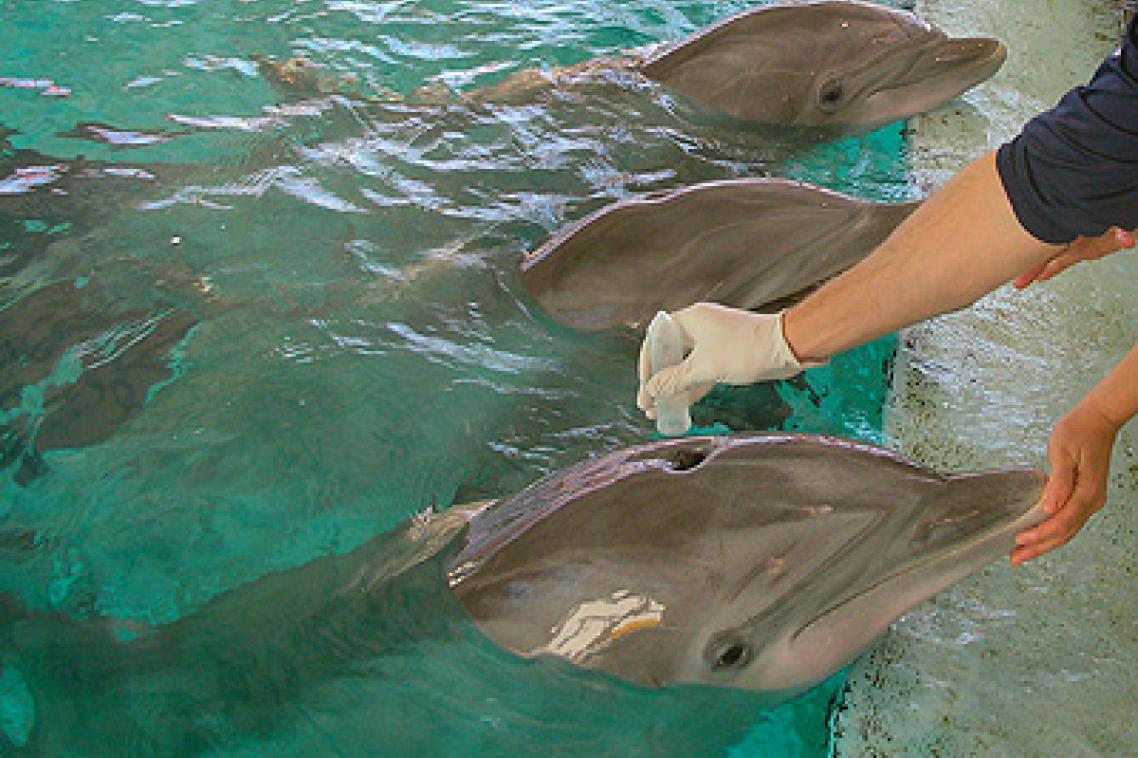
Collecting DNA from dolphins is now easier thanks to scientists at The University of Queensland, Georgetown University, and the Baltimore Aquarium.
They have uncovered a new technique for extracting DNA from a dolphin through blow-sampling, which involves collecting exhalations from the blowholes.
The research supports blow-sampling as a viable and less invasive method for the collection of genetic data than the commonly used dart biopsying which collects a small piece of skin and blubber using a dart gun.
“Biopsying does have a place, but sometimes it's inappropriate," said Dr Celine Frere, Scientist from UQ's School of Land, Crop and Food Sciences.
"It's about trying to find complementing techniques to minimise the impact on animals.
"Surprisingly little is known about the composition of 'blow' (the mixed air and saliva), as scientists have rarely had the chance to study it.”
The DNA can be used to complement behavioural information and data on population sizes to determine the conservation status of whales and dolphins.
At the National Aquarium in Baltimore, blow and blood samples were collected between March and May, 2010 from a total of six bottlenose dolphins: five female bottlenose dolphins and one male.
A test tube was held inverted over the dolphin’s blowhole and the dolphins were trained to exhale on cue (a light touch to the melon or forehead).
“A range of other techniques for collecting the blowhole substance have previously been trialled - such as skin swabbing and faecal sampling - but they had failed to gather sufficient quantities of DNA.
The mystery substance may contain hormones that could be used to determine whether a female is pregnant and fatty acids that provide clues about a dolphin's diet” said Dr Frere.
A control sample of seawater was taken along with each blow sample set to insure that any DNA results were from blow samples and not seawater contamination.
Scientists amplified three polymorphic dinucleotide microsatellite loci for each sample to estimate whether the blow and blood microsatellite (nuclear DNA) profiles matched.
For all samples, blow and blood showed a perfect match for each individual.
The researchers are currently applying their method to a wild population of bottlenose dolphins in Australia.
Media: Erin Pearl, 07 54 601 229, mobile 0409 265 587
Related articles

UQ’s QARC wins at Engagement Australia Awards
