
Singaporean student overwhelmed by flood support
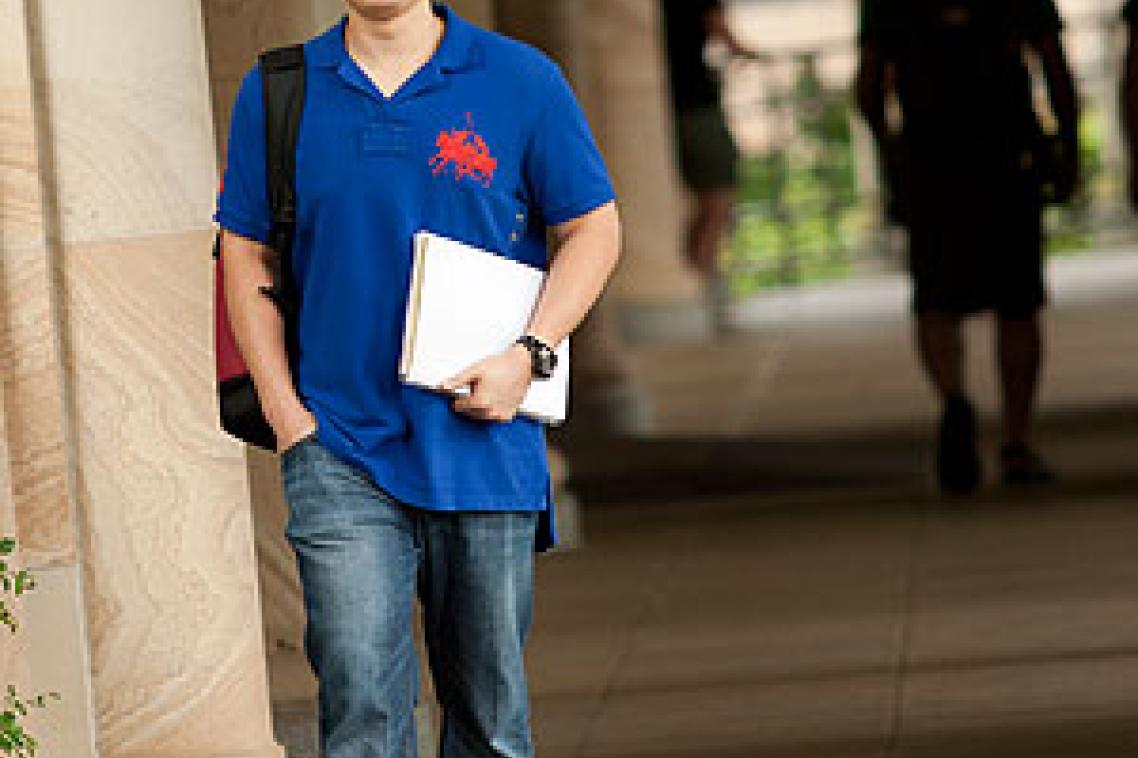
For UQ PhD candidate Lucas Goh, the recent floods in Southeast Queensland meant being evacuated by boat and losing his second-floor apartment in St Lucia.
But the Singaporean student isn’t dwelling on the situation: he’s found a new place to live and is back at the University completing research in the School of Chemistry and Molecular Biosciences.
“When I got back to my apartment after the water receded, there were at least 30 UQ Union volunteers in the building cleaning and salvaging anything they could,” he said.
“We also had army personnel there helping to move our things and other heavy-duty work.”
Mr Goh said he and his partner were overwhelmed by the offers of support they received.
“The Australian spirit is so amazing; it's unbelievable,” he said.
“My partner and I appreciated the help and assistance - even if was just moral support - of all volunteering Australians and UQ's staff and students.”
Mr Goh works under the supervision of Associate Professor Roy Hall, investigating diagnostics and treatments for Chikungunya virus – a mosquito-borne pathogen that has caused debilitating illness in many parts of the world including Europe, India, Africa and South–East Asia.
Despite the floods, Mr Goh still returned to campus as often as he could, with almost all of the University’s buildings unaffected by water.
“I’m a researcher so I have cells and animals that I need to look after,” he said.
“My supervisor, whose own house was affected in the floods, has been really understanding and said I should take off as much time as I needed.”
With the campus now fully open and operational, it’s back to the business of finding ways to prevent the Chikungunya virus coming into Australia.
“Typical symptoms of the virus include fever, rashes and poly-arthritis; with a newly mutated version of the virus known to cause inflammation of the brain.” Mr Goh said.
“We’re working on ways to prevent any incursion of the virus into Australia, while also developing immunotherapy treatments for people who have contracted it.”
Media: Lucas Goh (0423 632 863) or Penny Robinson at UQ Communications (07 3365 9723, penny.robinson@uq.edu.au)
Related articles

Time to tap into agriculture’s hidden genetic potential
