
Flood impacts on fragile marine ecosystem to be measured
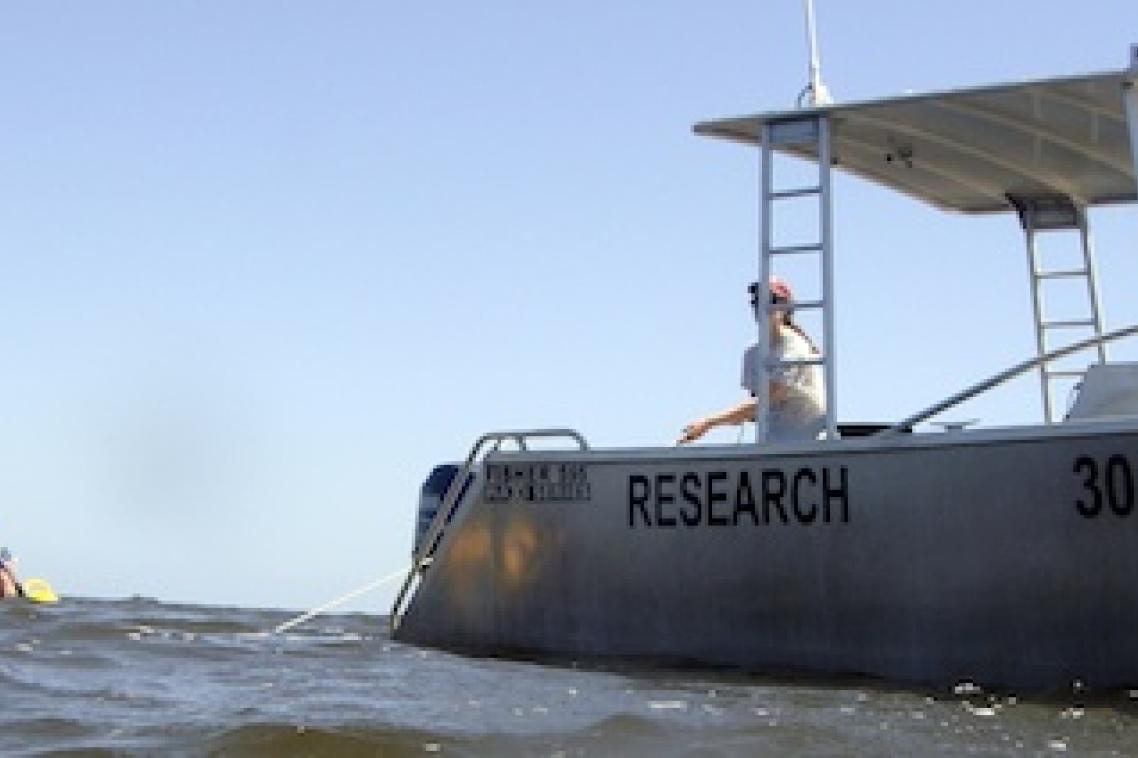
The impact of recent floods on Queensland's environmentally sensitive coast will be monitored using cutting-edge marine monitoring technology being deployed in Moreton Bay today (4/2/2011).
The network of underwater sensors will send real time data on coastal habitat health, light, temperature, turbidity and salinity straight to the laptops of scientists studying the environmentally fragile bay.
The sensors are the product of a $2.7 million international research project led by The University of Queensland (UQ).
The first prototypes of the Smart Environment Monitoring and Analysis Technology (SEMAT) will be deployed in Deception Bay – one of Moreton Bay’s most environmentally sensitive areas and the feeding ground of Australia’s most southerly dugongs.
SEMAT project leader Associate Professor Ron Johnstone, of UQ’s School of Geography, Planning & Environmental Management, says the network of sensors will allow scientists to measure the impact of the Brisbane River floods on a large area of the bay.
“We have already observed the death of algae and biovalves and the sensors will be able to record accurate and real time measurements of other changes in the marine environment as a result of the floods,” Dr Johnstone said.
“This information will help us understand how the floods are impacting on life in the bay and what it is that is causing some of the plants and animals to die.”
Dr Johnstone said the land-based floods and increased output from the Brisbane River are expected to have significant and long-term impacts on Queensland’s coastal ecosystems.
“The sensors will allow people from anywhere in the world to dial up and look at what the conditions are in the bay, to observe over time the changes and to monitor the health of our coast,” he said.
“This information in vital for informing future management of our marine reserves and fisheries regions.”
The project brings together researchers from UQ’s School of Geography, Planning & Environmental Management and School of Information Technology and Electrical Engineering; the Queensland Cyber Infrastructure Foundation with researchers from the Politecnnic di Milan (Italy); the Torino Wireless Foundation in Piemonte (Italy); and James Cook University. It is also supported by the Australian Research Council Research Network on Intelligent Sensors, Sensor Networks and Information Processing.
Media Enquiries: Ron Johnstone (0419 122 184) or Kathy Grube (0418 524 297).
To obtain photos, please contact Kathy Grube.
Related articles
UQ rises 22 places in 2027 QS Sustainability Rankings
