
Giving Cambodian children something to smile about
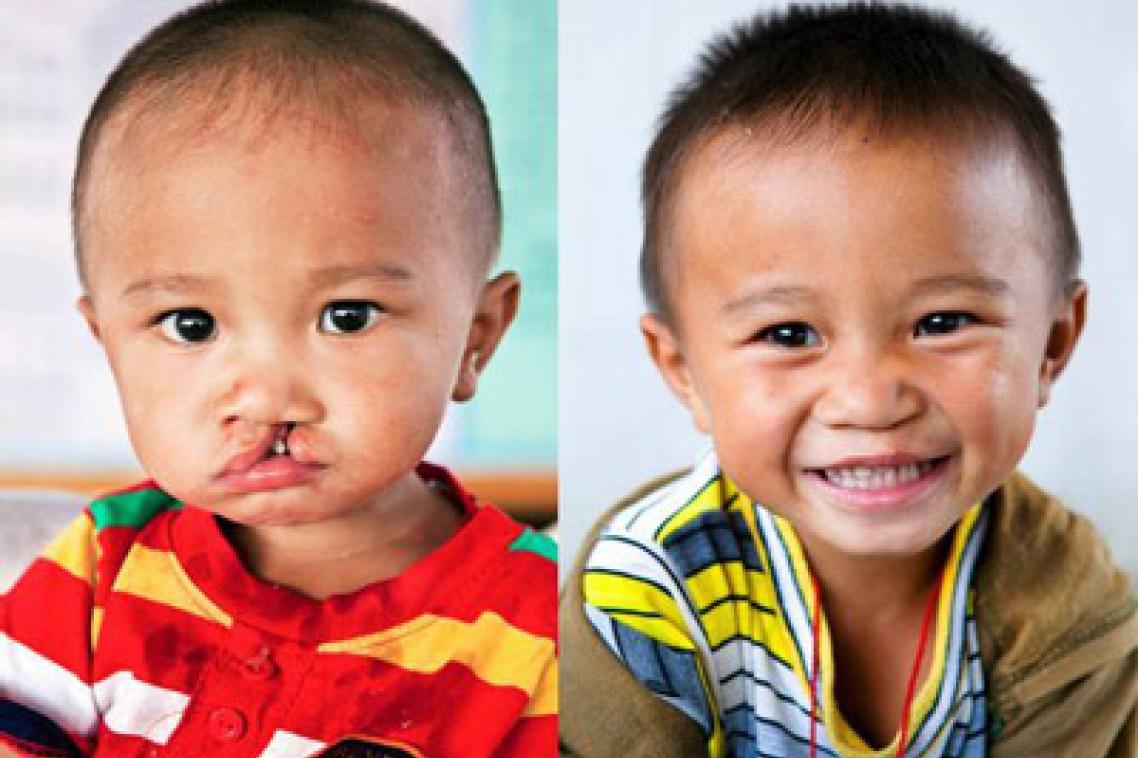
A University of Queensland initiative has taken medical students to Cambodia to witness life-changing reconstruction surgery on children and young adults.
Caitlin Swift and Ashleigh Cruickshank were the first two medical students selected to participate with Operation Smile as part of their surgical training.
They spent two weeks in Phnom Penh in Cambodia with a group of more than 40 Operation Smile surgeons and nurses from around the world, working to repair cleft lip and palate deformities on children.
Caitlin said the days were long and exhausting but the knowledge that she was witnessing children’s lives change forever made it all worthwhile.
“Most of the children having surgery were very young and unable to really understand what was happening, so what I found most rewarding to see was the parents' reactions, particularly to the cleft lip patients,” Caitlin said.
“They would be taken into the recovery room to greet their child and just gaze at them with a big smile on their face.”
“Knowing that the surgery was going to improve the child's socialisation, education and eventually employment prospects made this experience even more fulfilling.
“The Operation Smile team was truly changing these children's lives.”
Caitlin said she learnt about surgery, anaesthetics and paediatrics, and gained insight into charity work while surrounded by talented and inspirational health professionals willing to share their knowledge and wisdom.
“I look forward to one day having the skills as a doctor to allow me to contribute more than I can now as a student,” she said.
Operation Smile Australia Founder and UQ medical alumnus Dr Richard Lewandowski said the student program was an exciting new phase for the organisation.
“Operation Smile, both globally and in Australia, has a core value of providing continuous education, and creating opportunities for medical students to volunteer is a large component of this,” he said.
“The student program is a great opportunity for students to experience a unique environment which will add significant value to their future careers.”
It is hoped the collaboration between UQ and Operation Smile will inspire medical students to use their skills and give back to the community throughout their medical careers.
The School of Medicine will send four more students on another two missions in 2013.
About Operation Smile
Operation Smile Australia Ltd is a not-for-profit organisation providing free reconstructive surgery to children and young adults born with facial deformities in developing countries.
By providing education for local medical staff and local communities, Operation Smile creates sustainable change for children, families, and communities.
Operation Smile Australia sends credentialed medical volunteers to Operation Smile's International Medical Missions around the world to treat children over a two-week period.
Medical professionals from Australian and New Zealand have assisted in treating over 200 000 children and young adults.
More information on Operation Smile Australia can be found at operationsmile.org.au
Media: Brian Mallon, Communication Officer, School of Medicine, 0403621109, 07 3365 5254 b.mallon@uq.edu.au
Related articles

UQ recognised among Australia’s research leaders in The Australian’s 2027 Research Magazine
