
Captive elephants in Laos face extinction
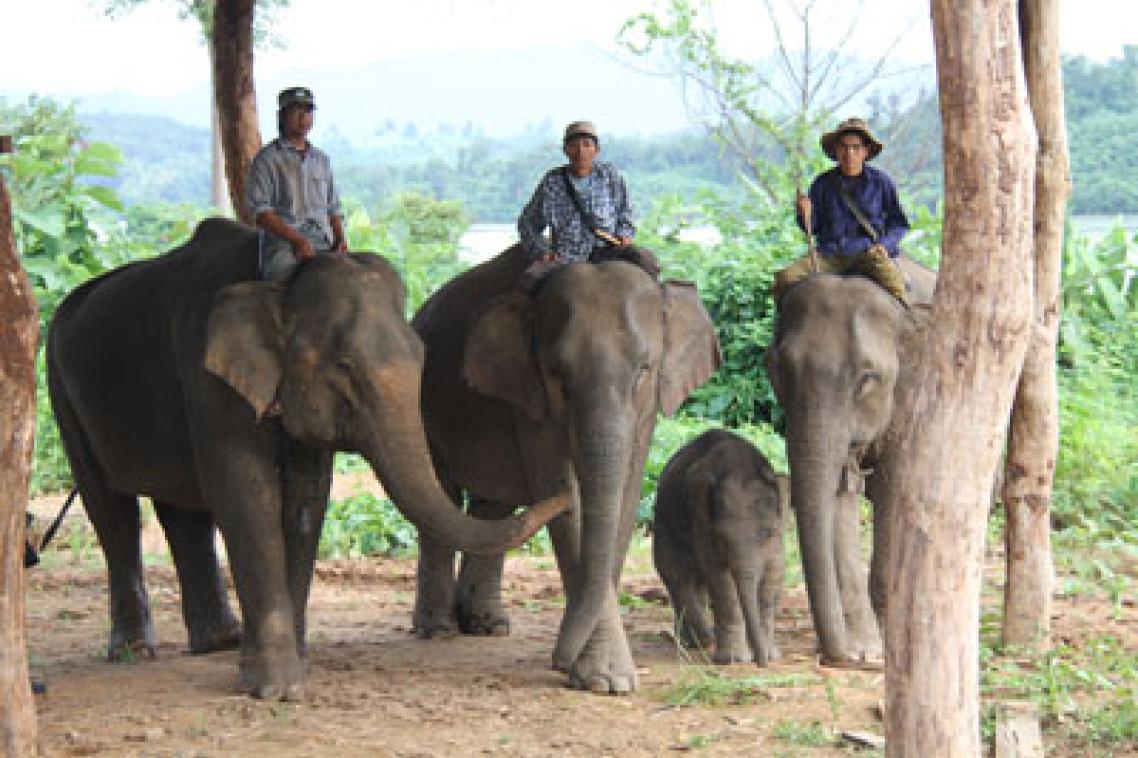
The captive elephant population in Laos will be extinct in just over a century if current management practices do not change, a University of Queensland study has found.
It is estimated that only 480 captive elephants remain across Laos, and the study shows that changes to conservation management are necessary to prevent extinction.
The study’s lead author, Dr Ingrid Suter, from UQ’s School of Geography, Planning and Environmental Management, said captive elephants were an important part of Lao culture and supported the livelihood of many rural communities.
“Elephant ownership has long been associated with Lao culture and national identity,” Dr Suter said.
“Extinction of this population would lead to loss of income for the mahouts (elephant owners) and their communities, impact on tourism and the logging industry, and would mean the end of thousands of years of elephants and humans working alongside each other.”
The study shows the captive elephant population in Laos is declining as the elephants are not allowed to breed at a rate sufficient to sustain the population.
Female elephants require at least four years off work to produce and wean a calf, an unaffordable length of time for mahouts.
UQ researchers collaborated with ElefantAsia, a non-government organisation which aims to overcome this barrier through the Baby Bonus program.
The program works with mahouts to provide alternative income while their elephants are on “maternity leave”, and to ensure the calves are well cared for.
UQ’s School of Geography, Planning and Environmental Management’s Dr Greg Baxter, senior author on the study, said a wider management approach was needed to prevent further population decline.
“The small number of breeding-age females is limiting the growth of the captive Laos elephant population,” he said.
“Increasing the breeding rate through programs such as the Baby Bonus is a good start, but it is unlikely to prevent population decline over the next 100 to 200 years.
“Establishing a rental agreement with other countries would allow the import and exchange of elephants for the purpose of breeding and provide benefit to all countries involved.”
The research was published in Endangered Species Research this month.
Contact: Dr Greg Baxter, 07 3365 8064 and +61403174149, gbaxter@uqg.uq.edu.au; Dr Ingrid Suter, +31 6 2730 3026 ingrid.suter@uq.edu.au .
Related articles

How brainless sea sponges use sunset as a cue to prepare for metamorphosis
