
The real cost of green developments
Green developments to fight climate change may be hurting some of the world’s most vulnerable people, according to research from The University of Queensland.
A report from UQ’s School of Social Science Associate Professor Kristen Lyons and Dr Peter Westoby examined the impact of Norwegian plantation company Green Resources and its forestry-based carbon offset projects in Uganda.
Dr Lyons said the research debunked many of the popular claims that carbon trading, the practise of negating emissions from one development by creating an environmentally friendly development elsewhere, represented a “win-win” for rural communities and the environment.
“Green Resources claims to be the largest operator of ‘green’ forestry plantations on the African continent, including licenses on over 10,000 hectares of land in Uganda alone, with additional landholdings in Mozambique and Tanzania,” Dr Lyons said.
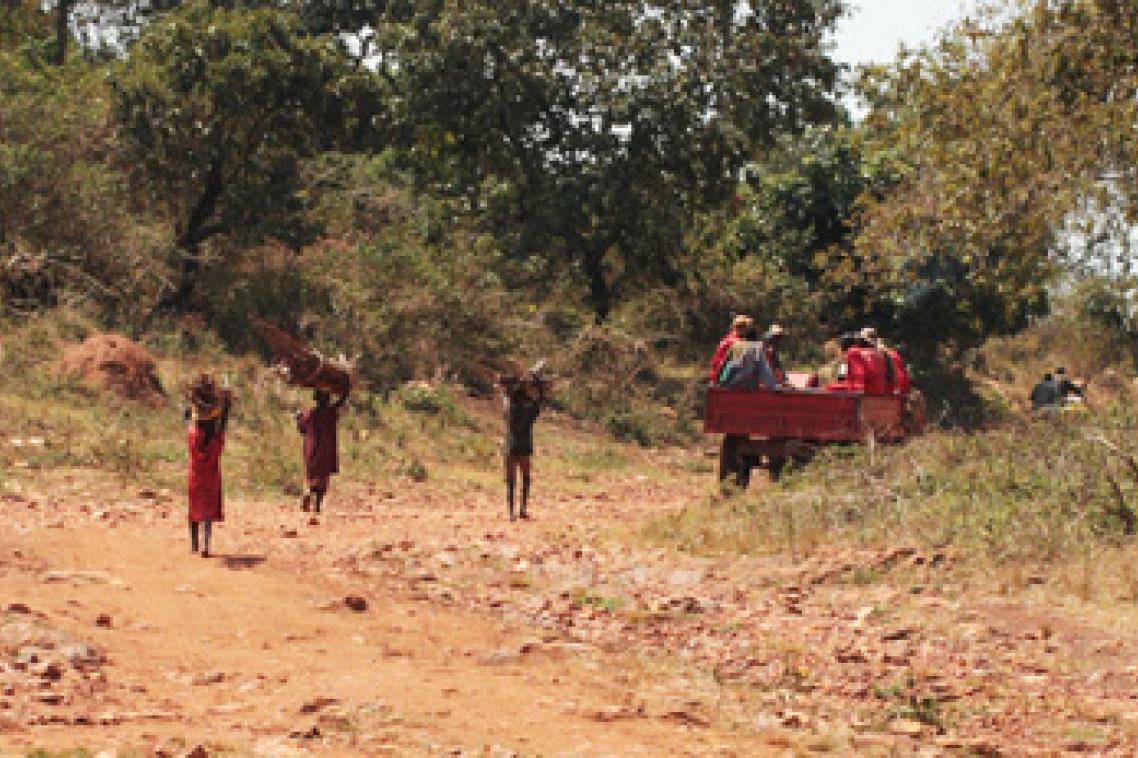
“But firsthand accounts from Uganda reveal that some villagers have experienced forced evictions, restricted access to land and food, in addition to loss of livelihood – all in the name of international ‘green’ investment.”
Dr Lyons, along with her UQ colleague Dr Peter Westoby, have been researching the issue for the past two years.
They interviewed more than 150 Ugandan villagers affected by the carbon-offset projects.
Dr Lyons said these projects were often branded as “green economic development” and are championed not only as solutions to climate change, but as catalysts for development in local communities.
“However, there is mounting evidence that these corporate land acquisitions for climate change mitigation – including forestry plantations – severely compromise not only local ecologies but also the livelihoods of the some of the world’s most vulnerable people living in rural areas in developing countries,” she said.
“Green Resources states that its objective is to ‘contribute to mitigating climate change and contribute to sustainable environmental management, community development and poverty alleviation in Uganda’.
“On the basis of such claims, the company has received investments and loans from international aid and investment development agencies, but there are hidden social costs with these projects.”
Dr Lyons said while carbon trading based on the offset of environmental pollution from the global north to the global south is widely championed as a good news story, this research highlights the need for much more scrutiny of such initiatives.
“It is unacceptable to expect those already living at the margins of existence – with high levels of poverty, food insecurity, poor access to health, sanitation and education – to carry a disproportionate burden in addressing the global climate crisis," she said.
“Under the licensed land agreement between Uganda’s government and Green Resources, upwards of 8,000 people face significant disruptions to their livelihoods, including many experiencing forced evictions.”
Dr Lyons presented her findings at an event today in Olso, Norway, organised by the Norwegian Forum for Environment and Development, Future in Our Hands, Spire and the Development Fund in cooperation with The Oakland Institute.
Media: Dr Kristen Lyons is available for interview in Oslo from November 1 - 8 and can be contacted on +61 437 332 732, kristen.lyons@uq.edu.au or via Skype (lyonskristen).
Dr Peter Westoby is available for interview in Australia and can be contacted on 0409 633 558 or p.westoby@uq.edu.au
Related articles

Want to help Nepal recover from its deadly floods? Here’s what tourists need to know
