
Elusive mouse edges close to extinction
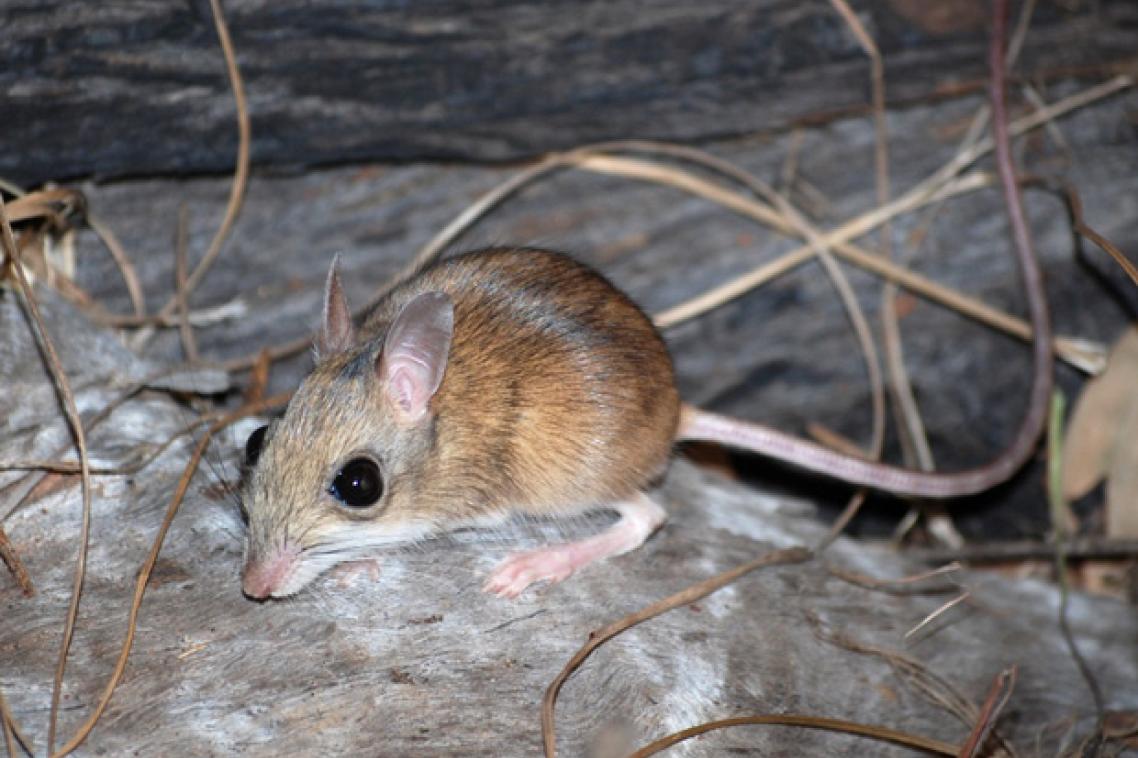
A University of Queensland researcher who has caught the endangered northern hopping mouse on camera for the first time believes the tiny mammal could be closer to the brink of extinction than previously thought.
UQ School of Agriculture and Food Sciences Ecology Lecturer and PhD candidate Rebecca Diete said population estimates of some of Australia’s most elusive native animals often relied on indirect and potentially inaccurate measures.
“The northern hopping mouse is very shy and hard to track down, so population estimates have relied on counting spoil heaps – the piles of sand left behind when the mouse digs burrows,” Ms Diete said.
“I found that some spoil heaps believed to belong to the northern hopping mouse were made by a different animal – the delicate mouse (Pseudomys delicatulus).
“The northern hopping mouse is listed as endangered on the International Union for Conservation of Nature red list, so better survey methods and correct estimations of populations are vital.
“We shouldn’t rely on signs of endangered animals if we’re not absolutely certain that it was that animal making them.”
The northern hopping mouse (Notomys aquilo) has impressive engineering skills.
It builds extensive concealed burrows to hide from predators such as quolls, snakes and owls – and from curious scientists.
Ms Diete spent 12 months searching for the mouse on Groote Eylandt, 50 kilometres off the Northern Territory coast, before catching her first glimpse.
“The northern hopping mouse is about 10 centimeters long from the tip of the nose to the base of the tail, and it stands and hops along on its two hind legs like a little kangaroo, but it is a rodent related to rats and mice,” she said.
“Through radio tracking, trapping and collecting footage over two and a half years of fieldwork, I was able to find out more about this little-known native.”
She shared these findings, along with her rare footage of the northern hopping mouse, on Radio National’s Off Track program this week.
Ms Diete said she hoped her research would lead to better northern hopping mouse conservation and encourage more accurate survey methods for other vulnerable and endangered species.
“Estimates of hopping mouse numbers made only from spoil heap assessments could be much higher than the reality,” she said.
“There were 10 species of hopping mouse in Australia and in the past 200 years we’ve lost five of them. We need to understand and protect those that are left.”
Media: Rebecca Diete, 0401 096 169, r.diete@uq.edu.au.
Topics
Related articles

From birdsong to galaxies: unleashing the potential of citizen science
