
Archaeologists dig into nitty-gritty of Gallipoli
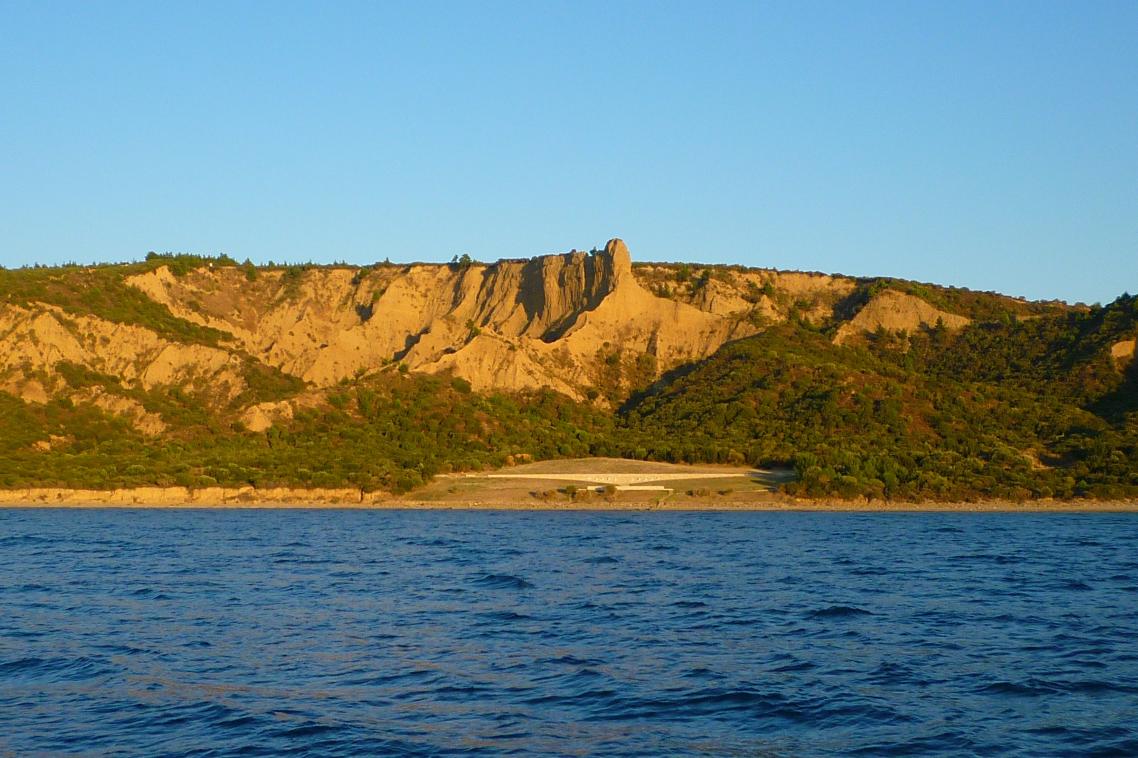
The 1915 Gallipoli battlefields have been a focus of intense interest for much of the past century, but official archaeological research began there only five years ago.
Dr Jessie Birkett-Rees, a cultural landscape analysis expert who has been investigating the material remains of the Gallipoli conflict since 2010, will give a public lecture on her work at The University of Queensland next month.
UQ School of Social Science Archaeology’s Professor Marshall Weisler said Dr Birkett-Rees and her colleagues – a team of archaeologists, historians and classicists from Australia, New Zealand and Turkey – were the first to get permission to undertake archaeological research in the battlefield zone.
“In this official sense, these archaeologists were the first to investigate the battlefield since Charles Bean’s post-war Australian Historical Mission in 1919,” Professor Weisler said.
Dr Birkett-Rees, from Monash University, has spent five field seasons recording and investigating the record of tunnels, trenches and artefacts at Gallipoli.
Professor Weisler said the Gallipoli campaign continued to generate historical publications.
“Although the current Gallipoli landscape bears little resemblance to records and accounts of its appearance in 1915, the area near Anzac Cove offers one of the best-preserved First World War landscapes in the world,” Professor Weisler said.
Dr Birkett-Rees’s will share revelations about daily life on the battlefield and discuss how archaeologists traced the remains of trenches and recorded artefact finds.
The annual Hall Lecture will be held on Friday 15 May. Now in its ninth year, the lecture honours Emeritus Associate Professor Jay Hall, who established UQ’s archaeology program in the 1970s.
The lecture coincides with National Archaeology Week.
Register here for the lecture and cocktail reception to follow.
Media: Professor Marshall Weisler, +61 7 3365 3038, m.weisler@uq.edu.au, or Professor Andrew Fairbairn, +61 7 336 52780, 0417 467987, a.fairbairn@uq.edu.au.
Topics
Related articles

How a unique environment sets Australian chocolate apart
