
UQ projects win Healthy Waterways awards
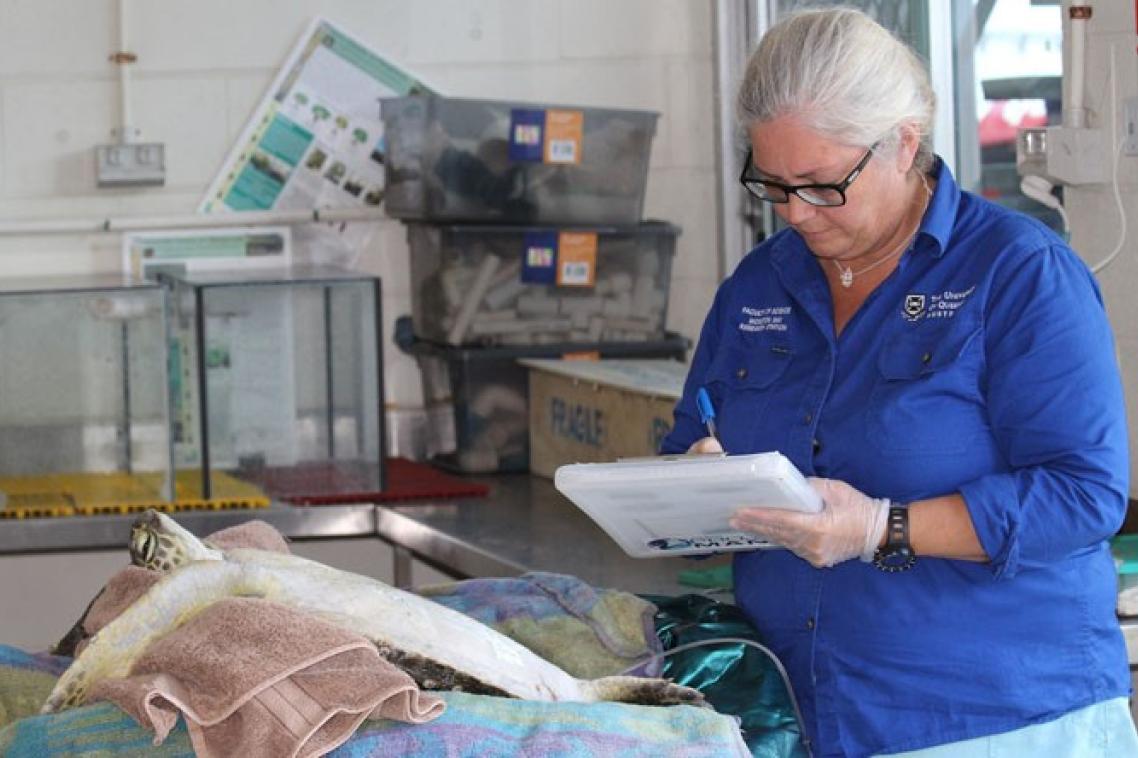
University of Queensland research highlighting the devastating impact of marine rubbish on wildlife has taken out the 2015 Healthy Waterways Research Award at the weekend.
The study, by researchers at UQ’s North Stradbroke Island Moreton Bay Research Station, sought to understand the impact of ingested marine debris on marine animals in Moreton Bay.
UQ’s UniDive won the Waterway Stewardship Award and the 2015 People’s Choice award for a project entitled: Caring for our local reefs.
Dr Kathy Townsend said the marine rubbish project used endangered sea turtles as an indicator species.
“Our studies found more than 30 per cent of stranded turtles die due to eating marine debris, with another six per cent due to entanglement,” she said.
“Marine rubbish is having a significant impact on marine life.
“These impacts include ingestion of plastic debris and entanglement in packaging bands, synthetic ropes and lines or drift nets, both of which can lead to the death of turtles, birds and marine mammals.
“Our observations indicate that size, shape and composition of the rubbish and the age of the turtle all play an important role in whether the turtles will eat the debris and if the gut becomes impacted.”
Dr Townsend said turtles often mistook plastic bags for jellyfish, one of their food sources.
Ingesting marine debris can lead to floating syndrome, which occurs when a turtle’s gut became paralysed, preventing it from being able to digest food.
The food decomposes, releasing gases that get caught in the body cavity and cause the animal to float.
“The condition occurs either from a parasite infection or from swallowing marine debris like plastic bags or balloons,” Dr Townsend said.
“Turtles with floating syndrome can’t absorb water so they quickly dehydrate and, because they can’t dive underwater, they’re often attacked by other animals, hit by boats or severely sunburnt.”
The Australian Research Council Linkage grant research involved Professor Justin Marshall from UQ’s Queensland Brain Institute and the School of Biomedical Sciences, UQ postgraduate students Qamar Schuyler and Melody Puckridge, and the CSIRO.
UniDive’s Caring for our local reefs project involved more than 100 volunteer divers in an ecological assessment of dive sites at Point Lookout, North Stradbroke Island.
The project advanced the skills of local divers and involved the broader community through reports, videos, presentations and media.
Media: Dr Kathy Townsend 0428 388 959, kathy.townsend@uq.edu.au.
Related articles

Sharks on the move expose the need for international conservation efforts
