
Teaming-up to protect the land
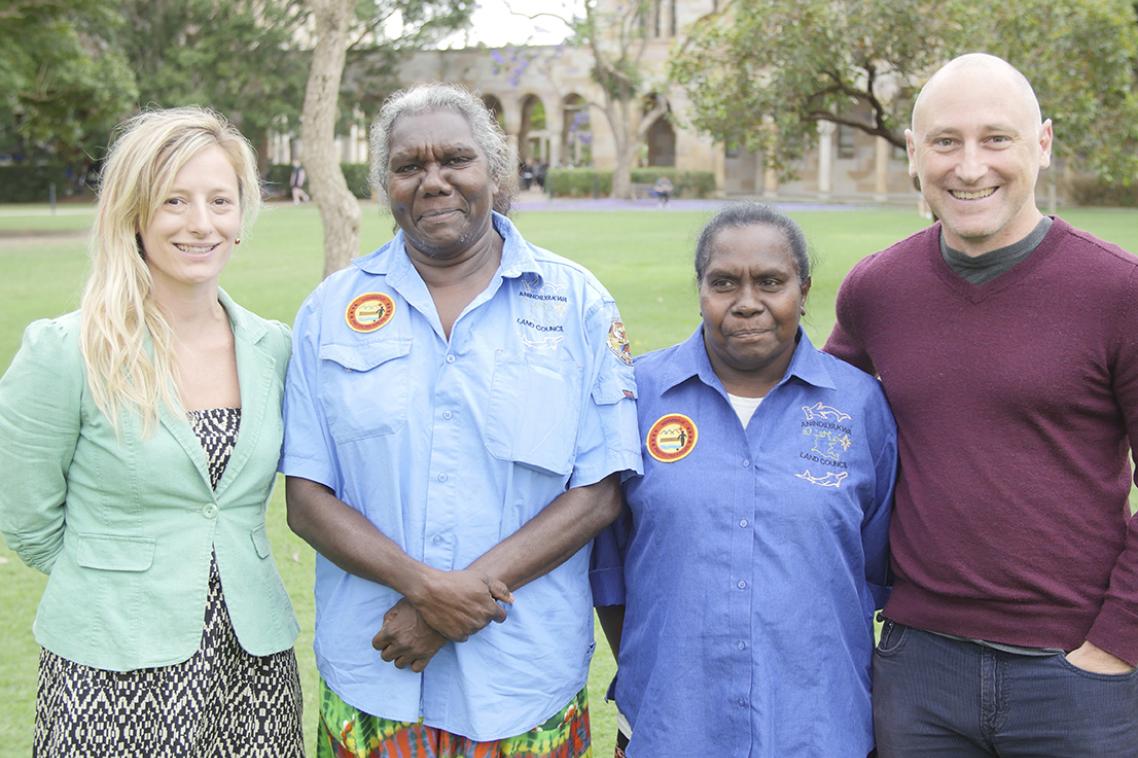
Combining culture and science is a winning mix for University of Queensland scientists and the Indigenous Rangers of the Northern Territory’s Groote Eylandt.
For the past six years, UQ’s Associate Professor Robbie Wilson has been travelling to the remote island with a team of postgraduate students and academics to study a variety of species, including the endangered northern quoll.
Dr Wilson said the relationship with Anindilyakwa Land and Sea Rangers, who were employed as part of the Federal Government’s Working on Country Program, was a mutually beneficial one.
“By working alongside PhD students, the rangers are getting scientific training above and beyond what they would be usually exposed to,” Dr Wilson said.
“Our students gain too—they learn about Indigenous culture and its importance to the conservation of northern Australia.”
Three of Dr Wilson’s former students have gone on to work with Indigenous groups on other projects after completing their PhDs.
Ranger Jennifer Yantarrnga has worked with Dr Wilson since 2010, and has travelled to UQ’s St Lucia campus as part of the skills exchange.
“Our land is special, and our work with Robbie and his students can help us to protect it,” she said.
“We learn by working alongside scientists on Groote and we can share our culture, language and country with young students.
“The training courses that Robbie has organised for us at UQ has also helped to improve our work together on Groote.”
Groote Eylandt and its archipelago is recognised as a site of international significance for threatened plants and wildlife and is an Indigenous Protected Area.
“About half of Australia’s protected areas are Indigenous-managed lands, so managing threatened species relies on building collaborations between Indigenous communities and scientists,” Dr Wilson said.
“We want to use our project to highlight how well a collaboration can work.”
Media contact
UQ Communications
Topics
Related articles

From birdsong to galaxies: unleashing the potential of citizen science
