A Nobel meeting
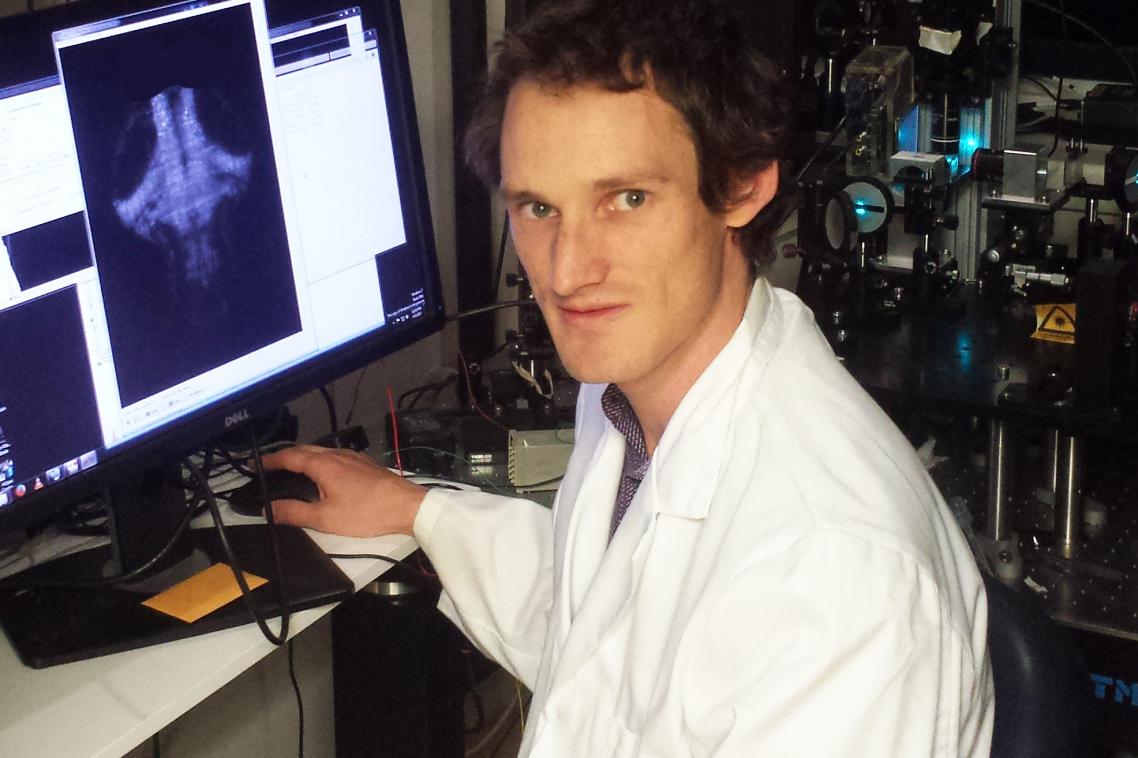
A physicist and a chemist from The University of Queensland will network with Nobel Prize winners at the 67th Lindau Nobel Laureate Meeting later this month.
Dr Michael Taylor and research higher degree student Andrew White will travel to Germany for the rare opportunity.
Dr Taylor, a Human Frontier Science Program fellow and visiting academic at The University of Queensland School of Biomedical Sciences, said he was thrilled to be meeting some of the world’s leading scientists.
“I’m particularly excited that Stefan Hell and William E. Moerner will be there,” Dr Taylor said.
“They are two of the 2014 Nobel Prize winners infamous for developing super-resolution microscopy, a technique that allows images to be taken with resolution that was previously thought to be impossible.”
These Nobel Prize winners will inspire Dr Taylor who is currently working on building and refining microscopes to improve the way neurons are measured.
“I’m a physicist but currently I’m looking at how living brains work, so this chemistry meeting will be of great relevance to my research,” Dr Taylor said.
“I enjoy working on science that’s actually seeing application and could lead to clinical results.
“A lot of physicists are starting to work on these problems, but it’s still quite rare to have one working in a biomedical sciences lab.
“I think it makes collaboration much easier.”
Dr Taylor joined UQ after completing his physics PhD in quantum measurement and working in Vienna at The Research Institute of Molecular Pathology.
Meanwhile Mr White, of UQ’s Institute for Molecular Bioscience, said the meeting would fuel his ideas and research towards designing next-generation therapeutics for obesity and inflammatory disorders.
“I am fascinated to hear the stories of the Noble Laureates and learn how their careers have progressed to receive the pinnacle award in science,” Mr White said.
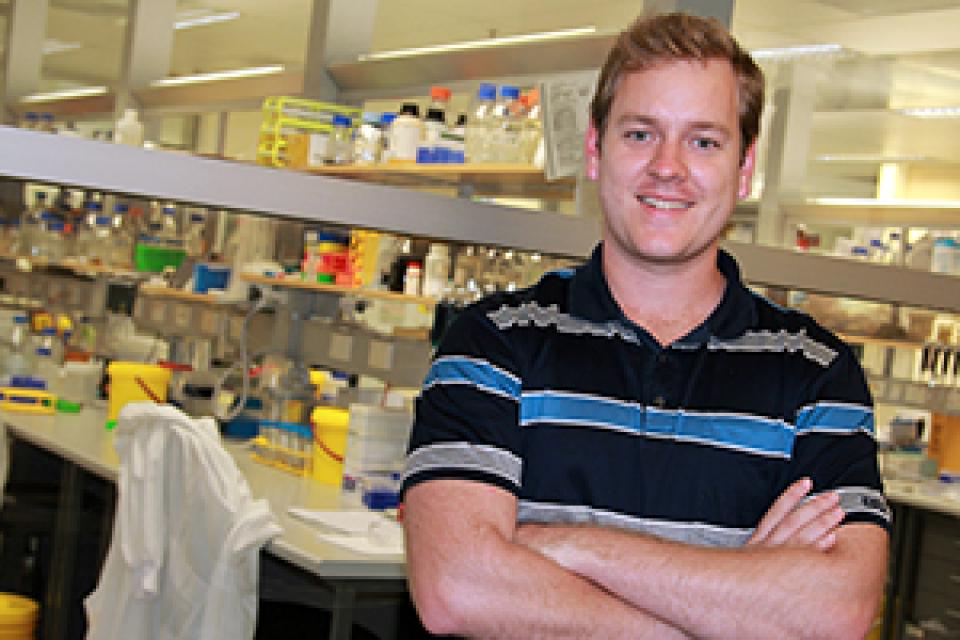
“Having a strong background in structural chemistry, I am especially excited to meet Nobel Laureate Kurt Wüthrich, who is a pioneer of a research technique I use every day to determine the three-dimensional structure of peptides.
“Being able to discuss my research with some of the world’s best scientific minds and make new collaborations with up-and-coming research leaders will be both incredibly inspiring and insightful.”
The UQ researchers are two of 400 of the world's most talented young scientists invited to the meeting next month to mingle with more than 30 of the world's leading scientists.
Dr Taylor is sponsored to attend the meeting by the Human Frontier Science Program and both he and Mr White are part of the Australian delegation supported by the Australian Academy of Science together with the Science and Industry Endowment Fund (SIEF).
Media: Dr Michael Taylor, m.taylor@sbs.uq.edu.au; Kim Lyell, k.lyell@uq.edu.au, +61 427 530647 ; Andrew White, a.white7@uq.edu.au; Gemma Ward, +61 439 651 107, communications@imb.uq.edu.au.
Related articles

Many feared a US World Cup under Trump would be a disaster. Its legacy will prove otherwise