
Nobel laureate to lead ‘a night in the deep beyond’
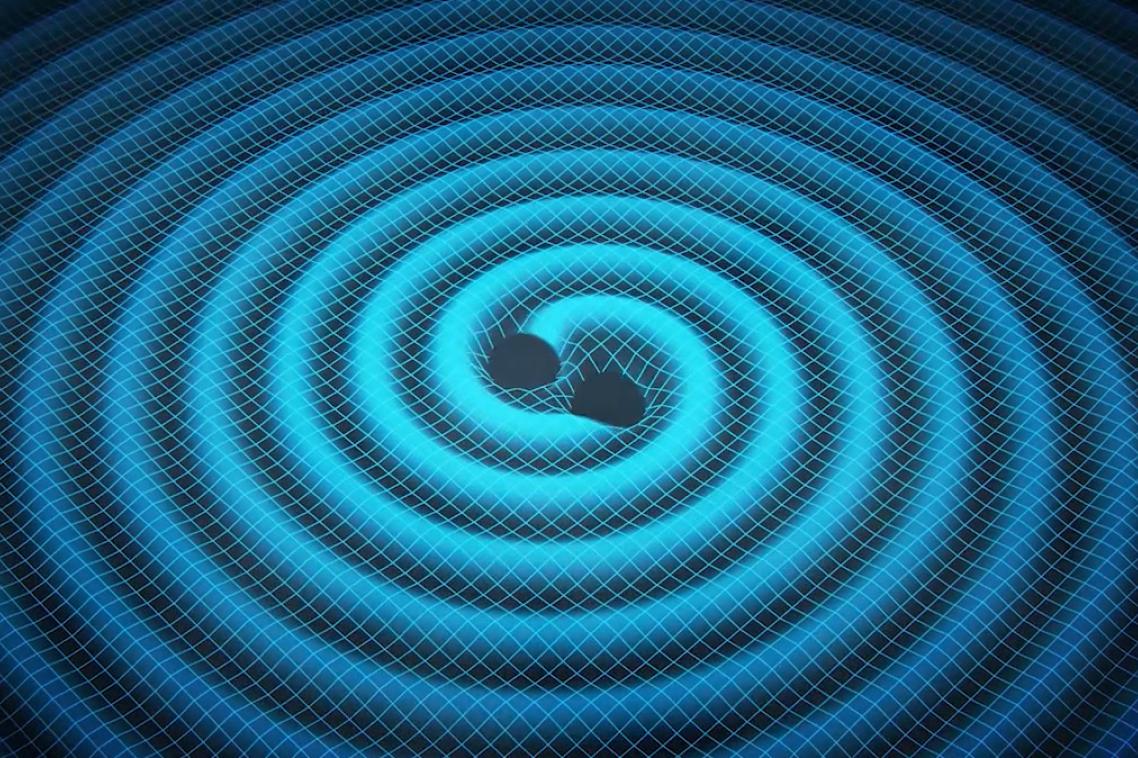
Gravitational waves, black holes and a possible ninth planet beyond Pluto will be discussed at a free public event at The University of Queensland on November 7.
Three international astrophysicists will share their knowledge at “A Night in the Deep Beyond”, hosted by Australian National University Vice-Chancellor and Nobel Laureate Professor Brian Schmidt.
Stanford University cosmologist and simulator Professor Risa Wechsler uses galaxies to probe the fundamental physics of the universe including the nature of dark matter and dark energy. She uses large computer simulations combined with the deepest and largest galaxy surveys to determine how the universe formed and evolved.
University of Michigan astrophysicist and dark energy researcher Professor David Gerdes is using Dark Energy Survey data to discover hundreds of new small icy worlds in our solar system beyond Neptune. His team's discoveries have raised the possibility that the solar system harbors a distant Neptune-sized planet with a 20,000-year orbit.
Fermi National Accelerator Lab researcher Professor Marcelle Soares-Santos detects dark matter by the way it bends light from background galaxies and uses the Dark Energy Camera to search for the optical signatures of gravitational wave events seen by the LIGO (US)/Virgo (Europe) interferometer detectors. She will report on the recent discovery of the first event for which both gravitational and electromagnetic radiation has been detected, a binary neutron star merger a hundred and thirty million light years away.
Attendees will have the opportunity to participate in a Q&A session and panel discussion.
UQ astrophysicist Professor Tamara Davis said the event would be a highlight of a Dark Energy collaboration meeting at UQ.
“We expect about 100 astrophysicists from around the world to converge on UQ from 6-10 November, working together on questions including dark energy, dark matter, and gravitational waves,” she said.
“Gravitational waves, which are ripples in the fabric of space-time caused by violent processes in the Universe, are a hot topic with the 2017 Nobel Prize in physics awarded for work on this phenomenon.”Professor Davis is also involved in the international Dark Energy Survey, an international collaborative effort to map hundreds of millions of galaxies, detect thousands of supernovae and find patterns of structure revealing the nature of the mysterious dark energy accelerating the expansion of our Universe.
Read more in The Conversation.
Event details
What: A Night in the Deep Beyond
Where: Room 03-206, Steele Building, UQ St Lucia
When: Tuesday, 7 November 2017, 6.30pm – 8.30pm
Registration: Free, limited places.
Media: Professor Tamara Davis, tamarad@physics.uq.edu.au, +61 (0)432 526 989.
Topics
Related articles

Vaccine platform receives funding to help protect against emerging mosquito-borne disease threats
