
Study estimates 200-plus white sharks breed each year
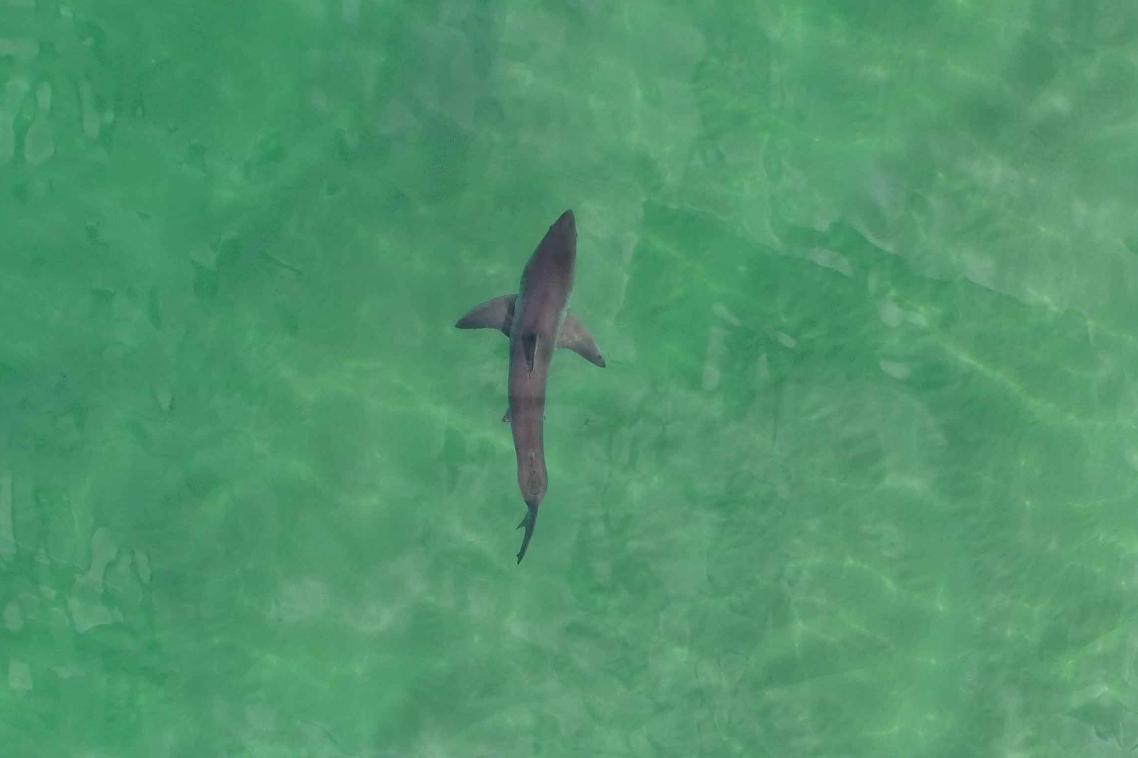
A study on the vulnerable white shark has shown that approximately 206 to 252 sharks breed on Australia’s east coast each year.
The joint study involving The University of Queensland, NSW Department of Primary Industries and Stellenbosch University in South Africa has used genomics to estimate the yearly number of "effective breeders" in the white shark population.
UQ PhD candidate in the Molecular Fisheries Laboratory, Dani Davenport, said "effective breeders” contributed offspring to the population each year.
“Effective breeders are like the ‘genetic vault’ that carry the genes of the population and pass them down to the next generation,” Ms Davenport said.
Ms Davenport said it is difficult to determine if protections applied to the white shark in Australia have been working, as monitoring populations of animals underwater is challenging, and particularly so for white shark, which are difficult to find, catch and handle.
“However, the ‘SMART’ drumline established by NSW DPI as part of the NSW Government’s 'Shark Management Strategy’ provided a valuable source of material for genomic analyses from sharks caught as part of the program.”
When sharks are caught on SMART-drumlines they are measured, sampled for DNA and then tagged with a tracking device before being released back, alive, to their ocean environment.
Ms Davenport said that monitoring the “effective breeding population size” can help early detection of population declines or increases over decadal time-spans.
“While this study showed stable numbers of effective breeders over the years 2010 to 2013, the white shark has a slow life history and is long lived.
“For example, female white sharks do not mature until, on average, they are five metres in length, or 16-years of age,” Ms Davenport said.
“Any possible recovery of the population after the declines of the 20th century may not be detected unless we continue monitoring.”
To achieve continued monitoring, sharks will be caught on drumlines and genomic analyses will contribute to future estimates of the effective number of breeders.
Ms Davenport is working on shark genomics, in partnership with NSW DPI and co-supervisor Dr Paul Butcher, as part of her PhD thesis with UQ Associate Professor Jennifer Ovenden from the School of Biomedical Sciences, along with Dr Andrew Jones, formerly of UQ, and experts from South Africa including Professor Conrad Matthee and white shark researcher Dr Sara Andreotti.
The study results are published in Ecology and Evolution (DOI 10.1002/ece3.7007).
Media: Danielle Davenport, danielle.davenport@uq.edu.au, +1 902 580 7049; Faculty of Medicine Communications, med.media@uq.edu.au, +61 7 3365 5133.
Related articles

Sharks on the move expose the need for international conservation efforts
