
Urgent action needed to reduce uncertainty on CO2 storage prospects
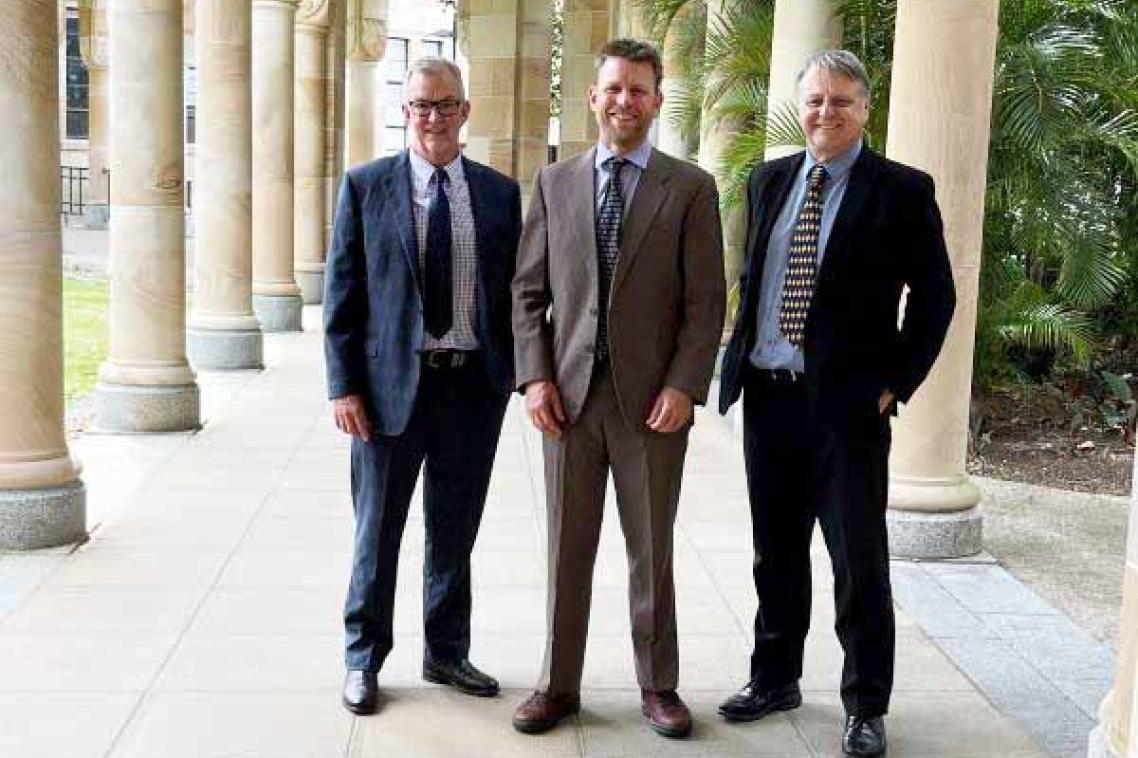
An urgent increase in policy support and investment would be needed for carbon capture and storage (CCS) to achieve the scale needed to meet global decarbonisation goals, according to University of Queensland and Princeton University researchers.
The study’s lead author, Dr Joe Lane, said CCS was regarded as a key technology for reducing energy and industrial sector emissions and for achieving negative emissions when coupled with bioenergy or direct air capture of carbon dioxide.
“Most scenarios for deep decarbonization of the global economy rely on massive scale CCS to be compliant with the Paris Agreement - from three to more than 20 gigatonnes of CO2 per year being captured and stored, worldwide by 2050,” Dr Lane said.
“Even the lower targets imply an extremely challenging pace and scale of CCS deployment across all major economies.”
UQ Centre for Natural Gas Director Professor Andrew Garnett said more information is needed globally to support such high expectations.
“Those scenarios typically assume that there is more than enough storage volume available in porous geological reservoirs around the world,” Professor Garnett said
“But the essence of our abatement challenge is not the volume of storage available, it’s the rate at which CO2 can be safely injected and permanently contained that counts.
“We have a poor understanding of injection rates that can be sustained in key regions and in aggregate - there is simply not enough key data available.”
Princeton University Senior Research Scientist from the Andlinger Center for Energy and Environment, Dr Chris Greig, said the storage uncertainty created a “chicken and egg” problem for CCS ambitions.
“The characterisation work required to build confidence in our storage capacity relies on mobilising tens of billions of dollars in risk capital over the next decade,” Dr Greig said.
“Currently, these capabilities are in the Oil and Gas sector.
“For the necessary investment to happen, storage developers need to be confident that the capture projects will actually be built before they enter into long term storage contracts.
“At the same time, investors will remain cautious until there’s a high level of confidence that cost-effective storage capacity will be available.”
Dr Lane said strategic planning is needed now if carbon dioxide storage is to play a major role for decarbonising crucial industries and the developing world.
The study is published in Nature Climate Change (DOI 10.1038/s41558-021-01175-7).
Media: Dr Heather Stewart, naturalgas@uq.edu.au +61 418 830 938.
Related articles

Improving the safety of timber buildings – by setting them on fire
