
Using satellites for faster flood information
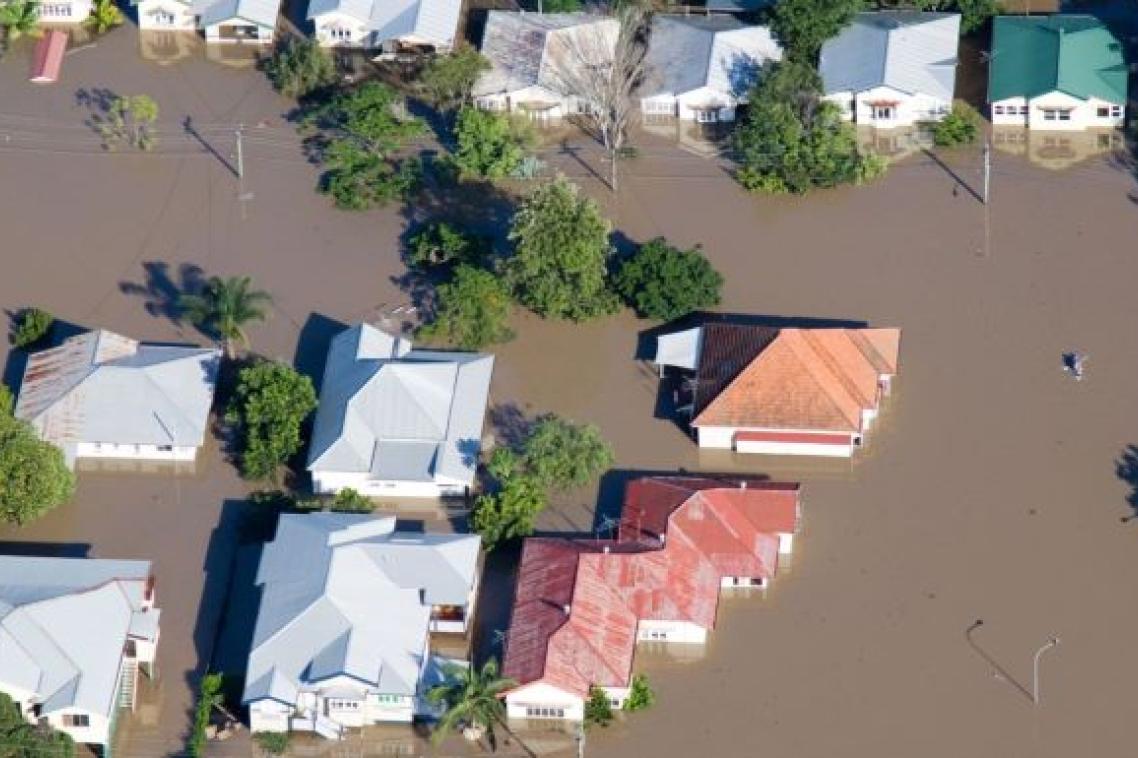
Researchers at The University of Queensland have used satellites with radar imaging sensors to see through clouds and map flooding and say the technique could provide faster, more detailed information to keep communities safe.
Professor Noam Levin from UQ’s School of Earth and Environmental Sciences said the project combined images from optical satellites with information from imaging radar satellites.
“Monitoring floods in towns and cities is challenging, with flood waters often rising and then receding in a few days,” Professor Levin said.
“While large satellites in the past provided images every 7-14 days, now groups of small satellites can collect several images a day over the same location.
“Radar imaging sensors can provide images at night or on days with thick cloud cover – a huge advantage in stormy conditions.
“They use a flash, like on a camera, and the light is sent at wavelengths between 1mm and 1.0m, which can pass through clouds and smoke.”
During Brisbane’s February 2022 floods, researchers combined satellite day-time pictures showing the extent of the flood with imaging radar and optical night-time data of the lights associated with human activity.
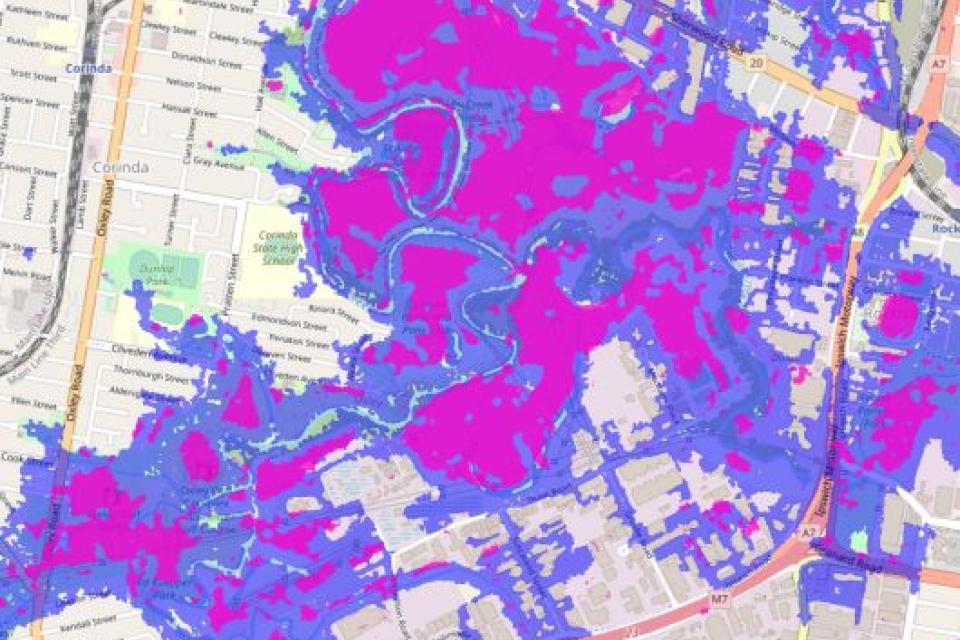
“We could see which areas became dark as the flood waters encroached,” Professor Levin said.
“We matched this with data from river gauges operated by the Bureau of Meteorology, and with changes in electricity loads reported by Energex, the power supplier.”
Professor Stuart Phinn said the technique could play a vital role in protecting Australians during future flooding events.
“In combination with existing flood monitoring and modelling technologies, satellites could change the way we monitor major flood events, understand how they occur, and direct emergency and other responses,” Professor Phinn said.
“With faster update times – at least twice a day – and more accurate and timely data, agencies monitoring the floods can assess changes and alert people in at-risk areas.
“This technique can also be used post-disaster to assess the extent of damage, direct recovery efforts and for the assessment of insurance claims.”
The team used optical satellites from Planet Inc. and from NASA’s VIIRS, as well as imaging radar satellites from Capella.
The research has been published in Remote Sensing.
Image: Map of inundated western Brisbane suburbs on 28 February 2022 derived from PlanetScope (purple) and Capella (pink) satellite data.
Related articles

All-in-one on-farm genetic testing proves to be quick and reliable
